An American high school student used artificial intelligence to map 1.5 million previously unknown objects in space, and the result has stunned scientists who thought the sky had already been searched
In a remarkable achievement that has captured the attention of scientists worldwide, a high school student from Pasadena, California, has utilized artificial intelligence to identify 1.5 million previously unknown objects in space. This groundbreaking work has challenged the long-held belief that the sky had been thoroughly examined.
The Genesis of a Groundbreaking Project
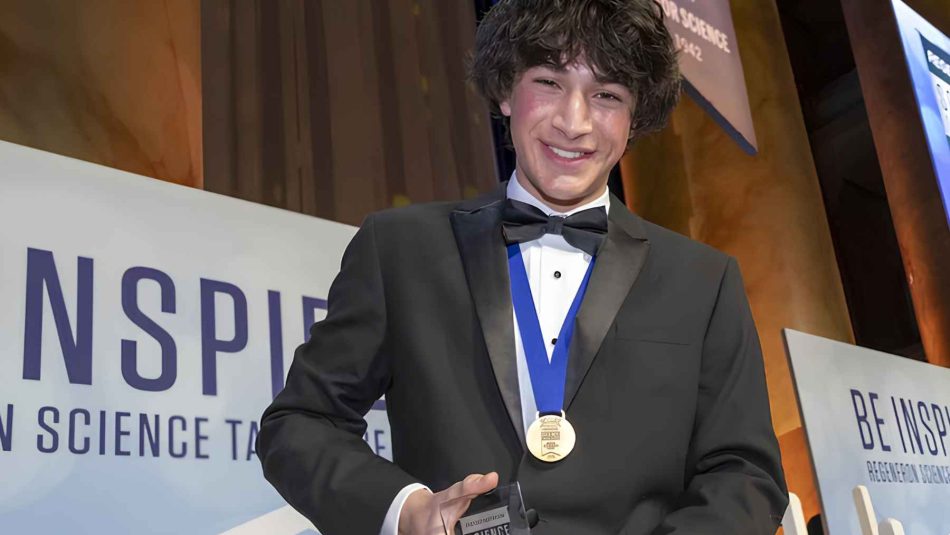
The student, Matteo (Matthew) Paz, embarked on this ambitious project during the summer of 2022 as part of Caltech’s Planet Finder Academy. His work continued through a six-week research program at Caltech, where he partnered with experienced mentors, including astronomer Davy Kirkpatrick from the Infrared Processing and Analysis Center (IPAC).
From Summer Project to National Recognition
What began as a summer project quickly evolved into a significant scientific endeavor. Paz’s innovative approach earned him the prestigious first-place prize of $250,000 in the Regeneron Science Talent Search, a national competition organized by the Society for Science. His research culminated in a peer-reviewed study published in December 2024 in The Astronomical Journal.
Understanding the NEOWISE Mission
The NEOWISE mission, originally designed to detect asteroids and near-Earth objects, inadvertently collected a wealth of data on variable objects in the cosmos. These include quasars, exploding stars, and eclipsing star pairs, all of which exhibit changing infrared signatures. The sheer volume of data collected by NEOWISE is staggering, with nearly 200 billion detections over approximately 10.5 years, resulting in a dataset of about 200 terabytes.
The Challenge of Data Analysis
As Kirkpatrick noted, the challenge of analyzing this vast dataset was immense. The team faced a daunting task of sifting through nearly 200 billion rows of measurements, making manual analysis impractical. This is where Paz’s AI-driven approach became invaluable.
Introducing VARnet: A New Approach to Data Analysis
Paz developed a system called VARnet, which combines signal processing with deep learning techniques. VARnet processes light curves—records of brightness over time—by breaking them into patterns at various time scales. It learns to distinguish real variability from random noise using advanced methods like wavelet decomposition and Fourier-based feature extraction.
With processing times under 53 microseconds on modern graphics processors, VARnet can efficiently handle large datasets, making it an ideal tool for astronomical analysis. In testing, VARnet achieved an impressive F1 score of 0.91 in identifying different types of infrared variables, demonstrating its reliability in classifying changes over time.
What Does “New” Mean in This Context?
The term “new” in this context does not imply that these stars or galaxies have only recently emerged. Instead, it signifies that their variability had not been previously recognized in a manner that allowed for large-scale study. Paz’s project resulted in a comprehensive catalog of approximately 1.9 million infrared variable objects, with around 1.5 million classified as new discoveries. These objects were categorized into ten distinct types, facilitating targeted research for astronomers.
Significance Beyond Astronomy
At first glance, a catalog of variable stars may seem unrelated to everyday environmental issues. However, the principles of time-series analysis that Paz employed have broader applications. Earth is characterized by cycles, such as daily pollution spikes and seasonal changes, which can be analyzed using similar mathematical techniques.
Paz himself noted that his model could be adapted to study atmospheric effects, including pollution, as these cycles influence environmental data. This connection highlights the potential for AI-driven analysis to enhance our understanding of various ecological phenomena.
Environmental Considerations in AI Research
As artificial intelligence becomes increasingly integrated into scientific research, it is essential to consider the environmental impact of computing. While AI offers significant benefits in terms of data analysis and monitoring, the energy consumption associated with large-scale computing must also be acknowledged. Researchers must balance the advantages of improved monitoring with the environmental costs of energy use.
Conclusion
Paz’s groundbreaking work exemplifies how innovative thinking and modern technology can unlock hidden treasures in existing datasets. By applying artificial intelligence to the vast archives of astronomical data, he has not only made significant discoveries in space but has also opened new avenues for environmental research. This achievement serves as a reminder that the universe still holds many secrets, waiting for curious minds to explore.
Note: The exploration of space and the understanding of our environment are interconnected fields, and advancements in technology will continue to play a crucial role in uncovering new knowledge.