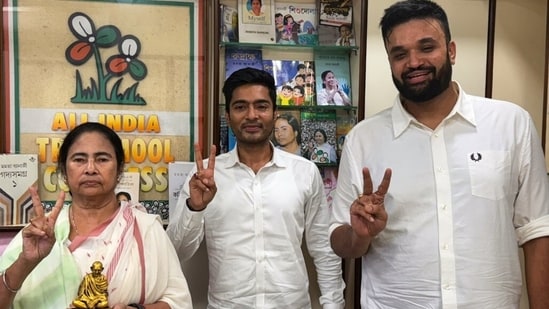
Who is I-PAC Chief Pratik Jain, IIT-B Alumnus and Mamata’s Poll Strategist Under ED Scanner
Pratik Jain, the co-founder and director of the Indian Political Action Committee (I-PAC), has recently come under scrutiny due to a money laundering investigation led by the Enforcement Directorate (ED). The ED conducted raids at I-PAC’s office and Jain’s residence in Kolkata, West Bengal, raising questions about his role in political consultancy and governance.
Background of Pratik Jain
Pratik Jain is an engineer-turned-political consultant who co-founded I-PAC in 2015. He graduated from the prestigious Indian Institute of Technology, Bombay (IIT-B), where he studied metallurgical engineering and materials science. During his time at IIT-B, Jain interned at Axis Mutual Fund, which marked the beginning of his professional journey.
After completing his engineering degree, Jain worked as an analyst at Deloitte in 2012. His career took a significant turn when he became a founding member of ‘Citizens for Accountable Governance’ (CAG), a not-for-profit organization aimed at promoting accountable governance in India. This initiative eventually evolved into I-PAC, which has since become a leading political consultancy in the country.
I-PAC’s Role in Political Consultancy
I-PAC describes itself as a platform for students and young professionals to engage in political affairs and governance without being affiliated with any political party. The organization has played a crucial role in shaping political strategies for various parties, most notably the Trinamool Congress (TMC) in West Bengal, where Jain also heads the IT and media cell.
ED Investigation and Raids
The recent ED raids on January 8, 2026, targeted Jain’s residence on Loudon Street in Kolkata and I-PAC’s office in Salt Lake. The ED has stated that there is “specific” evidence against Jain related to a coal scam in West Bengal, including allegations of hawala transactions and cash deals. In total, the ED conducted searches at ten locations, including six in West Bengal and four in Delhi.
During the raids, West Bengal Chief Minister Mamata Banerjee visited Jain’s home and accused the Bharatiya Janata Party (BJP) of using central agencies to undermine regional parties. She claimed that the ED was attempting to seize sensitive documents and hard drives containing information about her party’s electoral strategies.
Mamata Banerjee’s Response
Banerjee’s response to the ED’s actions was swift and vocal. She criticized the BJP for what she described as an attempt to stifle democratic processes. “If you cannot fight with us, then why are you coming to Bengal? Defeat us in a democratic way,” she stated, emphasizing that the raids were politically motivated.
Banerjee also alleged that the ED was confiscating documents related to her party’s candidates for the upcoming Assembly elections, which she claimed could jeopardize their electoral chances. In her statements, she urged the Prime Minister to control the actions of the Home Minister and accused the central government of misusing its power.
ED’s Defense of the Raids
In contrast to Banerjee’s accusations, the ED maintained that the raids were evidence-based and not targeted at any political establishment. The agency clarified that the investigation was part of a broader crackdown on money laundering related to illegal coal smuggling operations in West Bengal. The ED emphasized that the searches were not linked to any electoral processes and were conducted to gather evidence regarding cash generation and hawala transfers.
Impact on Political Landscape
The ongoing investigation and the ED’s actions have significant implications for the political landscape in West Bengal. As a key strategist for the TMC, Jain’s involvement in I-PAC and the current scrutiny could affect the party’s strategies and its performance in upcoming elections.
Conclusion
Pratik Jain’s journey from an IIT-B alumnus to a prominent political consultant highlights the intersection of technology, governance, and politics in modern India. As the ED investigation unfolds, the implications for both Jain and the TMC remain to be seen. The situation underscores the ongoing tensions between regional parties and the central government, particularly in the context of electoral strategies and governance.
Note: This article is based on the latest developments and statements from various parties involved. The situation is fluid, and further updates may emerge as the investigation continues.