Closing The Gap Between Silicon and Society
Inside IIIT Hyderabad’s Lab That Is Working Across The Full Electronics Stack
As India strengthens its semiconductor ambitions, researchers at IIIT Hyderabad are pioneering indigenous electronics that span the entire electronics stack. Their work includes custom chip design, millimetre-wave circuits, privacy-preserving sensing, and intelligent healthcare systems, all aimed at transitioning seamlessly from laboratory settings to real-world applications. In a world increasingly reliant on data for governance, healthcare, and mobility, the methods of sensing, processing, and protecting that data are of utmost importance.
Silicon-To-System Philosophy
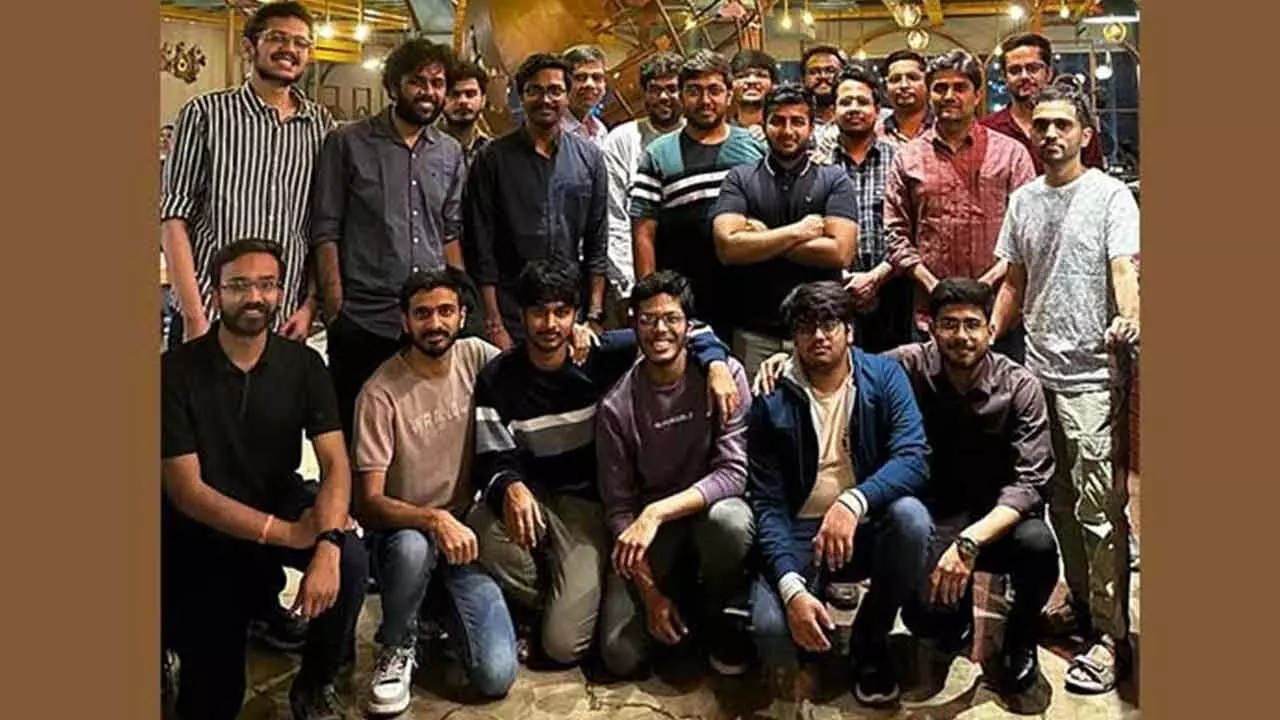
The Integrated Circuits – Inspired by Wireless and Biomedical Systems (IC-WiBES) research group at IIIT Hyderabad, led by Prof. Abhishek Srivastava, is rethinking electronic system design. Rather than viewing electronic components as isolated chips, the group adopts a holistic approach that encompasses end-to-end technologies from silicon to real-world deployment. This philosophy emphasizes vertical integration, allowing researchers to work across chip design, signal processing, and application development simultaneously.
Why Custom Chips Still Matter
While off-the-shelf electronics may suffice for many applications, they can become inadequate for strategic uses such as healthcare monitoring, privacy-preserving sensing, and national infrastructure projects. The IIIT-H team focuses on designing application-specific integrated circuits (ASICs) that provide enhanced flexibility, precision, and energy efficiency compared to commercial alternatives. These chips are continuously refined based on real-world feedback, ensuring that circuit-level decisions directly enhance overall system performance.
Millimetre Wave Electronics
One of the lab’s most significant research areas is millimetre-wave (mmWave) radar sensing, a technology gaining traction in automotive safety but still underutilized in civic and healthcare applications. Unlike traditional cameras, mmWave radar can operate effectively in low-light conditions, fog, rain, and dust, all while maintaining user privacy. By transmitting and receiving high-frequency signals, these systems can detect motion, distance, and even subtle vibrations, such as the movement of a human chest during breathing.
Contactless Healthcare Monitoring
This capability has opened new avenues in non-contact health monitoring. The research team has developed systems capable of measuring heart rate and respiration without the need for wearables or cameras. This technology is particularly beneficial in settings such as infectious disease wards, elderly care facilities, and post-operative monitoring. By combining custom electronics, signal processing, and edge AI, these systems can extract vital signs from extremely subtle radar reflections. Clinical trials are already underway to evaluate their performance in real-world hospital settings.
Privacy-First Sensing for Roads
The same radar technology is being adapted for road safety and urban monitoring. Traditional camera-based systems struggle in poor visibility conditions, such as heavy rain or fog. In contrast, radar-based sensing remains reliable. The researchers have demonstrated systems that can accurately detect and classify vehicles, pedestrians, and cyclists, even in challenging environments. Such innovations could significantly enhance traffic planning, accident analysis, and smart city governance while alleviating concerns about surveillance.
Systems Shaping Chips
A defining aspect of the lab’s work is the feedback loop between systems and circuits. When limitations arise during field testing—such as signal interference or noise—the insights gained directly inform the next generation of chip designs. This iterative process has led to innovations such as programmable frequency-modulated radar generators, low-noise oscillators, and high-linearity receiver circuits, all tailored to meet the demands of real applications rather than adhering strictly to textbook benchmarks.
Building Rare Electronics Infrastructure
Supporting this groundbreaking research is a rare high-frequency electronics setup at IIIT Hyderabad, capable of measurements up to 44 GHz—a facility available at only a handful of institutions nationwide. The lab has achieved significant milestones, including the institute’s first fully in-house chip tape-out and participation in international semiconductor design programs that provide broader access to advanced electronic design automation tools.
Training Full Stack Engineers
Beyond research outputs, the IC-WiBES group is dedicated to shaping a new generation of engineers who are proficient across the entire electronics stack—from transistor-level design to algorithms and applications. Prof. Srivastava emphasizes that students learn how circuit-level constraints influence system intelligence, a skill that is increasingly critical in today’s technology landscape. This cross-disciplinary training prepares students for roles in national missions, deep-tech startups, academia, and advanced semiconductor industries.
Academic Research to National Relevance
With sustained funding from various agencies, numerous top-tier publications, patents in progress, and early-stage technology transfers underway, the lab’s work reflects a broader shift in Indian research towards application-driven electronics innovation. Prof. Srivastava notes that progress in deep-tech research is not linear; circuits, systems, and algorithms must mature together. He states, “Sometimes hardware leads. Sometimes applications expose flaws. The key is patience, persistence, and constant feedback.” The lab’s focus is not on replacing every component with custom silicon but rather on strategic interventions to design custom chips where they are most impactful.
Note: The advancements made by IIIT Hyderabad’s IC-WiBES group illustrate the vital role of indigenous electronics in addressing real-world challenges, emphasizing the importance of integrating research with practical applications.