
Coal Belt to Clean Energy Lab: IIT (ISM) Develops Low-Cost Catalyst for Green Hydrogen
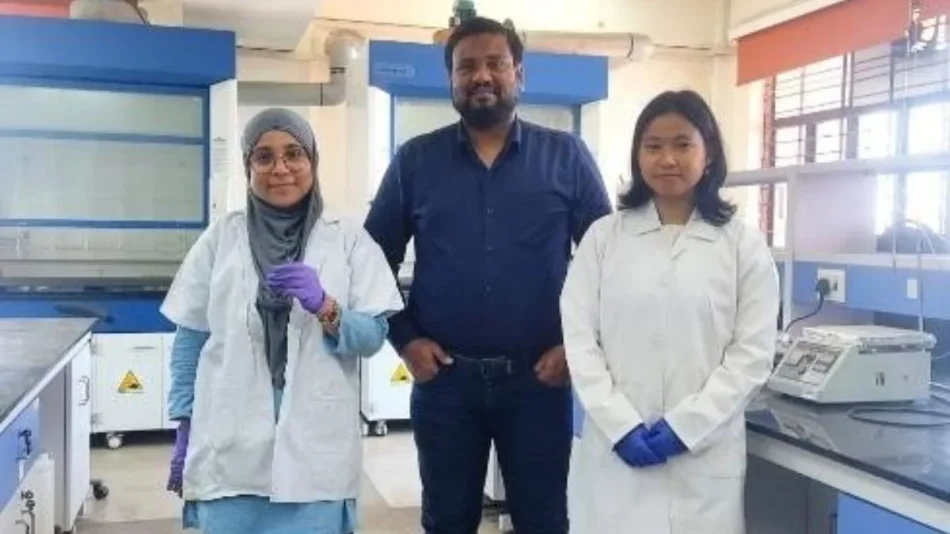
In a significant development that connects India’s historical reliance on fossil fuels with its aspirations for clean energy, scientists at the Indian Institute of Technology (Indian School of Mines), Dhanbad, have unveiled a low-cost electrode material designed to enhance the affordability of green hydrogen production. This groundbreaking research was spearheaded by Dr. Sk Riyajuddin, an INSPIRE Faculty member in the Department of Physics, alongside research scholars Priyadarshani Tamang and Rumana Sultana Parvin.
The Challenge of Green Hydrogen Production
Green hydrogen is increasingly recognized as a crucial component in the transition to sustainable energy. However, one of the primary barriers to its widespread adoption is the high cost of production. Currently, the cost of producing green hydrogen in India ranges from ₹250 to ₹350 per kilogram, largely due to the expensive noble metal catalysts such as platinum and ruthenium that are commonly used in electrochemical water splitting.
A Shift Towards Affordable Solutions
Located in a region historically known for coal mining, IIT (ISM) is now making strides in research aimed at reducing dependence on fossil fuels. The team’s innovative catalyst is made from more abundant and inexpensive elements, including molybdenum, vanadium, sulphur, and carbon. By combining advanced transition metal compounds with a conductive carbon framework, the researchers have developed a system that not only lowers the energy required for water splitting but also maintains strong catalytic performance.
Implications for India’s Energy Landscape
This development aligns with the Indian government’s National Green Hydrogen Mission, which aims to produce 5 million tonnes of green hydrogen annually by 2030. Achieving this ambitious target will necessitate significant infrastructure expansion and indigenous technological innovation. The use of affordable, locally developed materials can help reduce reliance on imported components and bolster domestic manufacturing capabilities.
Integration with Renewable Energy Sources
The research team has also demonstrated the successful production of hydrogen using a commercially available silicon solar cell. This experiment indicates that hydrogen can be generated directly from sunlight and water, paving the way for a practical solar-to-hydrogen pathway. Such integration could support decentralized production models, especially in regions with high solar potential.
The Environmental Benefits of Green Hydrogen
Green hydrogen is one of the cleanest energy carriers available, producing only water as a by-product when used. Its applications are vast and include:
- Fertilizer production
- Petroleum refining
- Chemical manufacturing
- Steelmaking
These sectors are among the most challenging to decarbonize using traditional renewable electricity alone. If production costs can be significantly reduced, green hydrogen could play a pivotal role in lowering industrial carbon emissions.
Scientific Validation and Future Prospects
The findings of this research have been published in the international journal Small (Wiley, 2026), highlighting the scientific rigor of the work. While this breakthrough represents a significant advancement at the laboratory level, further validation and scaling will be crucial to determine its industrial viability. Key factors such as durability, manufacturing feasibility, and integration into existing systems will be essential for the success of this technology.
Conclusion
The development of a low-cost catalyst for green hydrogen production by the IIT (ISM) team marks a pivotal moment in India’s journey towards sustainable energy. By leveraging local resources and innovative technologies, India can potentially transform its energy landscape, reducing reliance on fossil fuels while contributing to global efforts in combating climate change.
Note: The journey towards a sustainable energy future is ongoing, and continued research and development will be essential in overcoming the challenges that lie ahead.


