IIT Bhubaneswar Hosts Talk on MicroLEDs and Gas Sensors
On February 19, 2026, the School of Electrical and Computer Sciences (SECS) at IIT Bhubaneswar, in collaboration with the IEEE Bhubaneswar Section, organized an insightful technical talk focused on emerging electronic and sensing technologies. This event brought together experts, researchers, and students to discuss advancements in MicroLED technology and gas sensors, which are crucial for various applications in today’s technological landscape.
Keynote Address by Prof. Ioannis Kymissis
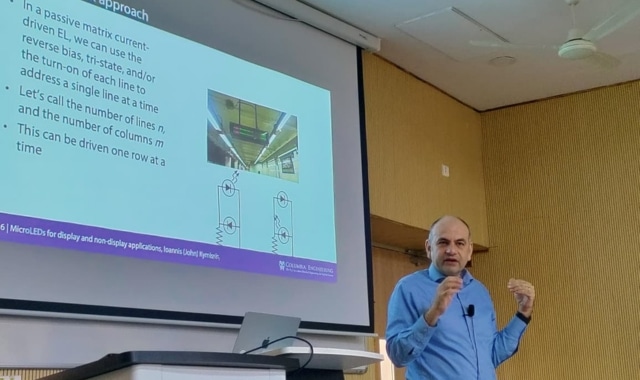
The keynote address was delivered by Prof. Ioannis (John) Kymissis, who is the Vice Dean for Infrastructure and Innovation and the Kenneth Brayer Professor of Electrical Engineering at Columbia University. His talk, titled “MicroLEDs for Display and Non-Display Applications,” provided a comprehensive overview of the current state and future potential of MicroLED technology.
Understanding MicroLEDs
MicroLEDs are a type of display technology that utilizes microscopic light-emitting diodes. Prof. Kymissis explained that MicroLEDs offer several advantages over traditional display technologies, including:
- Superior Efficiency: MicroLEDs consume less power compared to conventional LEDs, making them more energy-efficient.
- High Luminance: They produce brighter images, enhancing the viewing experience in various lighting conditions.
- Durability: MicroLEDs have a longer lifespan and are less prone to burn-in issues that affect OLED displays.
Applications Beyond Displays
During his presentation, Prof. Kymissis highlighted several innovative applications of MicroLED technology that extend beyond traditional displays:
- Biomedical Imaging: MicroLEDs can be used in advanced imaging techniques, improving diagnostics and treatment monitoring.
- Visible Light Communication: This technology can facilitate high-speed data transmission using light, which has potential applications in smart cities and IoT.
- Microscopy: Enhanced imaging capabilities can lead to breakthroughs in scientific research and medical diagnostics.
- IoT-Enabled Systems: MicroLEDs can be integrated into various IoT devices, improving their functionality and user interface.
Challenges in MicroLED Development
Despite the promising advantages, Prof. Kymissis also addressed the challenges faced in the development of MicroLED technology. Key challenges include:
- Thermal Management: Efficiently managing heat dissipation is crucial for maintaining performance and longevity.
- Device Integration: Integrating MicroLEDs into existing systems poses technical hurdles that need to be overcome.
- System-Level Optimization: Ensuring that all components work harmoniously is essential for maximizing the benefits of MicroLED technology.
Advancements in Gas Sensors
Following Prof. Kymissis’s address, Abhijit Narayan Eshore, a Doctoral Researcher at IIT Kharagpur, presented his research on inorganic perovskite-based gas sensors. His work focuses on developing sensors that can effectively monitor climate-relevant pollutants, which is increasingly important in today’s environmental landscape.
Key Innovations in Gas Sensing
Eshore emphasized several advancements in gas sensor technology, including:
- Defect Engineering: By manipulating the properties of perovskite materials, researchers can enhance the sensitivity and selectivity of gas sensors.
- Sensor Selectivity: Improved selectivity allows sensors to differentiate between various gases, which is critical for accurate environmental monitoring.
- Machine Learning-Assisted Gas Identification: Incorporating machine learning algorithms can significantly improve the identification and classification of gases, making sensors more efficient and reliable.
Importance of Environmental Monitoring
The significance of Eshore’s work lies in its potential to contribute to environmental monitoring efforts. As climate change and pollution become increasingly pressing issues, advanced gas sensors can play a vital role in:
- Identifying Pollutants: Early detection of harmful gases can lead to timely interventions and policy changes.
- Enhancing Public Health: Monitoring air quality can help protect communities from the adverse effects of pollution.
- Supporting Climate Research: Accurate data collection is essential for understanding climate change dynamics and developing effective mitigation strategies.
Engagement and Academic Exchange
The event was coordinated by Dr. Sayan Dey, an Assistant Professor in the Electrical and Computer Engineering department at IIT Bhubaneswar. Faculty members, researchers, and students participated enthusiastically, engaging in discussions that fostered academic exchange and collaboration.
Creating a Platform for Innovation
This talk not only showcased the latest advancements in MicroLED technology and gas sensors but also highlighted the importance of interdisciplinary collaboration in driving innovation. The exchange of ideas among participants contributed to a deeper understanding of the challenges and opportunities in these fields.
Conclusion
The technical talk at IIT Bhubaneswar served as a valuable platform for sharing knowledge and inspiring future research in electronics and environmental monitoring technologies. As advancements continue to emerge, it is crucial for academic institutions to facilitate such discussions, paving the way for innovative solutions to contemporary challenges.
Note: The information presented in this article is based on the event held on February 19, 2026, and reflects the insights shared by the speakers during the talk.