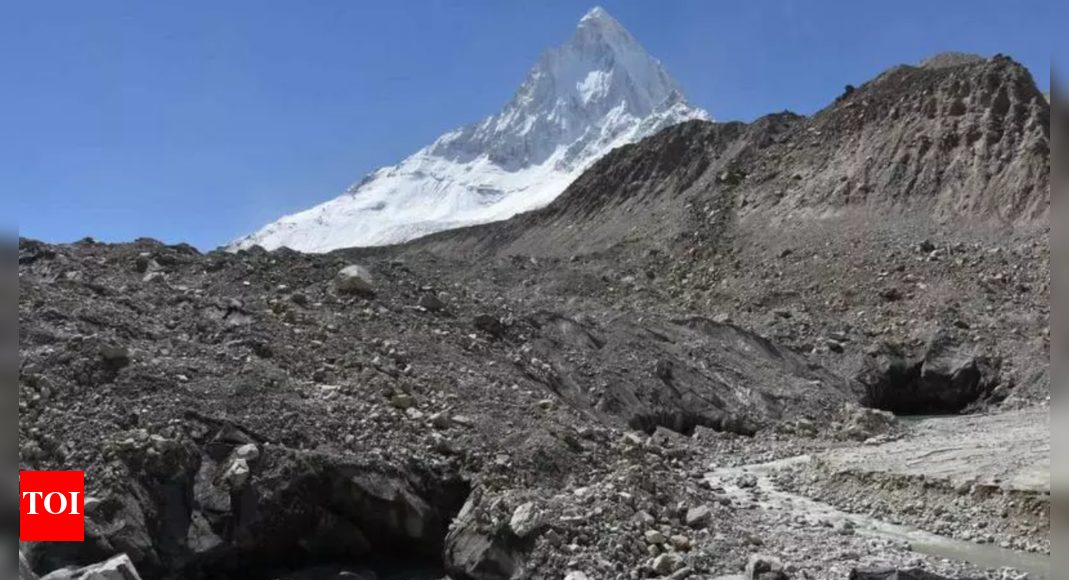
IIT-Indore: Gangotri Glacier Flow Over 4 Decades
A recent study conducted by researchers at IIT-Indore has unveiled significant changes in the streamflow of the Gangotri glacier over the past four decades. The findings indicate a shift in the timing of peak discharge from August to July, primarily due to a decline in snowmelt and an increase in rainfall contributions.
Key Findings of the Study
The study, which analyzed historical data and utilized computer modeling, reveals that the hydrological balance in the upper Bhagirathi basin is being altered by climate variability. The Gangotri glacier, one of the largest glaciers in the Himalayas, serves as the primary source for the Bhagirathi River, a major tributary of the Ganga. The research highlights the implications of these changes for hydropower, irrigation, and the livelihoods of communities in the upper Himalayan region.
Research Team and Methodology
The research team comprised Parul Vinze, Mohd Farooq Azam, Ghulam Hussain, Smriti Srivastava, Md Arif Hussain, and Umesh Haritashya. Their findings were published in the Journal of the Indian Society of Remote Sensing. Vinze, a PhD scholar at IIT-Indore’s Glaci-Hydro-Climate Lab, emphasized the importance of the long-term reconstruction in understanding how Himalayan headwaters are responding to climate shifts.
The study utilized a high-resolution glacio-hydrological model to estimate water release from various sources, including snow, glacier ice, rainfall, and underground sources. The model was calibrated using field discharge records from 2000 to 2003, satellite-derived glacier mass balance data from 2000 to 2019, and snow cover maps from NASA’s MODIS satellite system.
Streamflow Contributions
The research findings revealed the contributions to annual streamflow as follows:
- Snowmelt: 64%
- Glacier melt: 21%
- Rainfall-runoff: 11%
- Baseflow (underground sources): 4%
The average yearly discharge was measured at 28 ± 1.9 cubic meters per second, peaking at approximately 129 m³/s in July.
Climate Impact on Glacier Dynamics
Despite an increase in average annual temperatures, the study did not find a significant long-term increase in glacier melt or rainfall. Instead, it noted a decline in snowmelt contributions due to reduced snow cover, while runoff from rainfall and underground sources has increased. Azam, who supervised the study and serves as a senior intervention manager at the International Centre for Integrated Mountain Development in Kathmandu, stated, “This subtle but steady reshaping of the basin’s water balance signals that climate variability is already altering runoff seasonality.”
Key Drivers of Streamflow
The research identified summer rainfall and winter temperatures as critical drivers of annual streamflow. The correlation between summer rainfall and streamflow was found to be strong (r = 0.62), followed by winter temperatures (r = 0.52). This highlights the significant influence of seasonal climate patterns on water availability in the region.
Implications for Local Communities
Researchers warned that changes in meltwater timing and volume will have direct consequences for hydropower generation, irrigation, and local livelihoods in the upper Himalayan regions. Azam noted, “Any change in the timing and volume of meltwater directly affects irrigation, hydropower, and livelihoods in upper reaches.” The increasing vulnerability of Uttarakhand to floods, cloudbursts, and glacial lake outburst floods underscores the need for closer monitoring of glacier-fed rivers.
Future Research and Monitoring
The research team emphasized the importance of long-term field monitoring, high-resolution climate projections, and updated glacio-hydrological models to anticipate shifts in water availability. Azam remarked, “Accurate modeling, backed by field data, is key for anticipating shifts in water availability.” The changes in meltwater seasonality and runoff volume are expected to have severe impacts on hydropower generation and irrigation at higher elevations.
Historical Context
Historical records from the Wadia Institute of Himalayan Geology indicate that the Gangotri glacier has retreated more than 1,500 meters over the past 70 years. The IIT-Indore study confirms that beyond physical retreat, the glacier’s internal water dynamics are also changing, which could significantly affect the lives of millions living in the Ganga basin in the years to come.
Note: The findings of this study highlight the urgent need for adaptive strategies to manage water resources in the face of climate change, particularly in vulnerable regions like the Himalayas.