IIT Jodhpur Researchers Develop Ultra Light, Ultra Strong Super Metal For Use In Defence, Aerospace Sectors
Researchers at the Indian Institute of Technology (IIT) Jodhpur have made a significant breakthrough in materials science by developing a revolutionary titanium-aluminide (TiAl) alloy. This new material, named TiAl-CA, is expected to transform the aerospace and defence sectors, aligning with the Make in India initiative.
Key Features of TiAl-CA
The TiAl-CA alloy addresses long-standing challenges associated with lightweight metals, providing exceptional strength at high temperatures while remaining lightweight. Traditional metals used in aircraft engines often suffer from either excessive weight or a loss of strength under extreme conditions. In contrast, TiAl-CA maintains a gigapascal (GPa)-level yield strength even at temperatures reaching 900 degrees Celsius, a feat that current alternatives struggle to achieve.
Research Team and Publication
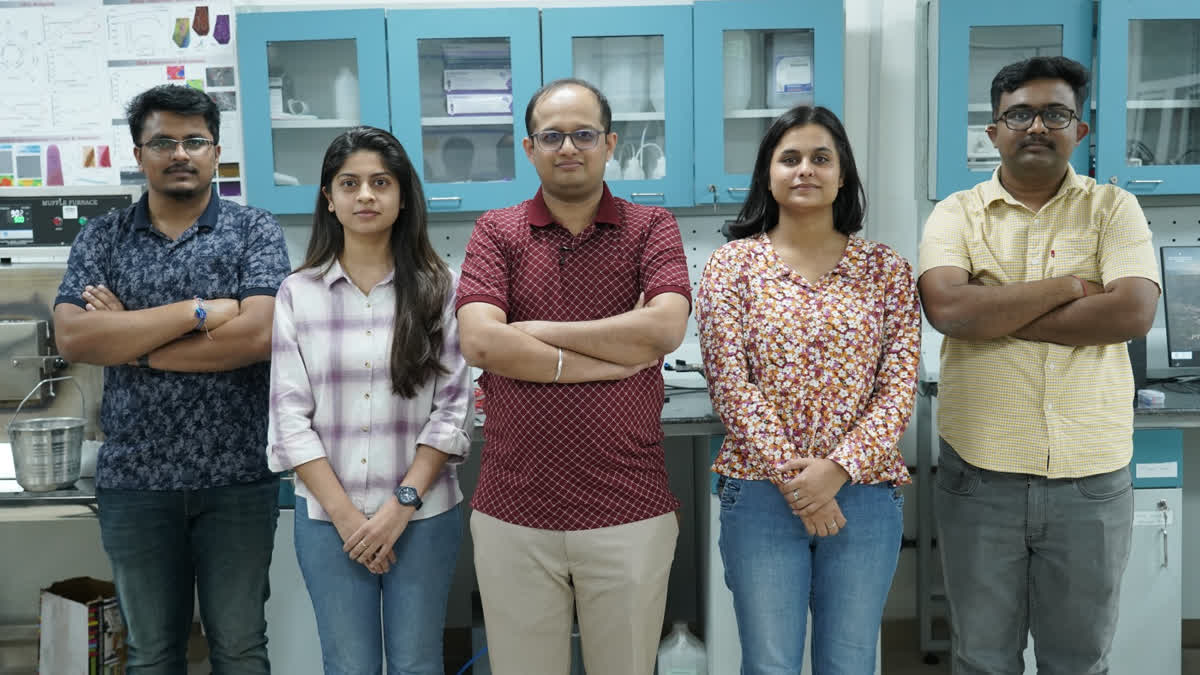
This groundbreaking research was led by Professor SS Naine, alongside his team members AR Balpande and A Dutta, from the Advanced Materials Design and Processing Group within the Department of Materials Engineering at IIT Jodhpur. Their findings were published in the prestigious journal Materials Horizons.
Innovative Properties
One of the standout features of the TiAl-CA alloy is its remarkable oxidation resistance, even at elevated temperatures. This characteristic represents a significant engineering advancement. Unlike previously developed TiAl alloys that required the addition of elements such as boron or carbon—often leading to brittleness and processing difficulties—TiAl-CA is developed without boron, enhancing its usability and performance.
Composition and Strength
The researchers meticulously mixed various metallic elements, including:
- Niobium (Nb)
- Molybdenum (Mo)
- Tantalum (Ta)
- Tungsten (W)
- Vanadium (V)
These elements were combined in precise proportions within a TiAl matrix, resulting in an alloy that is both extremely strong and flexible. The performance metrics of TiAl-CA are impressive, with a yield strength of approximately 1.1 GPa at room temperature, which it maintains even at 900 degrees Celsius.
Weight Advantages
In terms of density, TiAl-CA has approximately half the density (4.13 g/cc) of conventional nickel-based superalloys, which typically range from 7.75 to 9.25 g/cc. This ultralight and ultrastrong supermetal is poised to offer significant advantages in the manufacturing of fuel-efficient aeroengines. By reducing the weight of components used in aerospace and defence equipment, TiAl-CA can help save energy and lower carbon emissions.
Future Testing and Applications
The research team is currently preparing for creep and fatigue testing to further validate the practical applications of this next-generation material. The excellent properties of TiAl-CA also make it suitable for advanced 3D printing technologies, including electron beam melting (EBM) and laser powder bed fusion (LPBF), which are increasingly being adopted in the aerospace industry.
Conclusion
The successful development of the TiAl-CA alloy by IIT Jodhpur researchers marks a pivotal moment in materials engineering, particularly for the aerospace and defence sectors. Its unique properties promise to enhance performance while contributing to sustainability goals through reduced energy consumption and emissions.
Note: The advancements in material science such as TiAl-CA highlight the importance of research and innovation in addressing modern engineering challenges.