
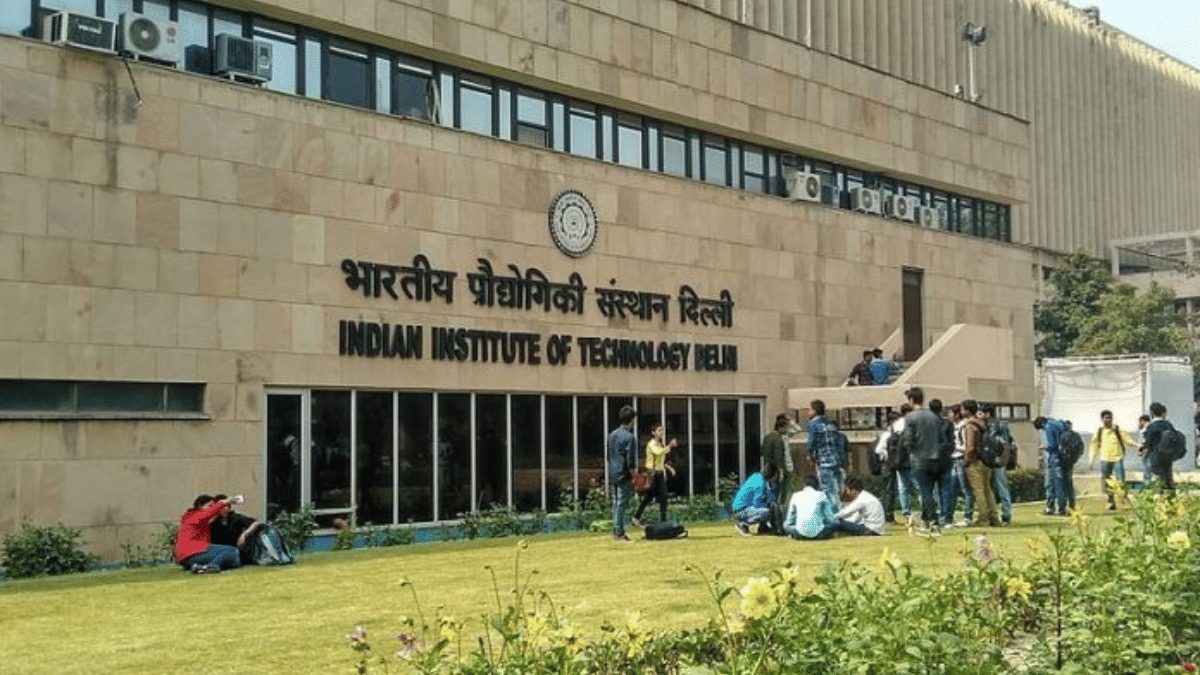
IIT-Delhi Retains Top Spot in QS World Rankings (Asia)
New Delhi: The Indian Institute of Technology Delhi (IIT-D) has maintained its position as the highest-ranked educational institution in India for the fifth consecutive year in the QS World University Rankings: Asia 2026. This ranking, released on November 4, 2025, highlights India’s growing academic footprint in Asia, particularly in faculty qualifications and research output, despite ongoing challenges in internationalization.
Ranking Overview
According to the latest QS rankings, IIT Delhi is placed 59th in Asia, followed closely by the Indian Institute of Science (IISc) Bengaluru at 64th, IIT Madras at 70th, IIT Bombay at 71st, IIT Kanpur at 77th, IIT Kharagpur also at 77th, and Delhi University at 95th. These seven institutions have successfully secured spots in the region’s top 100.
Decline in Rankings
Despite their presence in the top 100, several Indian universities have experienced a decline in their rankings compared to the previous year:
- IIT Delhi: fell from 44th to 59th
- IISc Bengaluru: fell from 62nd to 64th
- IIT Madras: fell from 56th to 70th
- IIT Kanpur: fell from 67th to 77th
- IIT Kharagpur: fell from 60th to 77th
- Delhi University: fell from 81st to 95th
Overall Progress in Indian Higher Education
Despite the declines, India has made significant strides in overall representation and research strength. Nineteen Indian universities achieved their highest-ever rankings, including:
- Chandigarh University (109th)
- BITS Pilani (154th)
- Shoolini University (163rd)
- O.P. Jindal Global University (163rd)
In total, India now boasts seven universities in Asia’s top 100, 20 in the top 200, and 66 in the top 500, reflecting the country’s expanding presence in Asian higher education.
Performance Metrics
The 2026 QS rankings evaluated 1,529 universities from 25 education systems, with 558 debut entries. China (Mainland) remains the most represented country with 395 universities, while India follows with 294, solidifying its position as Asia’s second most represented higher education system.
Insights from QS Quacquarelli Symonds
Jessica Turner, CEO of QS Quacquarelli Symonds, emphasized that India’s increasing representation is indicative of systemic growth since the launch of the National Education Policy (NEP) 2020. She stated, “In just five years since the NEP’s introduction, India has built globally relevant and locally empowering capacity.” The inclusion of over 130 Indian universities in this year’s rankings signals both depth and breadth. As research ecosystems mature and international partnerships expand, India is positioning itself as a global knowledge leader.
Top Universities in Asia
The University of Hong Kong topped the 2026 Asia rankings, followed by Peking University. Nanyang Technological University (NTU) and the National University of Singapore (NUS) shared third place.
Ranking Indicators
The rankings were based on 11 indicators, including:
- Academic Reputation
- Employer Reputation
- Faculty-Student Ratio
- Citations per Paper
- Papers per Faculty
- Staff with PhD
- International Research Network
- International Faculty
- International Students
- Inbound Exchange Students
- Outbound Exchange Students
Research Productivity and Faculty Qualifications
In India, IIT Bombay ranked 26th in Academic Reputation and 11th in Employer Reputation, the highest among Indian institutes on these parameters. Shoolini University of Biotechnology and Management Sciences excelled in Citations per Paper, while Maulana Abul Kalam Azad University of Technology (MAKAUT), West Bengal, ranked first in Asia for Papers per Faculty.
The report highlighted India’s strength in faculty qualifications and research productivity, noting that India leads Asia in the proportion of faculty with PhDs and in papers published per faculty. Five Indian universities rank among Asia’s top 10 for research productivity, with 28 in the top 50 and 45 in the top 100 for Staff with PhD.
Challenges in Internationalization
Despite these achievements, the report flagged internationalization as India’s weakest area. India continues to score below global averages in indicators such as International Faculty, International Students, and Student Exchange programs. The report noted, “India continues to face challenges in cross-border engagement and diversity, with low levels of international faculty presence, student mobility, and exchange participation.”
Conclusion
Despite the challenges, QS stated that India’s growing representation and leadership in research indicators mark an important step towards its ambition of becoming a global education and innovation hub.
Note: This article is based on the QS World University Rankings: Asia 2026 report and aims to provide an overview of the current state of higher education in India.


