India Hosts Landmark AI Summit, Prioritizing Human Impact Over Pure Tech
On February 12, 2026, India hosted the inaugural India AI Impact Summit 2026, a significant event that highlighted the importance of artificial intelligence (AI) in the Global South. This summit aimed to focus on the human impact of AI rather than just technological advancements, marking a pivotal shift in the discourse surrounding AI.
Mindful AI: A New Approach
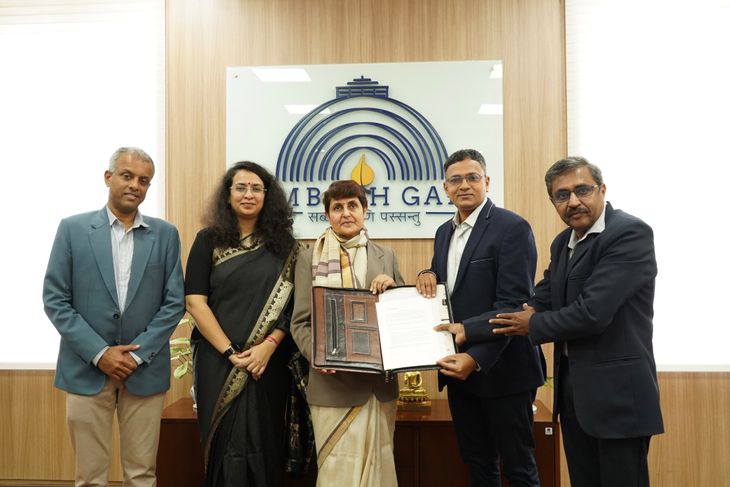
The Indian Institute of Management Bodh Gaya (IIM Bodh Gaya) is at the forefront of this movement, advocating for a ‘mindful AI’ approach. This philosophy integrates AI with sustainability, ensuring that future leaders are educated about the social, economic, and ecological implications of data-driven decisions. The institute has made it mandatory for all subjects to include components of AI and sustainability, aligning with the summit’s guiding principles known as the “Sutras” of People, Planet, and Progress.
Summit Highlights: A Shift Towards Human-Centric AI
The India AI Impact Summit 2026, held at Bharat Mandapam, emphasized the need for AI to contribute positively to society. This event is part of India’s broader vision of Viksit Bharat 2047, which aims to leverage technology to enhance governance and public service delivery on an unprecedented scale.
Key Themes of the Summit
- Human-Centric AI: The summit focused on how AI can be used to improve the lives of individuals, particularly in underserved communities.
- Governance and Public Service: Discussions centered on how AI can enhance the efficiency of public services and governance.
- Inclusivity: The importance of ensuring that AI technologies are accessible to all, particularly in rural areas.
Bridging the Digital Divide
A significant challenge identified during the summit is the digital literacy gap that exists in many parts of India, particularly in rural areas. IIM Bodh Gaya’s initiatives with Panchayati Raj leaders in rural Bihar highlighted that traditional keyboard-centric interfaces often hinder access to technology.
Innovative Solutions
To address these challenges, IIM Bodh Gaya is prioritizing the development of multi-modal and multilingual AI systems. Technologies such as voice recognition and Optical Character Recognition (OCR) are being implemented to allow rural leaders to interact with data using their natural voice and regional languages. This ‘applied AI’ approach empowers local leaders by making technology more accessible and user-friendly.
Center of Excellence and Governance Innovation
IIM Bodh Gaya is also planning to establish a Center of Excellence in AI that will focus on the intersection of AI and society. This center aims to foster collaboration between data analytics experts and policymakers to address real-world issues effectively.
Key Initiatives
- Chief Minister’s Fellowship Scheme (CMFS): Prototyping projects that focus on governance innovation.
- Executive Programs: Training public servants in AI tools to enhance their capabilities.
- Kisan E-Mitra: A project designed to provide agricultural advisories to farmers.
National Capacity Building and Future Wellbeing
The institute is also hosting the AICTE–QIP PG Certificate Programme (2026–27) along with other executive programs focused on AI and Machine Learning. These initiatives are designed to train leaders at all levels, from students to senior government officials.
Long-term Wellbeing
The “Progress” Sutra of the summit emphasizes the role of AI in promoting long-term wellbeing, including mental health. IIM Bodh Gaya is exploring the potential of AI to support mindfulness and mental health through personalized monitoring, ensuring that future leaders are equipped to be resilient and compassionate.
Conclusion
The ultimate success of India’s AI mission, as suggested by IIM Bodh Gaya, will be measured by its impact in villages and rural areas, rather than solely in global tech hubs. This focus on human impact over pure technological advancement marks a significant step forward in the responsible development and deployment of AI technologies.
Note: This content is for educational and informational purposes only and does not constitute investment, financial, or trading advice, nor a recommendation to buy or sell any securities. Readers should consult a SEBI-registered advisor before making investment decisions, as markets involve risk and past performance does not guarantee future results. The publisher and authors accept no liability for any losses. Some content may be AI-generated and may contain errors; accuracy and completeness are not guaranteed. Views expressed do not reflect the publication’s editorial stance.