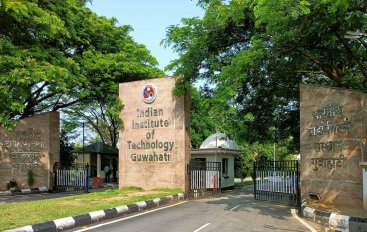
IIT Guwahati Develops Framework To Identify High-risk Areas For Glacial Lake Formation
The Indian Institute of Technology (IIT) Guwahati has made significant strides in understanding and addressing the risks associated with glacial lake formation in the Himalayan region. This initiative is particularly crucial as climate change continues to accelerate the melting of glaciers, leading to the formation of glacial lakes that pose risks of glacial lake outburst floods (GLOFs).
Understanding Glacial Lakes and Their Risks
Glacial lakes are bodies of water that form in depressions left by melting glaciers. While some of these lakes can be stable, others may become unstable and pose a significant threat to downstream communities. GLOFs can occur when the dam containing a glacial lake fails, leading to catastrophic flooding. Such events have been documented in various parts of the world, including the Himalayas, where the impact can be devastating.
The Need for a Predictive Framework
As climate change progresses, the rate of glacial melting is expected to increase, leading to the formation of new glacial lakes. This necessitates a robust framework to identify areas at high risk for glacial lake formation. The framework developed by IIT Guwahati aims to provide a predictive tool that can help in assessing these risks effectively.
Components of the Framework
The framework developed by IIT Guwahati incorporates various components that work together to identify high-risk areas for glacial lake formation:
- Data Collection: The first step involves gathering extensive data on glacier dynamics, topography, and hydrology. This data is crucial for understanding the conditions that lead to glacial lake formation.
- Remote Sensing Technology: The use of satellite imagery and remote sensing technology allows researchers to monitor changes in glaciers and identify potential lake sites.
- Modeling Techniques: Advanced modeling techniques are employed to simulate glacial behavior and predict future lake formation scenarios. This includes analyzing factors such as temperature, precipitation, and glacier retreat rates.
- Risk Assessment: The framework also includes a risk assessment component that evaluates the potential impact of GLOFs on nearby communities and infrastructure.
Implementation and Applications
The implementation of this framework can have far-reaching implications for disaster management and environmental conservation in the Himalayan region. Some potential applications include:
- Disaster Preparedness: By identifying high-risk areas, local authorities can develop contingency plans and early warning systems to mitigate the impact of GLOFs.
- Infrastructure Planning: The framework can guide infrastructure development in areas prone to glacial lake formation, ensuring that critical facilities are built with adequate safety measures.
- Environmental Conservation: Understanding glacial dynamics can aid in the conservation of fragile ecosystems that are threatened by climate change.
Challenges Ahead
While the framework developed by IIT Guwahati represents a significant advancement, there are still challenges to overcome:
- Data Limitations: Access to comprehensive and high-quality data can be a challenge, especially in remote regions of the Himalayas.
- Climate Variability: The unpredictable nature of climate change adds complexity to modeling efforts, making it difficult to predict future scenarios accurately.
- Community Engagement: Engaging local communities in understanding and implementing the findings of the framework is essential for its success.
Conclusion
The framework developed by IIT Guwahati is a pioneering step towards better understanding and managing the risks associated with glacial lake formation in the Himalayas. As climate change continues to pose threats to these vital ecosystems, such innovative approaches will be essential for safeguarding communities and preserving the environment.
Note: The information presented in this article is based on research and developments up to October 2023. For the latest updates and advancements in this field, please refer to official publications and announcements from IIT Guwahati.