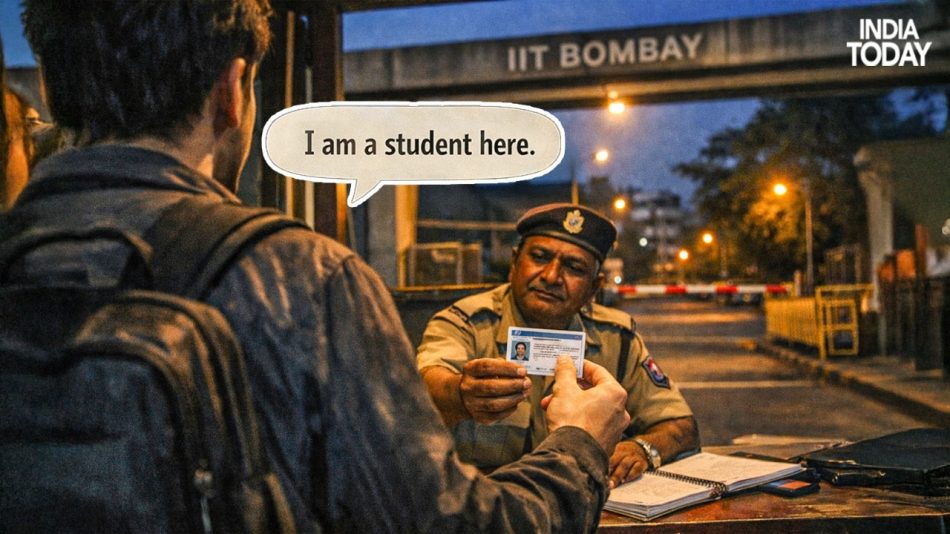
How struggling actor posed as IIT Bombay student, lived in hostel for months
A struggling actor managed to live in one of IIT Bombay’s hostels for four months without anyone realizing he wasn’t a student. This incident raises significant questions about the security measures at one of India’s premier institutes, especially in light of recent events involving illegal activities on campus.
The Incident
The story comes to light following the discovery of live bullets in a BTech student’s bag at IIT Bombay. The student, Anand Chaudhary, was arrested for illegally accommodating a visitor in his room. This incident is not isolated; in June 2025, another outsider, Bilal Ahmad Teli, impersonated a PhD scholar and lived on campus for nearly a month, attending classes and seminars without detection.
Security Concerns
The lax security at IIT Bombay is surprising, considering it is one of India’s top educational institutions. Alumni from various premier institutes, including Jawaharlal Nehru University (JNU) and the University of Delhi (DU), have noted that the presence of non-students in hostels is not uncommon. However, the fact that this occurred in a reputed institution in a relatively safe city is alarming.
How the Actor Gained Access
We spoke with Devang Sharma (name changed), who shared his experience of living in IIT Bombay’s hostel while pursuing his dreams in the film industry. Sharma, who had given up on his aspirations eight years ago, revealed how he managed to stay on campus without being a student.
Background
Sharma came from an upper middle-class family and always dreamed of a career in cinema. However, his family discouraged him from attending film school, leading him to pursue an engineering degree followed by an MBA. Despite his educational background, Sharma faced immense pressure from his family to succeed in a traditional career.
Struggles in the Film Industry
Sharma attempted to break into the film industry from 2015 to 2018 but found it challenging to establish himself. After failing to secure a stable position in the industry, he returned to a conventional job in a public sector unit in Uttar Pradesh. During his time in Mumbai, he sought the cheapest accommodation options available.
Entering IIT Bombay
With no place to stay upon arriving in Mumbai, Sharma reached out to a friend who was pursuing a master’s degree at IIT Bombay. This friend facilitated his entry into the hostel by allowing him to stay in his room under the pretense that Sharma was a research scholar.
Living in the Hostel
At the time, outsiders were generally prohibited from staying in student accommodations. However, Sharma’s friend managed to sneak him into the hostel, specifically House of Titans, where he resided for four months. Sharma explained that while guests were allowed in guest houses on campus, the student hostels had strict regulations.
Blending In
Sharma’s background in English and his experience in the film industry helped him blend in with the student population. He dressed well and maintained a schedule that did not raise suspicion. Most of his auditions and shoots occurred during the day, allowing him to enter and exit the hostel without attracting attention.
Security Lapses
When asked about the ease of gaining access to the hostel, Sharma likened it to checking into a hotel, noting the lack of ID checks and tariffs. Initially, he was accompanied by his friend, but as he became more familiar with the environment, he began to navigate the campus independently. The watchmen, who recognized him over time, contributed to his confidence.
Feeling at Home
As time passed, Sharma began to feel like a student himself. He participated in conversations with other research scholars and immersed himself in the campus culture, all while focusing on his auditions. The experience, although built on deception, provided him with a sense of belonging during a tumultuous period in his life.
Conclusion
The story of Devang Sharma highlights significant security concerns at IIT Bombay and raises questions about the effectiveness of measures in place to protect students and the integrity of the institution. While the allure of campus life is undeniable, the implications of unauthorized access to such a prestigious establishment are serious and warrant attention.
Note: The names and certain details in this article have been changed to protect the identities of individuals involved.