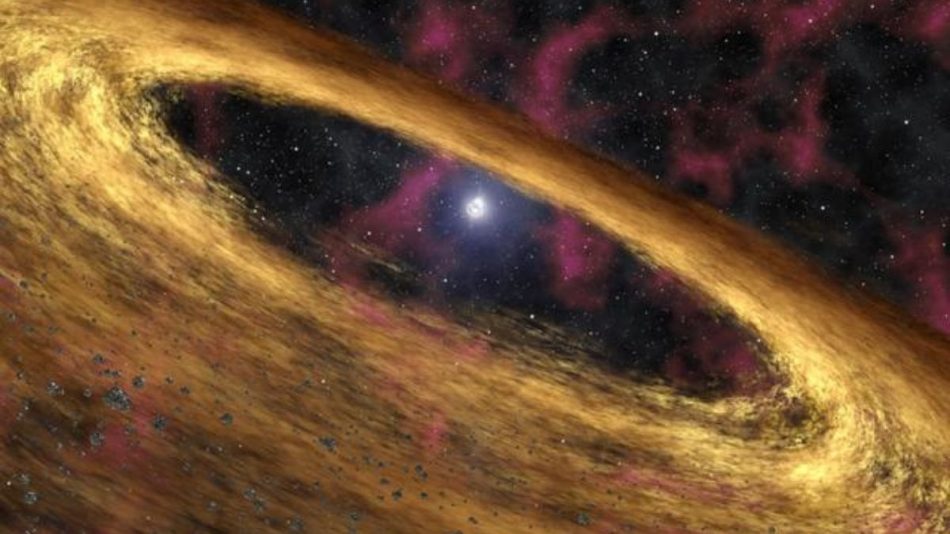
Indian astronomers devise clever method to find dead suns in deep space
Scientists from the Indian Institute of Technology (IIT) Kanpur and the National Centre for Radio Astrophysics (NCRA) Pune have made a groundbreaking advancement in the field of astrophysics. They have developed an innovative method to measure the distances of pulsars, which are remnants of dead stars that emit regular pulses of radio waves. This research not only enhances our understanding of these celestial objects but also contributes to a more accurate mapping of the Milky Way galaxy.
The Challenge of Measuring Pulsar Distances
For decades, astronomers have faced significant challenges in determining how far pulsars are from Earth. While the positions of these stars in the sky are well documented, calculating their distance in the vastness of space has proven to be a complex puzzle. The new research, published in the Monthly Notices of the Royal Astronomical Society, provides a clever solution to this longstanding issue.
Innovative Measurement Techniques
The research team employed two specific phenomena that affect radio waves as they traverse space: dispersion and scattering.
- Dispersion: This occurs when radio waves from a pulsar are delayed by varying amounts depending on their wavelength as they pass through free electrons in space.
- Scattering: This phenomenon happens when radio signals encounter clumps of turbulent gas, causing the waves to take slightly different paths and arrive at Earth as a smeared or broadened pulse.
As a pulsar’s signal travels to Earth, it passes through a thin mist of particles known as the interstellar medium. This medium acts like a cosmic obstacle course, delaying the signal based on its wavelength and scattering the light, which results in smeared pulses. By measuring both dispersion and scattering simultaneously, the researchers can accurately determine the amount of material the signal has traversed, allowing for a more reliable distance calculation.
Testing the Method on the Gum Nebula
The team tested their innovative approach on the Gum Nebula, a massive cloud of gas located in the southern sky. Their findings indicate that this method could be applied to hundreds of other known pulsars. Furthermore, it may aid in understanding Fast Radio Bursts (FRBs), which are powerful flashes originating from beyond our Milky Way galaxy.
Implications for Astronomy
This breakthrough in pulsar distance measurement has far-reaching implications for the field of astronomy. By providing a clearer understanding of the true brightness and speed of these stars, the research offers a more accurate map of our galactic neighborhood. The IIT Kanpur and NCRA Pune team’s work eliminates the guesswork associated with older models, equipping the global scientific community with a sharper lens to explore the universe.
Pulsars as Cosmic Lighthouses
Pulsars serve as cosmic lighthouses, emitting regular flashes that reveal hidden particles scattered between stars. Although space may appear empty, it is filled with electrons that distort light, complicating the task of determining whether a star is faint or simply very distant. The Gum Nebula, with its massive gas structure, provides an ideal laboratory for scientists to study how radio waves scatter over vast distances.
Future Research Directions
By applying the principles used in pulsar research, astronomers hope to pinpoint the origins of mysterious radio flashes from other galaxies. The ability to measure distances more accurately could lead to significant advancements in our understanding of the universe’s structure and the behavior of celestial phenomena.
Conclusion
The innovative method developed by Indian astronomers at IIT Kanpur and NCRA Pune represents a significant leap forward in astrophysics. By enhancing our ability to measure pulsar distances, this research not only contributes to a better understanding of these fascinating celestial objects but also aids in the broader goal of mapping the Milky Way galaxy with greater precision. As scientists continue to explore the universe, the insights gained from this study will undoubtedly pave the way for future discoveries.
Note: The information presented in this article is based on research published in the Monthly Notices of the Royal Astronomical Society and other scientific sources.