
IIT-Ropar is bringing AI to agriculture. ‘It will engage youth in this sector’
Punjab’s Indian Institute of Technology (IIT) Ropar is at the forefront of integrating artificial intelligence (AI) into the agricultural sector. Established as part of the Ministry of Education’s initiative to enhance AI research in India, IIT Ropar’s agricultural-focused AI Centre of Excellence, known as Annam.ai, aims to revolutionize farming practices and engage the youth in this crucial sector.
The Need for AI in Agriculture
With Punjab contributing over 10% of India’s rice production, the state’s agricultural landscape is vital to the nation’s food security. However, there is a growing trend among the youth to shy away from farming. According to Professor Rajeev Ahuja, Director of IIT Ropar, this shift poses a challenge to the agricultural sector. He believes that by incorporating technology and AI into agriculture, the institute can attract young talent back into the field.
Innovative Solutions at IIT Ropar
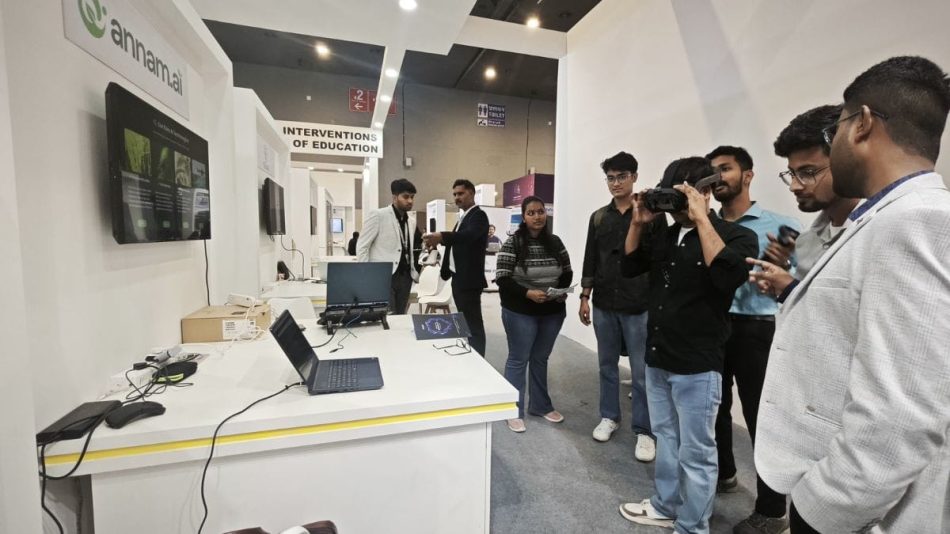
At the recent AI Impact Summit in New Delhi, IIT Ropar showcased several innovative solutions aimed at enhancing agricultural productivity:
- Hyper-local Weather Forecasting Stations: These AI-powered weather stations provide farmers with precise weather data, helping them make informed decisions about planting and harvesting.
- Multilingual Chat Engine: This AI-driven chatbot offers real-time agricultural advice, making it easier for farmers to access information on farming techniques, soil testing, and market prices.
- Digital Twin Application for Crops: This application allows farmers to simulate and analyze crop growth, optimizing farming practices.
Weather Stations and Their Impact
One of the standout innovations from Annam.ai is the deployment of over 4,000 AI-based weather stations across India. These stations utilize Internet of Things (IoT) sensors and AI predictive capabilities to deliver hyper-local weather data. According to Divya Monga, Innovation Program Manager at Annam.ai, these stations have been verified for over 90% accuracy by IITM Pune. The data provided helps farmers understand weather patterns, including rainfall and humidity levels, which are critical for effective farming.
Educational Initiatives
In addition to technological innovations, IIT Ropar has launched a BTech program in Digital Agriculture, which began in 2025. This four-year degree program aims to equip students with the skills necessary to apply digital and AI technologies in agriculture. Professor Ahuja noted that the initial 20 seats for the program were quickly filled, indicating strong interest from students in this emerging field.
Practical Applications and Collaborations
The initiatives at IIT Ropar extend beyond education and technology development. The institute is actively collaborating with the Punjab government and various farmer-producer organizations (FPOs) to test and validate their AI models. This hands-on approach ensures that the solutions developed are practical and meet the real-world needs of farmers.
Moreover, IIT Ropar has established agri-tech hubs in states like Uttar Pradesh and signed memorandums of understanding (MoUs) with organizations in Tamil Nadu and Haryana. These collaborations aim to integrate AI at every stage of the agricultural process across the country.
The Vision for the Future
Professor Ahuja envisions a future where India leads the world in AI applications, not only in agriculture but across various sectors. He emphasizes that the country possesses the necessary skills, manpower, and vision to achieve this goal. The ongoing projects at IIT Ropar serve as a testament to the potential of AI in transforming agriculture and engaging the youth.
Conclusion
IIT Ropar’s commitment to integrating AI into agriculture represents a significant step towards modernizing the farming sector in India. By providing innovative solutions and educational opportunities, the institute aims to inspire the next generation of farmers and technologists. As AI continues to evolve, its applications in agriculture could play a crucial role in ensuring food security and sustainability in the years to come.
Note: The information presented in this article is based on the latest developments as of February 2026 and may be subject to change.


