IIT Roorkee opens molecular medicine facility to boost biomedical and drug discovery research
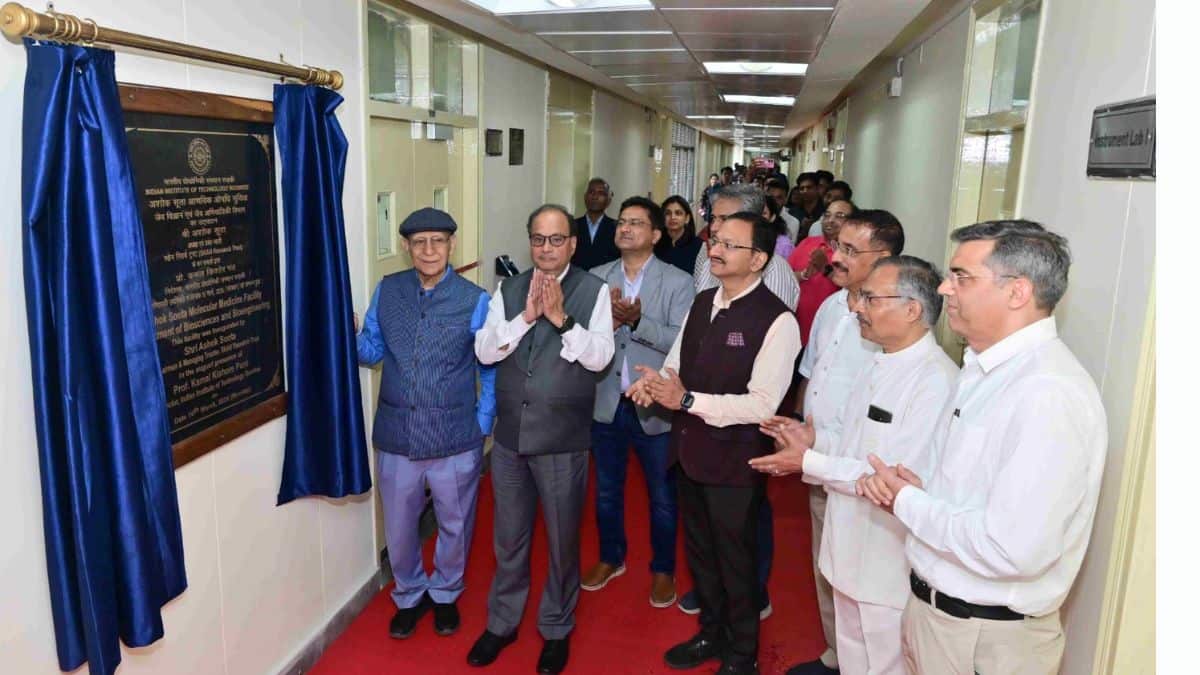
On March 16, 2026, the Indian Institute of Technology Roorkee (IIT Roorkee) inaugurated the Ashok Soota Molecular Medicine Facility at its Department of Biosciences and Bioengineering. This new research facility aims to enhance research capabilities in molecular medicine, drug discovery, and disease studies, thereby contributing to the advancement of healthcare and biomedical science.
Inauguration Ceremony
The facility was inaugurated by Ashok Soota, an esteemed alumnus of IIT Roorkee, in the presence of K. K. Pant, the director of the institute, along with faculty members, researchers, and industry representatives. The establishment of this facility is part of IIT Roorkee’s initiative to strengthen its research infrastructure and support cutting-edge studies related to healthcare.
Objectives of the Molecular Medicine Facility
The Ashok Soota Molecular Medicine Facility is designed to facilitate research in various critical areas, including:
- Studying diseases
- Identifying biological targets
- Developing diagnostic methods
- Discovering potential drug molecules
Research conducted at this facility will encompass a wide range of health issues, including:
- Cancer
- Neurological conditions
- Metabolic disorders
- Infectious diseases
Advanced Research Instruments
The facility is equipped with state-of-the-art research instruments that are essential for modern biological research. Some of the key instruments available include:
- Protein purification systems
- High-Performance Liquid Chromatography (HPLC) and Ultra-Performance Liquid Chromatography (UPLC) systems
- Gas Chromatography-Mass Spectrometry (GC-MS)
- Flow cytometer
- Confocal microscope
- Equipment for protein crystallization and molecular analysis
These advanced tools will enable researchers to conduct experiments related to biomolecular interactions, structural studies, and laboratory testing necessary for developing diagnostics and treatments.
Strengthening Research in Biosciences
K. K. Pant, the director of IIT Roorkee, emphasized the importance of the new facility in strengthening the institute’s research work in biosciences and bioengineering. He stated, “The integration of advanced infrastructure with interdisciplinary expertise will accelerate translational research and contribute meaningfully to national priorities in healthcare innovation, precision medicine, and scientific self-reliance.”
Vision for Research and Collaboration
Ashok Soota highlighted the necessity of building robust research facilities to translate scientific discoveries into practical benefits for society. He remarked, “India possesses immense scientific talent, and it is equally critical to provide world-class infrastructure and collaborative platforms to enable innovation at scale. I am proud to see IIT Roorkee strengthening its capabilities in molecular diagnostics, precision medicine, and drug discovery, contributing to healthcare solutions of both national and global relevance.”
Encouraging Collaboration
Prof. Pravindra Kumar, the head of the institute’s instrumentation center, stated that the facility will be accessible to researchers, scholars, and industry partners working in related fields. The center aims to foster collaboration between academia and industry, thereby supporting research in molecular medicine and translational biosciences.
Conclusion
The establishment of the Ashok Soota Molecular Medicine Facility at IIT Roorkee marks a significant step forward in enhancing research capabilities in the fields of biomedical science and drug discovery. With its advanced infrastructure and focus on interdisciplinary collaboration, the facility is poised to make substantial contributions to healthcare innovation and scientific research in India.
Note: This article is based on the latest developments at IIT Roorkee as of March 2026.