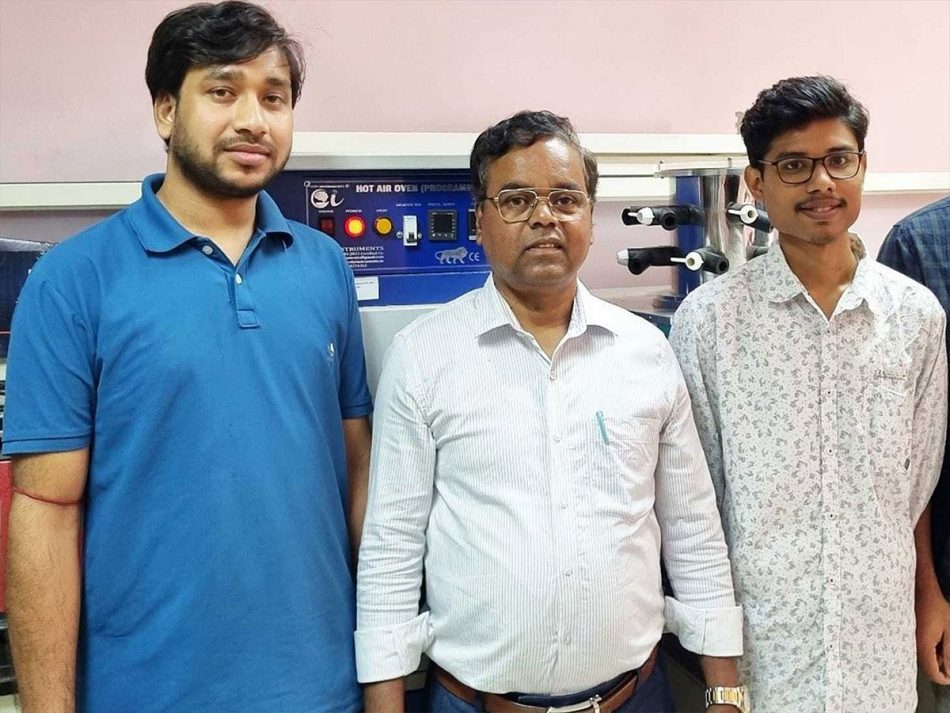
IIT Guwahati creates material for sustainable hydrogen, drinking water
Researchers at the Indian Institute of Technology (IIT) Guwahati have made significant advancements in the field of sustainable energy and water purification. They have developed a novel material capable of generating hydrogen fuel through the electrolysis of water, while also supporting the desalination of seawater using solar energy. This dual functionality addresses two pressing global challenges: the reliance on fossil fuels and the shortage of safe drinking water.
Hydrogen Production through Electrolysis
The process of water splitting, essential for hydrogen production, typically requires a thermodynamic potential of 1.23 volts. However, the new material developed by the IIT Guwahati team exhibits an ultralow hydrogen evolution reaction (HER) overpotential of only 12 millivolts. This remarkable performance surpasses that of the commercially available platinum/carbon (Pt/C) electrode, showcasing the material’s exceptional electrocatalytic capabilities.
Addressing Environmental Challenges
The increasing environmental damage caused by fossil fuel usage has necessitated the search for cleaner energy alternatives. Hydrogen is often hailed as a clean fuel, as its combustion produces only water vapor without emitting carbon dioxide (CO₂). Nevertheless, the majority of hydrogen currently in use is derived from fossil fuels, highlighting the urgent need for more sustainable production methods.
The Water Crisis and Desalination
Alongside the energy crisis, the world faces a significant shortage of safe drinking water. Desalination of seawater presents a viable solution; however, it is often an expensive process. Utilizing solar energy for desalination can offer a cost-effective alternative, making it accessible to more communities. In response to these challenges, the IIT Guwahati research team has engineered a MXene-based catalyst that efficiently produces hydrogen from water while simultaneously acting as a photocatalyst for desalination.
Understanding MXenes
MXenes are a family of two-dimensional materials recognized for their high electrical conductivity and other beneficial properties. Despite their advantages, conventional MXenes have a relatively low active surface area, which limits their catalytic performance. To enhance the material’s effectiveness, the researchers modified it into ultra-thin, ribbon-like structures, thereby improving charge transport and increasing the active surface area available for reactions.
Enhancing Catalytic Performance
To further boost the catalytic performance of the MXene material, the researchers introduced ruthenium atoms into oxygen-vacant sites within the engineered structure. This modification is believed to strengthen metal-support interactions, leading to significantly improved catalytic activity. Advanced computational modeling was employed to understand how these atomic-level changes contributed to the enhanced performance of the material.
Experimental Findings
During experimental trials, the team observed that the engineered MXene material effectively catalyzed the hydrogen evolution reaction when a small amount of additional energy was supplied. The material demonstrated superior performance under simulated sunlight conditions due to its excellent photothermal conversion capabilities. Furthermore, it maintained stability over prolonged periods, exhibiting minimal performance decline.
Innovative Application: The Janus Evaporator
As part of their research, the team integrated the MXenes into a specially designed three-dimensional structure known as a Janus evaporator. This innovative device floats on water, efficiently reducing energy loss by heating only the surface layer. Under standard sunlight conditions, the Janus evaporator achieved an evaporation rate of approximately 3.2 kg/m²/h. It was tested continuously for five days in saltwater, successfully avoiding salt deposition. The system effectively removed salts and other contaminants, producing water that meets international quality standards for human consumption.
Implications for Sustainable Development
The findings from this research highlight the potential of the dual-functional system to support solar-powered desalination and promote sustainable hydrogen production. The implications of this work extend to various sectors, including transportation, industry, and energy storage. The development of such materials aligns with global efforts to transition towards cleaner energy sources and improve access to safe drinking water.
Conclusion
In conclusion, the research conducted by IIT Guwahati represents a significant step forward in addressing two critical global challenges: the need for sustainable hydrogen fuel and the shortage of safe drinking water. By leveraging innovative materials like MXenes and advanced engineering techniques, the team has opened new avenues for clean energy solutions and water purification methods.
Note: This article is based on research findings published in the journal Advanced Functional Materials and reflects the work of Prof. PK Giri and his research team at IIT Guwahati.