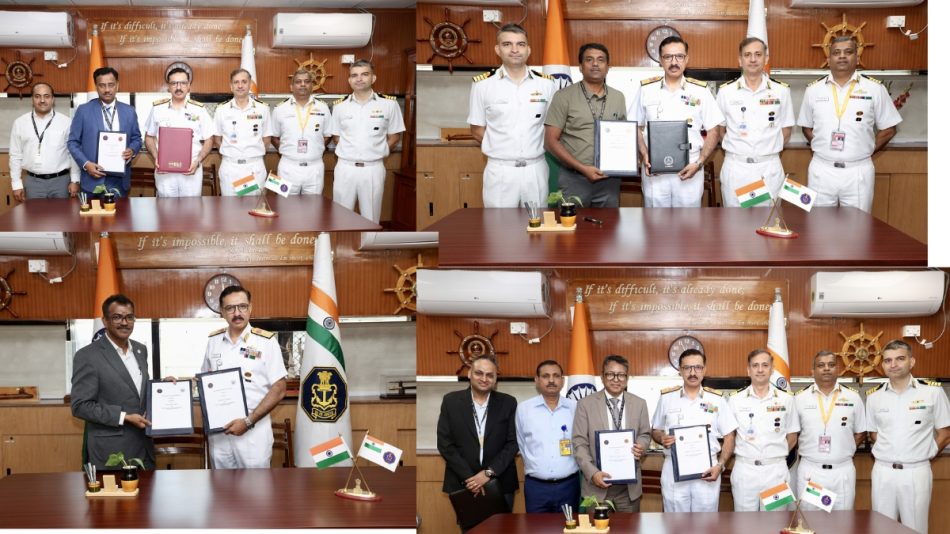
Indian Navy Signs MoUs with IIT Madras, IOCL, CSL, and MDL to Boost Marine Engineering Innovation
New Delhi, March 18, 2026: In a significant move aimed at enhancing India’s maritime capabilities, the Indian Navy has entered into Memorandums of Understanding (MoUs) with several prominent institutions and companies, including the Indian Institute of Technology (IIT) Madras, Indian Oil Corporation Limited (IOCL), Cochin Shipyard Limited (CSL), and Mazagon Dock Shipbuilders Limited (MDL). This collaboration is set to advance training, technology development, and innovation in the field of marine engineering.
Objectives of the MoUs
The primary goal of these agreements is to foster collaboration across various sectors, focusing on:
- Training programs for personnel involved in marine engineering.
- Development of cutting-edge technologies tailored for naval applications.
- Field-level solutions that address the current challenges in marine engineering.
Key Features of the Collaboration
The MoUs will enable a variety of initiatives, including:
- Workshops designed to enhance skills and knowledge among participants.
- Courses that cover the latest advancements in marine engineering.
- Technical visits to facilitate hands-on learning and exposure to real-world applications.
- Joint research projects aimed at driving innovation and technological advancement.
Signatories and Their Roles
The agreements were signed by Rear Admiral Vikas Chawla, who serves as the Assistant Chief of Materiel (Dockyard & Refits) for the Indian Navy. He was joined by representatives from each of the partnering institutions:
- IIT Madras: A premier engineering institution known for its research and innovation in technology.
- IOCL: A major player in the oil and gas sector, contributing expertise in energy solutions.
- CSL: A leading shipyard that plays a crucial role in shipbuilding and repair.
- MDL: Renowned for its shipbuilding capabilities, particularly in naval vessels.
Significance of the MoUs
This partnership is pivotal in reinforcing India’s vision of Atmanirbhar Bharat, or self-reliant India. By promoting indigenous solutions and technological self-sufficiency, the Indian Navy aims to:
- Enhance the nation’s defense capabilities through advanced marine engineering.
- Reduce reliance on foreign technologies and solutions.
- Encourage innovation and skill development within the country.
Expected Outcomes
The collaboration is expected to yield several positive outcomes, including:
- Improved training and skill development for personnel in the maritime sector.
- Innovative solutions tailored to the unique challenges faced by the Indian Navy.
- A stronger framework for research and development in marine engineering.
- Enhanced collaboration between academia, industry, and defense sectors.
Future Prospects
As the Indian Navy embarks on this collaborative journey, the focus will remain on creating a robust ecosystem for marine engineering innovation. The MoUs will serve as a foundation for:
- Long-term partnerships that extend beyond the initial agreements.
- Continuous improvement in training methodologies and technological advancements.
- Increased participation from other academic and industrial stakeholders in future projects.
Conclusion
The signing of these MoUs marks a significant milestone in India’s efforts to bolster its maritime capabilities through collaboration and innovation. By leveraging the expertise of IIT Madras, IOCL, CSL, and MDL, the Indian Navy is poised to enhance its operational efficiency and technological prowess, ultimately contributing to the nation’s defense and maritime objectives.
Note: The information provided in this article is based on the latest updates as of March 18, 2026, and is subject to change as new developments occur.