
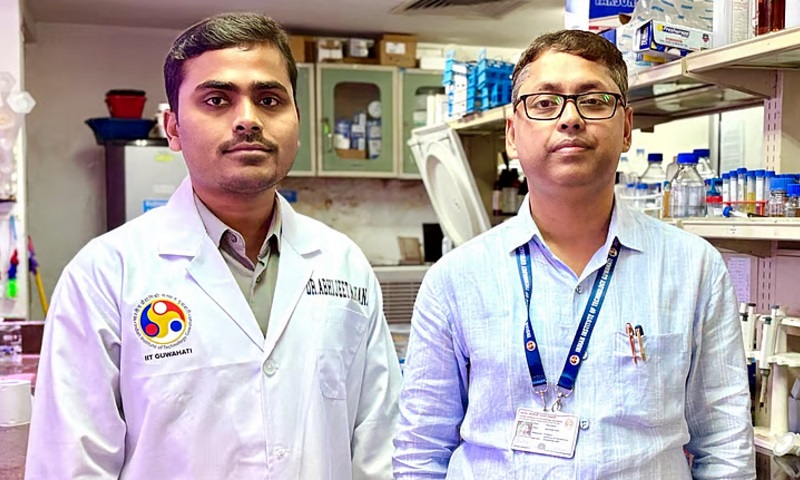
Assam: IIT Guwahati Develops Low-Cost, Natural Method to Remove Toxic Lead from Water
Researchers at the Indian Institute of Technology (IIT) Guwahati have made significant strides in addressing lead contamination in water. They have developed a low-cost and natural method to remove toxic lead using cyanobacteria, which are tiny photosynthetic microorganisms found in nature. This innovative approach promises to provide an effective solution to a pressing environmental issue.
The Problem of Lead Contamination
Lead contamination poses a major environmental threat, affecting over 800 million children globally, with 275 million of those in India alone. Lead can enter water sources through various means, including:
- Industrial waste
- Agricultural runoff
- Ageing pipelines
Once present in water, lead can persist for decades, leading to serious health issues such as neurological, kidney, cardiovascular, and developmental problems.
Traditional Treatment Methods
Conventional methods for treating lead-contaminated water often rely on expensive chemicals or synthetic adsorbents. These methods can sometimes create secondary pollution, which further complicates the issue. The need for more sustainable and cost-effective solutions has never been greater.
Innovative Solution: Bioremediation Using Cyanobacteria
To tackle this issue, the research team at IIT Guwahati utilized bioremediation, a natural process where microorganisms remove harmful substances from the environment. The study was led by:
- Prof. Debasish Das from the Department of Biosciences and Bioengineering
- Dr. Abhijeet Mahana
- Prof. Tapas K. Mandal from the Department of Chemical Engineering
The researchers focused on a specific cyanobacterial species known as Phormidium corium NRMC-50. They identified exopolysaccharides (EPS) produced by these bacteria as the most effective component for lead removal. Remarkably, EPS was able to remove up to 92.5% of lead from contaminated water.
Benefits of the New Method
Prof. Das highlighted several advantages of this innovative approach:
- Low energy consumption
- Scalability without complex infrastructure
- Cost reduction of 40–60% compared to traditional methods
- Eco-friendly nature, making it suitable for industries and municipalities
Moreover, the researchers noted that cyanobacteria could capture other pollutants, including pesticides, dyes, and various industrial chemicals. The metals absorbed can later be recovered for producing biochar, bioplastics, or biofuels, adding further value to the process.
Sustainability and Future Plans
Cyanobacteria are self-replicating organisms that require only sunlight, carbon dioxide, and a few nutrients to thrive. This makes the method a sustainable alternative to synthetic water treatments. The research team plans to scale their findings from laboratory experiments to a pilot system, which will allow them to test the method under real wastewater conditions.
Conclusion
The development of this low-cost, natural method for removing toxic lead from water by IIT Guwahati represents a significant advancement in environmental science and public health. By utilizing the natural capabilities of cyanobacteria, this approach not only addresses the urgent issue of lead contamination but also promotes sustainability and cost-effectiveness in water treatment practices.
Note: This article is based on research findings and aims to inform readers about innovative solutions to environmental challenges.


