I tried to prove I'm not AI. My aunt wasn't convinced
In a world increasingly dominated by artificial intelligence, the line between human and machine is becoming increasingly blurred. This reality was brought home to me during a recent conversation with my aunt, Eleanor. I had an experiment in mind that would test whether someone who has known me my entire life could distinguish between my real self and an AI deepfake.
The Experiment
I called my aunt and explained the premise of my experiment: she would either be speaking to me or an AI-generated voice mimicking me. At first, she was skeptical. “Well, it sounds like you,” she remarked. “I think a real person uses a lot more inflection than I would expect an AI-generated voice to use.” While her observation was valid, I reminded her that AI technology has advanced significantly.
After a moment of hesitation, she admitted, “I was like 90% sure, but that sounded more artificial.” This exchange highlighted a growing concern: how do we prove our humanity in an age where AI can convincingly replicate human behavior and speech?
Deepfake Dilemmas
The typical concern surrounding deepfakes is the risk of being deceived. AI-generated content has been used to scam individuals, spread misinformation, and even influence elections. However, a more pressing question arises: what happens when someone accuses you of being a deepfake? How can you prove you are real?
This dilemma was recently faced by Israeli Prime Minister Benjamin Netanyahu. He posted a video that caused a stir on social media, as it appeared to show him with a glitchy sixth finger, a common indicator of AI manipulation. Speculation erupted that he had died in a missile strike, leading to widespread rumors and conspiracy theories. In response, Netanyahu released a follow-up video from a coffee shop, where he held up his hands to demonstrate that he had the usual number of fingers.
Expert Opinions
Experts agree that Netanyahu’s videos are genuine. Jeremy Carrasco, co-founder of Riddance, an independent publication focused on AI-generated media, analyzed the footage and concluded, “In short, they’re all real, and they are all just showing normal things that happen in videos.” The supposed sixth finger was merely light reflecting off his palm, not an indication of AI manipulation.
Hany Farid, a digital forensics professor at the University of California, Berkeley, also confirmed the authenticity of Netanyahu’s videos. His team conducted a thorough analysis, including voice analysis and frame-by-frame detection of facial features. “There’s no evidence that this is AI-generated,” Farid stated. Despite this, skepticism remained, and even a third video released by Netanyahu failed to convince some critics.
Can Anyone Prove They’re Real?
After considering the challenges faced by Netanyahu, I turned the focus back to myself. If a prominent world leader struggles to prove his authenticity, what chance do I have? I reached out to experts for their insights on how one might demonstrate their humanity in an increasingly skeptical world.
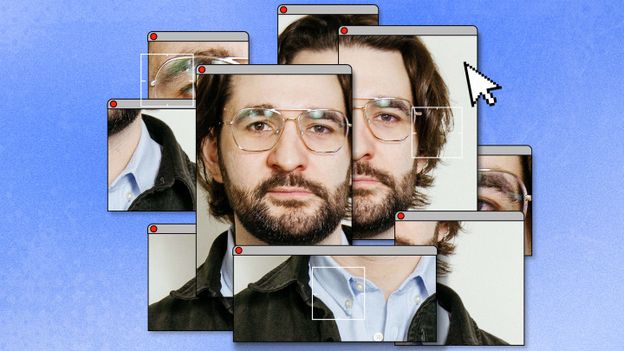
During my discussion with Farid, I asked if there was anything I could do in real-time to prove I wasn’t an AI. His response was disheartening: “No.” He explained that while there are indicators that could make it less likely I was an AI, such as the physical consistency of my movements and the reflections in my glasses, ultimately, he couldn’t be 100% certain. “The reality is that you could be faking this,” he noted.
The Challenges of Verification
Another expert, Woolley, echoed Farid’s sentiments. He suggested that verifying someone’s identity, even for those familiar with technology, is increasingly difficult. “For the average person, and even for people who are savvy to technological manipulation, it is very difficult to verify that someone is real,” he said. In a world where AI-generated content is becoming more prevalent, the challenge of proving one’s authenticity is daunting.
Conclusion
The implications of this technology are profound. As AI continues to evolve, the ability to distinguish between human and machine will only become more complicated. Whether it’s a casual conversation with a family member or a public figure attempting to prove their existence, the struggle to establish authenticity in a world filled with deepfakes is a growing concern. In the end, the question remains: how can we prove we are real in an age where the line between human and AI is increasingly blurred?
Note: The challenges of proving one’s humanity in the age of AI are significant and growing. As technology advances, so too must our understanding of authenticity and identity.