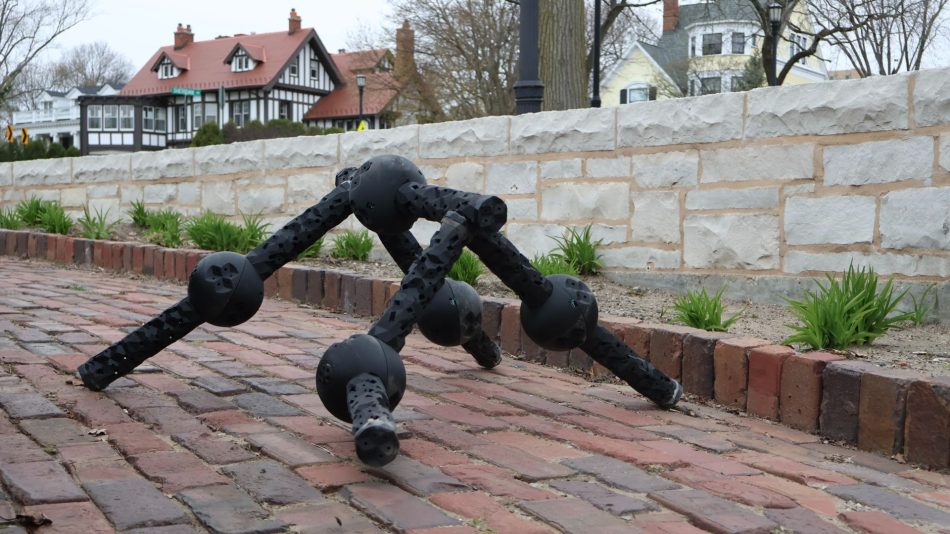
AI compressed billions of years of evolution into seconds to create 'Lego-like robots' that can recover even when they lose limbs
Researchers at Northwestern University have developed innovative modular robots that can autonomously navigate diverse terrains and continue functioning even when they sustain significant damage. These robots, referred to as “legged metamachines,” are designed to mimic certain aspects of biological evolution, providing insights into human and animal mobility.
The Concept Behind Legged Metamachines
The project aimed to create robots with “athletic intelligence,” which refers to their ability to adapt to changing environments dynamically. The robots are constructed from modular components, described as “Lego-like,” allowing for easy assembly and customization. Each robot consists of pairs of meter-long (approximately 3 feet) legs connected by a central jointed sphere.
Key Features of the Robots
According to Sam Kriegman, the lead author of the study and an assistant professor of computer science and engineering at Northwestern, each robot is equipped with essential systems that enable it to function independently:
- Nervous System: A circuit board that processes information and controls the robot’s movements.
- Metabolism: A battery that powers the robot’s operations.
- Muscle: A motor that facilitates movement and locomotion.
Evolutionary Insights
The development of these robots is not just a technological achievement; it also offers valuable insights into the evolutionary processes that have shaped mobility in living organisms. By compressing billions of years of evolutionary history into mere seconds, researchers can explore how different configurations and adaptations affect mobility and resilience.
Modularity and Adaptability
The modular design of these robots allows for easy expansion and reconfiguration. This adaptability is crucial, as the robots can detect when they are upside down or stuck and adjust their movements accordingly. This feature is particularly significant in environments where obstacles are common, enabling the robots to overcome challenges that would hinder traditional robotic designs.
Applications of Legged Metamachines
The potential applications for these robots are vast. Some of the key areas where they could be utilized include:
- Search and Rescue: Their ability to navigate difficult terrains could be invaluable in disaster recovery scenarios.
- Exploration: These robots could be deployed in environments that are hazardous to humans, such as deep-sea exploration or other planetary surfaces.
- Military Use: The modularity and resilience of the robots could provide advantages in military operations, where adaptability is crucial.
Future Directions
As researchers continue to refine the technology behind these legged metamachines, there are several exciting directions for future development:
- Enhanced Autonomy: Improving the robots’ decision-making capabilities to allow for more complex navigation and interaction with their environment.
- Integration with AI: Incorporating advanced artificial intelligence algorithms to improve learning and adaptability in real-time scenarios.
- Collaboration with Other Robots: Developing systems that enable multiple robots to work together, enhancing their effectiveness in various applications.
Conclusion
The creation of these Lego-like robots represents a significant advancement in robotics, merging principles of biology and engineering. By leveraging the concept of modularity and incorporating adaptive features, these robots not only enhance our understanding of mobility but also pave the way for future innovations in robotic design and application.
Note: The information presented in this article is based on research conducted by Northwestern University and published in the journal PNAS.