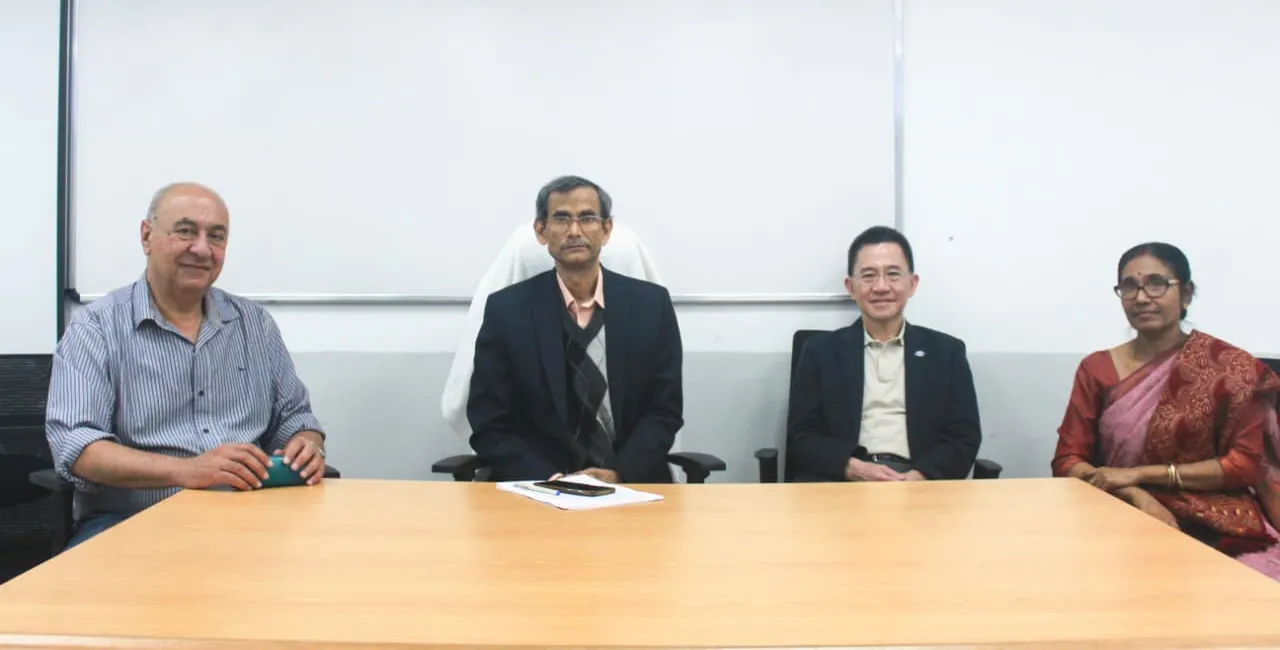
India’s Indigenous TB Vaccine: IIT Bhubaneswar Unleashes AI and Biotech for a New Era of Disease Defense
In a monumental leap for global public health, the Indian Institute of Technology (IIT) Bhubaneswar, in collaboration with the Institute of Life Sciences (ILS) Bhubaneswar, has spearheaded the development of India’s first indigenous, next-generation subunit vaccine against tuberculosis (TB). This groundbreaking initiative, culminating in the ‘Hsp16.3C4’ vaccine, has successfully completed pre-clinical trials, showcasing robust immune responses without adverse effects.
The Significance of Hsp16.3C4 Vaccine
This advancement marks a critical turning point in the relentless global battle against TB, a disease that continues to claim millions of lives annually. The existing Bacillus Calmette Guérin (BCG) vaccine offers limited protection, particularly against pulmonary TB in adults and adolescents. The Hsp16.3C4 vaccine emerges as a beacon of hope, designed to complement or enhance the efficacy of the BCG vaccine.
Technology Transfer and Commitment to Public Health
The recent technology transfer to TechInvention Lifecare Limited through a quadripartite license agreement underscores the commitment to bringing this vital innovation from the lab to the global population. This initiative bolsters India’s self-reliance in public health and contributes significantly to the worldwide effort to eradicate TB by 2030.
A New Paradigm in Immunization
The Hsp16.3C4 vaccine represents a significant technical departure from traditional TB immunization strategies. At its core, Hsp16.3C4 is a C-terminal truncated variant of the Mycobacterium tuberculosis small heat shock protein Hsp16.3. This protein is an immunodominant antigen and a molecular chaperone, vital for the survival of M. tuberculosis during latent infection by preventing protein aggregation under stress.
Mechanism of Action
By targeting this specific, latency-associated antigen, the vaccine aims to tackle both active disease and the critical issue of latent TB reactivation, a major contributor to the global TB burden. Pre-clinical trials conducted on mouse models have showcased the vaccine’s remarkable capabilities.
Immune Response
- Induces potent cellular and humoral immunity.
- Enhances Th1 responses through increased production of IFN-γ and IL-2.
- Ellicits robust activated memory T and memory B cell responses.
- Demonstrates elevated levels of IL-17A.
- Significantly reduces pulmonary bacterial burden and pathology in infected mice.
Synergistic Effect with BCG Vaccine
A groundbreaking finding is its synergistic effect when co-administered with the Bacillus Calmette-Guérin (BCG) vaccine, leading to enhanced protection against both acute and chronic M. tuberculosis infection, a performance superior to BCG alone. This unique compatibility stems from Hsp16.3C4 being an M. tuberculosis-specific antigen that does not interfere with BCG’s biology, ensuring its effectiveness as a booster.
Safety and Biotechnological Advances
The preclinical trials affirmed the safety of Hsp16.3C4, with no observed toxicity signals. The development of Hsp16.3C4 is deeply rooted in advanced biotechnology. As a protein subunit vaccine, it contains only purified antigenic parts of the pathogen, offering a safer and more stable alternative to live attenuated vaccines like BCG, which carries risks for immunocompromised individuals.
Key Biotechnological Processes
Key biotechnological processes included precise antigen selection and engineering, heavily supported by bioinformatics and structural biology techniques. While explicit details on AI’s direct involvement in this specific vaccine’s initial design are not fully public, the broader research context at IIT Bhubaneswar suggests the implicit or explicit use of AI-driven immunoinformatic strategies.
The Role of AI in Vaccine Development
AI algorithms are increasingly deployed in epitope prediction, computational biology, and molecular dynamics simulations to accelerate the discovery and optimization of vaccine candidates. This innovative approach significantly differs from the existing BCG vaccine, which, despite being the only licensed TB vaccine for over 80 years, offers inconsistent and limited protection against adult pulmonary TB and insufficient efficacy against latent TB reactivation.
Industry Implications and Future Prospects
The successful preclinical development of the Hsp16.3C4 vaccine, underpinned by advanced biotechnology and the inferred integration of AI, is poised to significantly reshape the competitive landscape for AI companies, tech giants, and biotech startups. This paradigm shift underscores the burgeoning role of computational power in accelerating drug and vaccine discovery, creating new opportunities and challenging established norms.
Opportunities for AI Companies
AI companies specializing in bioinformatics, machine learning, and data analytics stand to gain immensely. The intricate processes of rapid antigen identification, optimal vaccine design, prediction of immune responses, and streamlining of clinical trials are increasingly reliant on sophisticated AI platforms.
Collaboration and Innovation
Collaborations between AI startups and established pharmaceutical players are expected to intensify, creating a vibrant ecosystem of innovation. Tech giants with formidable cloud computing, AI, and machine learning capabilities are already deeply embedded in the life sciences sector and will further solidify their strategic positions.
Conclusion
The Hsp16.3C4 vaccine represents a significant advancement in the fight against tuberculosis, leveraging the power of biotechnology and AI. As India continues to lead in innovative public health solutions, the global community watches with anticipation for the impact of this groundbreaking vaccine.
Note: The information presented in this article is based on the latest research and developments in the field of tuberculosis vaccine development as of November 2025.