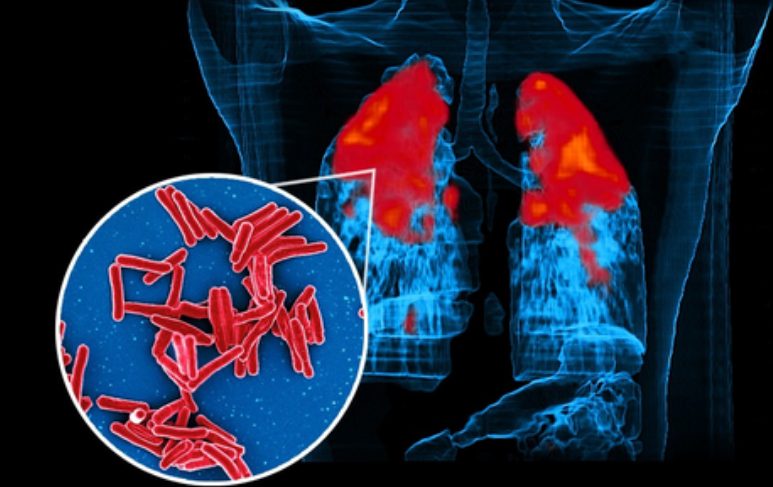
IIT Bombay Study Reveals How TB Bacteria Reinforce Their Outer Coating to Survive Antibiotics
NEW DELHI — A groundbreaking study from the Indian Institute of Technology (IIT) Bombay has provided new insights into the survival mechanisms of Mycobacterium tuberculosis, the bacterium responsible for Tuberculosis (TB), which is recognized as the world’s deadliest infectious disease. This research elucidates how the bacterium alters its outer lipid membrane to withstand antibiotic treatment, shedding light on the persistent challenge of eradicating TB despite advancements in medical science.
The Ongoing Challenge of Tuberculosis
Despite significant medical progress over the years, Tuberculosis remains a leading cause of mortality globally. In 2024, an estimated 10.7 million people developed TB, resulting in approximately 1.23 million deaths. India, which bears one of the highest burdens of the disease, reported over 2.71 million cases during the same year. The persistence of TB is attributed to various factors, including the bacterium’s ability to adapt and survive in the face of treatment.
Research Findings
The study, published in the journal Chemical Science, reveals that the resilience of TB bacteria is linked to significant alterations in their membrane structure, which serves as a protective barrier primarily composed of lipids (fats). Researchers conducted experiments by cultivating TB bacteria under two distinct conditions: an active, fast-dividing phase that resembles an active infection, and a dormant state that simulates latent infections capable of remaining inactive in the body for extended periods.
Effects of Antibiotics on Active vs. Dormant Bacteria
When subjected to four common TB antibiotics—rifabutin, moxifloxacin, amikacin, and clarithromycin—the dormant bacteria exhibited a significantly higher tolerance to these drugs. Specifically, the concentration of medication required to inhibit half of the bacterial growth in dormant cells was found to be two to ten times greater than that needed for active cells. Professor Shobhna Kapoor from IIT Bombay’s Department of Chemistry noted, “The same drug that worked well in the early stage of the disease would now be needed at a much higher concentration to kill the dormant or persistent TB cells.”
Mechanism of Drug Resistance
Interestingly, this drug tolerance was not attributed to genetic mutations, which are typically responsible for antibiotic resistance. Instead, the researchers identified over 270 distinct lipid molecules within the membranes of the bacteria. Active bacteria displayed loose, fluid membranes, while dormant bacteria developed rigid, tightly packed structures, effectively creating a more formidable shield against antibiotics.
The Role of Lipids
Historically, lipids were considered passive components in bacterial survival. However, this study highlights their active role in helping bacteria resist drugs. Professor Kapoor emphasized, “People have studied TB from the protein point of view for decades. But lipids were long seen as passive components. We now know they actively help the bacteria survive and resist drugs.”
Implications for Treatment Strategies
One of the study’s pivotal findings revealed that rifabutin, an antibiotic, could easily penetrate active cells but struggled to infiltrate the fortified outer membrane of dormant bacteria. “The rigid outer layer becomes the main barrier. It is the bacterium’s first and strongest line of defense,” explained Kapoor. This discovery suggests that targeting the bacterial membrane could significantly enhance the effectiveness of existing TB treatments.
Potential for Improved Drug Efficacy
Professor Kapoor proposed that weakening the outer membrane of TB bacteria could restore the sensitivity of dormant cells to antibiotics. “Even old drugs can work better if combined with a molecule that loosens the outer membrane,” she stated. This approach could potentially enhance the efficacy of current treatments without allowing the bacteria to develop permanent genetic resistance.
Future Directions in TB Research
The findings from this study pave the way for new treatment strategies aimed at targeting the bacterial membrane—a critical yet often overlooked component of drug tolerance. By focusing on the structural adaptations of the bacteria, researchers can explore innovative methods to combat TB more effectively.
Conclusion
The research conducted by IIT Bombay underscores the complexity of TB and the need for continued exploration into the mechanisms that allow bacteria to resist treatment. As TB remains a significant public health challenge, understanding the role of lipid membranes in bacterial survival could lead to breakthroughs in treatment protocols, ultimately saving countless lives.
Note: The information presented in this article is based on a study conducted by IIT Bombay and published in the journal Chemical Science. The findings reflect ongoing research efforts to combat Tuberculosis and improve treatment outcomes.