IIT organises conference on GST
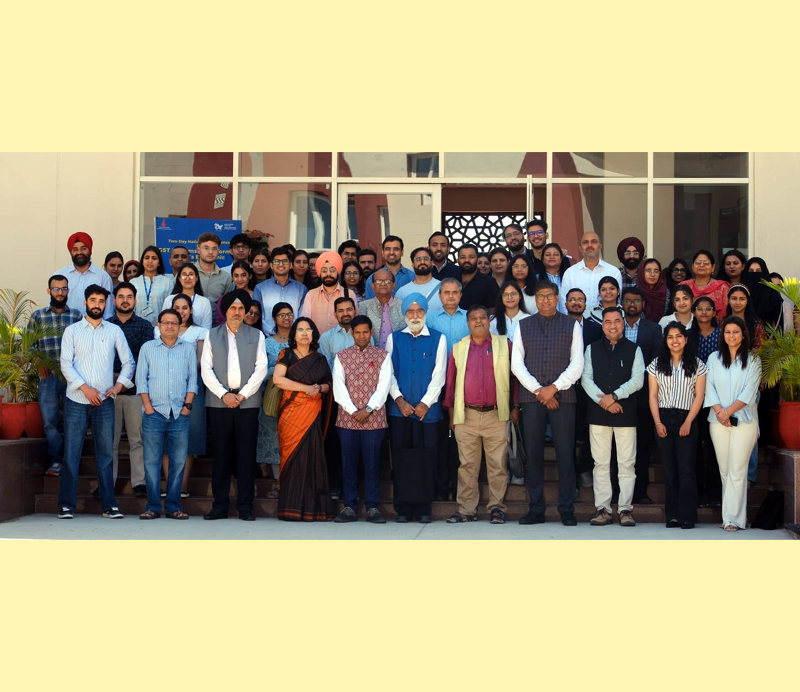
On April 14-15, 2026, the Indian Institute of Technology (IIT) Jammu hosted a significant national conference titled ‘GST Reforms: Transforming India’s Economic Landscape’. This event was organized by the Department of Humanities and Social Sciences at IIT Jammu in collaboration with the Indian Council of Social Science Research. The conference aimed to bring together a diverse group of stakeholders, including academicians, policymakers, researchers, and practitioners, to discuss the evolving impact of the Goods and Services Tax (GST) on the Indian economy.
Inaugural Session
The inaugural session commenced with a warm welcome address by Dr. Amitash Ojha, who set the tone for the discussions that followed. He was followed by remarks from Prof. Meenakshi Rajeev and Dr. Hardeep Singh, both from IIT Jammu. The session featured notable addresses from distinguished guests:
- Parvin Chandra, Commissioner, CGST, J&K (Chief Guest)
- Namrita Dogra, Additional Commissioner, State Taxes, Government of J&K (Guest of Honour)
- Prof. B. Eswar Reddy, IIT Jammu
- Prof. Subhasish Dey, University of Warwick, UK
The inaugural session concluded with a vote of thanks delivered by Dr. Shafkat Dar from IIT Jammu, expressing gratitude to all the participants and speakers for their contributions.
Day One Activities
The first day of the conference included a panel session and two technical sessions. These sessions were focused on critical themes such as:
- The impact of GST on Micro, Small, and Medium Enterprises (MSMEs)
- The informal sector
- Rural-urban livelihoods
Experts from the National Institute of Public Finance and Policy (NIPFP), New Delhi, along with various economists and practitioners, actively participated in these discussions. The insights shared during these sessions were aimed at understanding the multifaceted impacts of GST on different segments of the economy.
Day Two Highlights
The second day of the conference featured a technical session titled ‘Reimagining GST: The Road Ahead’. This session encouraged participants to think critically about the future of GST and its potential reforms. Following this, a panel discussion on ‘Sectoral Dynamics and Emerging Insights’ provided a platform for further exploration of GST’s implications across various sectors.
Experts and practitioners shared their perspectives, highlighting both the challenges and opportunities presented by GST reforms. The discussions were enriched by the diverse backgrounds of the participants, leading to a comprehensive understanding of the topic.
Valedictory Session
The conference concluded with a valedictory session where Prof. Manoj Singh Gaur, Director of IIT Jammu, addressed the gathering. He emphasized the importance of continuous dialogue and research on GST reforms to ensure that the policy evolves in line with the needs of the economy.
Other experts, including Dr. Sanjeev Kumar, also shared their insights during the closing session, reinforcing the significance of collaborative efforts in shaping the future of GST in India.
Conclusion
The ‘GST Reforms: Transforming India’s Economic Landscape’ conference at IIT Jammu served as a vital platform for discussing the complexities and implications of GST. The collaborative efforts of academicians, policymakers, and practitioners highlighted the importance of ongoing research and dialogue in this area. As India continues to navigate its economic landscape, such conferences play a crucial role in fostering understanding and driving reform.
Note: This article is based on information available as of April 2026. The discussions and insights shared during the conference reflect the current understanding of GST reforms and their impact on the Indian economy.