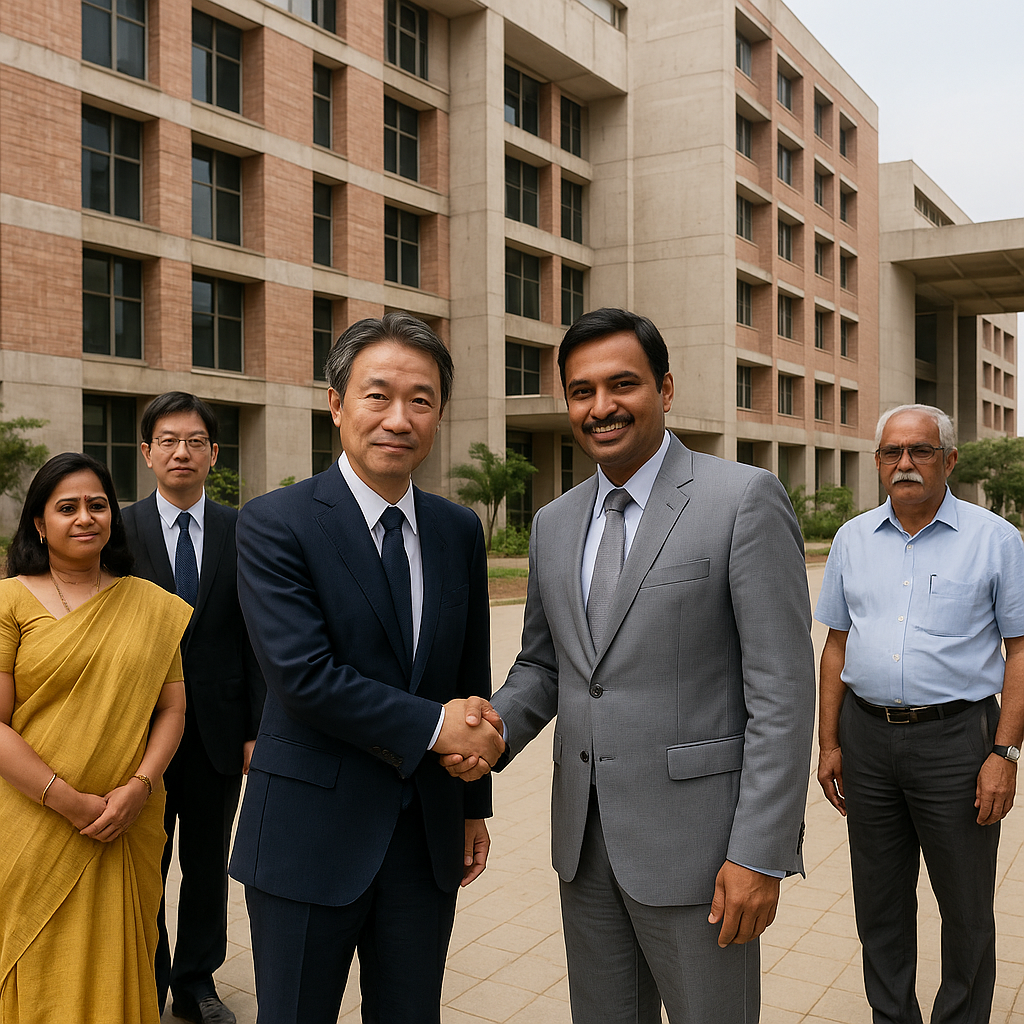
DMRC Partners with IIT-Hyderabad to Strengthen Last-Mile Connectivity
In a significant move towards enhancing urban mobility, the Delhi Metro Rail Corporation (DMRC) has entered into a partnership with the Indian Institute of Technology (IIT) Hyderabad. This collaboration aims to leverage cutting-edge technology to improve last-mile connectivity and public transport networks in the National Capital Region.
Overview of the Partnership
The Memorandum of Understanding (MoU) was formalized on December 9, 2025, between DMRC and IIT-Hyderabad’s Technology Innovation Hub for Autonomous Navigation (TiHAN). This partnership is expected to harness the technical expertise and innovative capabilities of both organizations, focusing on the development of next-generation mobility solutions.
Goals of the Collaboration
The primary objective of this partnership is to develop safe, smart, and scalable mobility systems that can support a variety of autonomous platforms, including:
- Driverless ground vehicles
- Robots
- Drones
- Other autonomous platforms designed for operation without human intervention
By focusing on these areas, DMRC and IIT-Hyderabad aim to enhance the efficiency and reliability of public transportation, thereby improving the overall commuting experience for metro users.
Technological Expertise of TiHAN
TiHAN, established under the Department of Science and Technology’s National Mission on Cyber Physical Systems, specializes in creating advanced autonomous navigation and data acquisition systems. These technologies are crucial for enabling unmanned platforms to:
- Navigate complex environments
- Collect real-time data
- Enhance transportation efficiency
With the integration of such technologies, DMRC officials believe that the project will significantly improve last-mile connectivity for metro commuters, making it easier for passengers to reach their final destinations.
Signatories of the MoU
The MoU was signed by:
- Shobhan Chaudhuri, Advisor (R&D) at DMRC
- Dr. Santosh Reddy, Hub Executive Officer at TiHAN
The signing ceremony was attended by several dignitaries, including:
- DMRC Managing Director Dr. Vikas Kumar
- Director (Infrastructure) Manuj Singhal
- Dean (Innovation) Prof. Malla Reddy from IIT Hyderabad
- Prof. P. Rajalakshmi from IIT Hyderabad
Importance of Last-Mile Connectivity
Last-mile connectivity refers to the final leg of a journey, where commuters travel from a transportation hub, such as a metro station, to their ultimate destination. This aspect of transportation is often overlooked, yet it plays a crucial role in the overall efficiency of public transport systems.
Improving last-mile connectivity can lead to:
- Increased usage of public transport
- Reduced traffic congestion
- Lower carbon emissions
- Enhanced accessibility for all commuters
By focusing on autonomous solutions, DMRC and IIT-Hyderabad are taking a proactive approach to address these challenges and improve the commuting experience for everyone.
Future Prospects
The partnership between DMRC and IIT-Hyderabad is expected to pave the way for innovative solutions that can be implemented across various urban transport systems. As cities continue to grow and evolve, the need for efficient and reliable public transportation becomes increasingly critical.
By investing in autonomous navigation technologies, DMRC aims to set a benchmark for other metropolitan areas in India and around the world, demonstrating how technology can be harnessed to solve complex urban mobility challenges.
Conclusion
The collaboration between DMRC and IIT-Hyderabad marks a pivotal step towards revolutionizing urban transport in Delhi. By focusing on autonomous navigation and last-mile connectivity, both organizations are committed to creating a more efficient, reliable, and sustainable public transport system. This partnership not only highlights the importance of innovation in transportation but also sets the stage for future advancements that could benefit commuters across the nation.
Note: The information presented in this article is based on the latest updates available as of December 2025.