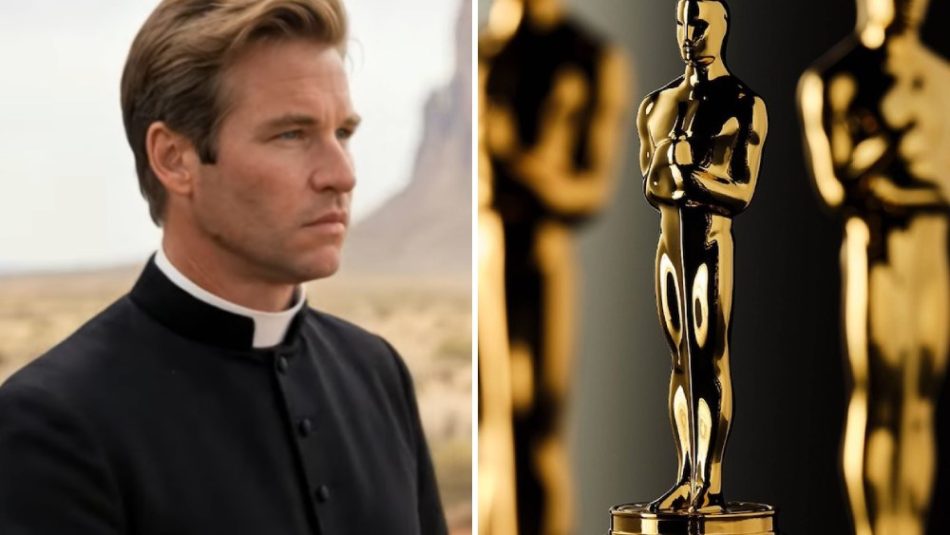
Can AI Win an Oscar? Val Kilmer's Film Writes New Awards Rules
The question of whether artificial intelligence (AI) can win an Oscar has gained traction in Hollywood, particularly following the digital resurrection of actor Val Kilmer in an upcoming film. This unprecedented situation is prompting awards bodies to reconsider their rules regarding eligibility for performances generated or enhanced by AI.
The Emergence of AI in Film
As AI technology continues to evolve, its application in the film industry has become more pronounced. The case of Val Kilmer, who was cast in the film As Deep as the Grave before his death in April 2025, exemplifies this trend. Kilmer was set to portray Father Fintan, a Catholic priest and Native American spiritualist. However, due to complications from throat cancer, he was unable to physically appear on set.
The writer-director Coerte Voorhees, who had originally envisioned Kilmer for the role, chose not to recast. Instead, with the cooperation of Kilmer’s estate and his daughter, Mercedes Kilmer, Voorhees utilized generative AI to reconstruct Kilmer’s performance using archival material and digital tools.
The Implications for Awards Bodies
The film As Deep as the Grave raises significant questions for awards organizations regarding the eligibility of AI-generated performances. The Academy of Motion Picture Arts and Sciences (AMPAS) has yet to establish a definitive ruling on this matter. Following the 2024 awards cycle, which included the controversial use of AI in the film The Brutalist, the Academy acknowledged the complexities involved but stopped short of an official policy.
In its statement, the Academy indicated that AI tools “neither help nor harm the chances of achieving a nomination.” Instead, voters were instructed to consider “the degree to which a human was at the heart of the creative authorship.” While this principle offers some guidance, it lacks the specificity needed for practical application.
Current Stances of Awards Organizations
Different awards organizations have adopted varying positions on the use of AI in creative work:
- Academy Awards: No official ruling on AI-generated performances; emphasis on human authorship.
- SAG-AFTRA: Current rules disqualify performances “fully generated by artificial intelligence.” However, performances enhanced by AI may qualify if the performer has given consent.
- Recording Academy (Grammys): Only human creators are eligible for awards. AI elements must involve meaningful human contribution.
- Television Academy (Emmys): Requires disclosure when AI-generated material exceeds a minimal threshold.
- BAFTA: Discourages the use of AI in certain categories, particularly in gaming.
The Debate Over AI Performances
The situation surrounding Val Kilmer’s digital likeness highlights deeper issues within the industry. The fundamental question remains: what constitutes an AI performance, and who deserves credit for it? Kilmer’s legacy includes iconic roles such as Jim Morrison in The Doors and Doc Holliday in Tombstone. The prospect of posthumous recognition raises ethical dilemmas about honoring the actor versus the technology used to recreate his likeness.
Some industry professionals speculate whether Kilmer’s performance could be nominated for categories typically reserved for human actors, or if it would be more appropriate to consider it for visual effects awards. The Visual Effects Branch of the Academy may have differing opinions on this matter, reflecting the ongoing debate over AI’s role in creative industries.
The Future of AI in Entertainment
As studios increasingly embrace AI technology, the implications for the future of film, television, and animation are profound. Sun Zhonghuai, a senior executive at Tencent, predicted that AI-driven productions could account for 10% to 30% of output within two years. This rapid integration of AI tools is outpacing the development of ethical guidelines and industry standards.
Organizations like the Golden Globes and the Critics Choice Awards are also grappling with these challenges. The need for clear policies and ethical considerations regarding AI-generated content is becoming more urgent as the technology continues to advance.
Conclusion
The intersection of AI and filmmaking presents a complex landscape that awards bodies must navigate. The case of Val Kilmer’s digital resurrection serves as a catalyst for discussions about the future of performances in the age of AI. As the industry evolves, so too must the rules that govern it, ensuring that creativity and artistry remain at the forefront of cinematic achievements.
Note: The discussion surrounding AI in film is ongoing, and further developments are expected as technology continues to advance and integrate into the creative process.