IIT Bombay Tracks Mars’ Climate Shift Using Ancient Valleys
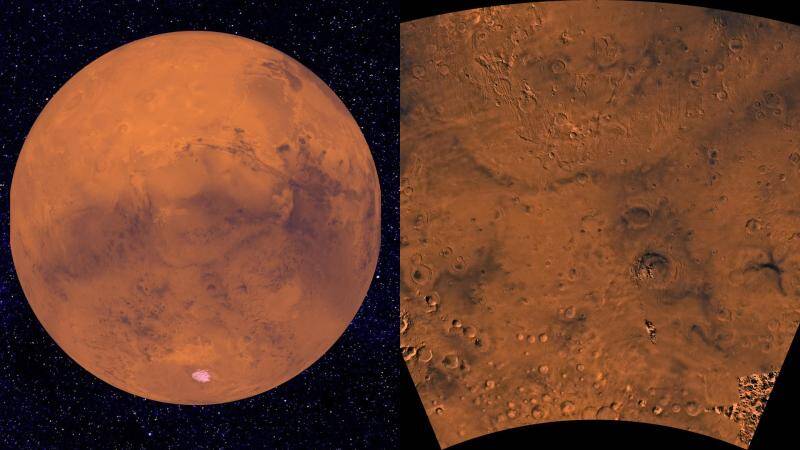
Researchers at the Indian Institute of Technology (IIT) Bombay have made significant strides in understanding the climatic history of Mars by studying ancient valleys located in the Thaumasia Highlands. Their findings reveal crucial insights into the planet’s transition from a wetter environment to a colder, more glacial landscape.
The Research Background
The study of Martian geology has long fascinated scientists, as it holds the key to understanding the planet’s past and its potential for supporting life. The Thaumasia Highlands, a region characterized by its unique geological features, has been a focal point for researchers aiming to decipher the climatic evolution of Mars.
Mapping Martian Valleys
The IIT Bombay team utilized high-resolution imagery and data from various Mars missions to map the valleys in the Thaumasia Highlands. Their research focused on identifying different valley shapes and their implications for the planet’s climatic history.
Types of Valleys Identified
- V-shaped Valleys: These valleys are indicative of flowing water erosion, suggesting that liquid water was present on the Martian surface during the early Noachian era, approximately 4.5 to 3.5 billion years ago.
- U-shaped Valleys: In contrast, the presence of U-shaped valleys points towards glacial activity. These features indicate that as Mars cooled, water likely froze and contributed to the formation of glaciers.
Evidence of Climate Shift
The transition from V-shaped valleys to U-shaped valleys is a critical indicator of Mars’ climatic shift over millions of years. The IIT Bombay researchers suggest that the early Noachian era was marked by a warmer climate that allowed for the presence of liquid water, which played a significant role in shaping the landscape.
As the planet underwent cooling, the dynamics of its climate changed, leading to the formation of glaciers. The evidence gathered from the valleys provides a timeline for these climatic changes, illustrating how Mars evolved from a potentially habitable environment to its current cold and arid state.
Implications for Future Research
The findings from IIT Bombay have several implications for future research on Mars. Understanding the climatic history is crucial for various reasons:
1. Search for Past Life
Identifying periods when liquid water was present on Mars is essential for astrobiology. If conditions were suitable for water to flow, it raises the possibility that life may have existed on the planet.
2. Understanding Planetary Evolution
Insights into Mars’ climatic changes can help scientists draw parallels with Earth’s own climate history. This understanding can provide valuable lessons about planetary evolution and the factors that contribute to climate change.
3. Future Exploration Missions
The knowledge gained from this research can inform future exploration missions to Mars. Understanding the geological and climatic history will aid in selecting landing sites and determining the best strategies for searching for signs of past life.
Technological Advancements in Research
The research conducted by IIT Bombay was made possible through advancements in technology. High-resolution satellite imagery and data from orbiters like the Mars Reconnaissance Orbiter (MRO) have provided unprecedented views of the Martian surface. These tools allow scientists to analyze geological features in detail, leading to more accurate interpretations of Mars’ history.
Conclusion
The work done by IIT Bombay researchers in mapping the ancient valleys of Mars is a significant contribution to our understanding of the planet’s climatic evolution. By uncovering evidence of past water flow and glacial activity, they have provided a clearer picture of how Mars transitioned from a warmer, wetter world to the cold desert we see today. This research not only enhances our knowledge of Mars but also has broader implications for planetary science and the search for extraterrestrial life.
Note: The findings discussed in this article are based on research conducted by IIT Bombay and are subject to further validation and exploration as new data becomes available.