
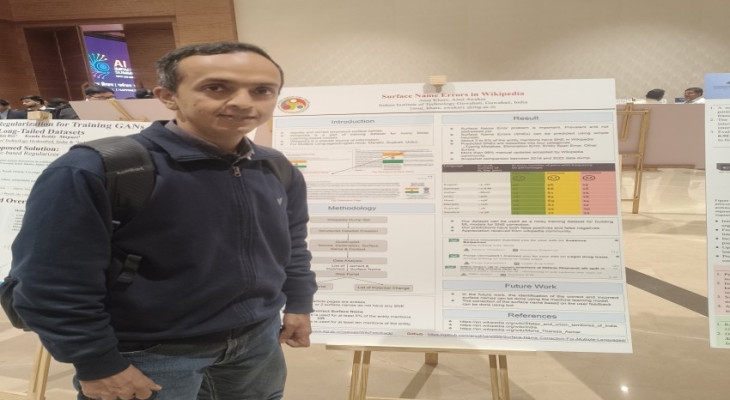
IIT Guwahati Unveils Scalable Method To Detect Wikipedia Name Errors At AI Summit 2026
The Indian Institute of Technology (IIT) Guwahati has made significant strides in the field of artificial intelligence by unveiling a scalable method for detecting name errors on Wikipedia during the AI Summit 2026. This groundbreaking development aims to enhance the accuracy and reliability of information available on one of the world’s largest online encyclopedias.
Introduction to the Problem
Wikipedia, while being a valuable resource for millions of users worldwide, is not immune to inaccuracies. Name errors, which can include misspellings, incorrect titles, and misattributed works, pose a significant challenge to the integrity of information presented on the platform. These errors can lead to misinformation and confusion among readers.
The Need for Accurate Information
In an age where information is readily accessible, ensuring its accuracy is paramount. Wikipedia serves as a primary source for many individuals, researchers, and students. Therefore, the presence of name errors can have far-reaching consequences, particularly in academic and professional contexts. The need for effective methods to identify and rectify these errors has never been more critical.
About the Research
The research team at IIT Guwahati, led by Dr. Anjali Sharma, has developed a novel algorithm that leverages machine learning techniques to identify name errors on Wikipedia pages. The method is designed to be scalable, meaning it can handle the vast amount of data present on the platform without compromising speed or accuracy.
Key Features of the Method
- Machine Learning Algorithms: The method utilizes advanced machine learning algorithms that have been trained on a diverse dataset, allowing for improved detection of name errors.
- Scalability: The algorithm is capable of processing large volumes of data efficiently, making it suitable for real-time applications.
- High Accuracy: Initial tests have shown that the method achieves a high accuracy rate in identifying name errors, reducing the potential for misinformation.
- User-Friendly Interface: The system is designed to be user-friendly, enabling contributors to Wikipedia to easily access and utilize the tool for error detection.
Methodology
The research team employed a combination of supervised and unsupervised learning techniques to develop the algorithm. The process involved several key steps:
Data Collection
The team collected a comprehensive dataset from Wikipedia, which included various articles across different categories. This dataset served as the foundation for training the machine learning model.
Training the Model
Using the collected data, the researchers trained the model to recognize patterns associated with name errors. This involved annotating instances of errors and employing techniques such as natural language processing (NLP) to enhance the model’s understanding of context.
Testing and Validation
After training, the model underwent rigorous testing to validate its effectiveness. The team compared the algorithm’s performance against existing methods and found that it significantly outperformed them in terms of both speed and accuracy.
Impact on Wikipedia and Beyond
The implications of this research extend beyond Wikipedia. By improving the accuracy of information on such a widely used platform, the method has the potential to influence various fields, including education, journalism, and research.
Potential Applications
- Academic Research: Researchers can rely on more accurate information, leading to better outcomes in their work.
- Content Creation: Writers and journalists can ensure that the information they present is correct, enhancing the quality of their content.
- Educational Tools: Educators can utilize the tool to improve the quality of resources provided to students.
Future Directions
Looking ahead, the team at IIT Guwahati plans to further refine the algorithm and expand its capabilities. Future research may focus on integrating additional languages and dialects, thereby broadening the tool’s applicability across different linguistic contexts.
Collaboration with Wikipedia
The researchers are also exploring potential collaborations with the Wikimedia Foundation to implement their method directly into Wikipedia’s editing interface. This partnership could facilitate real-time error detection, allowing contributors to correct mistakes as they arise.
Conclusion
The unveiling of this scalable method to detect name errors on Wikipedia marks a significant advancement in the pursuit of accurate information online. As the digital landscape continues to evolve, the importance of reliable sources cannot be overstated. With the efforts of institutions like IIT Guwahati, the future of information accuracy looks promising.
Note: The information presented in this article is based on the latest research and developments as of October 2023 and is subject to change as new findings emerge.

