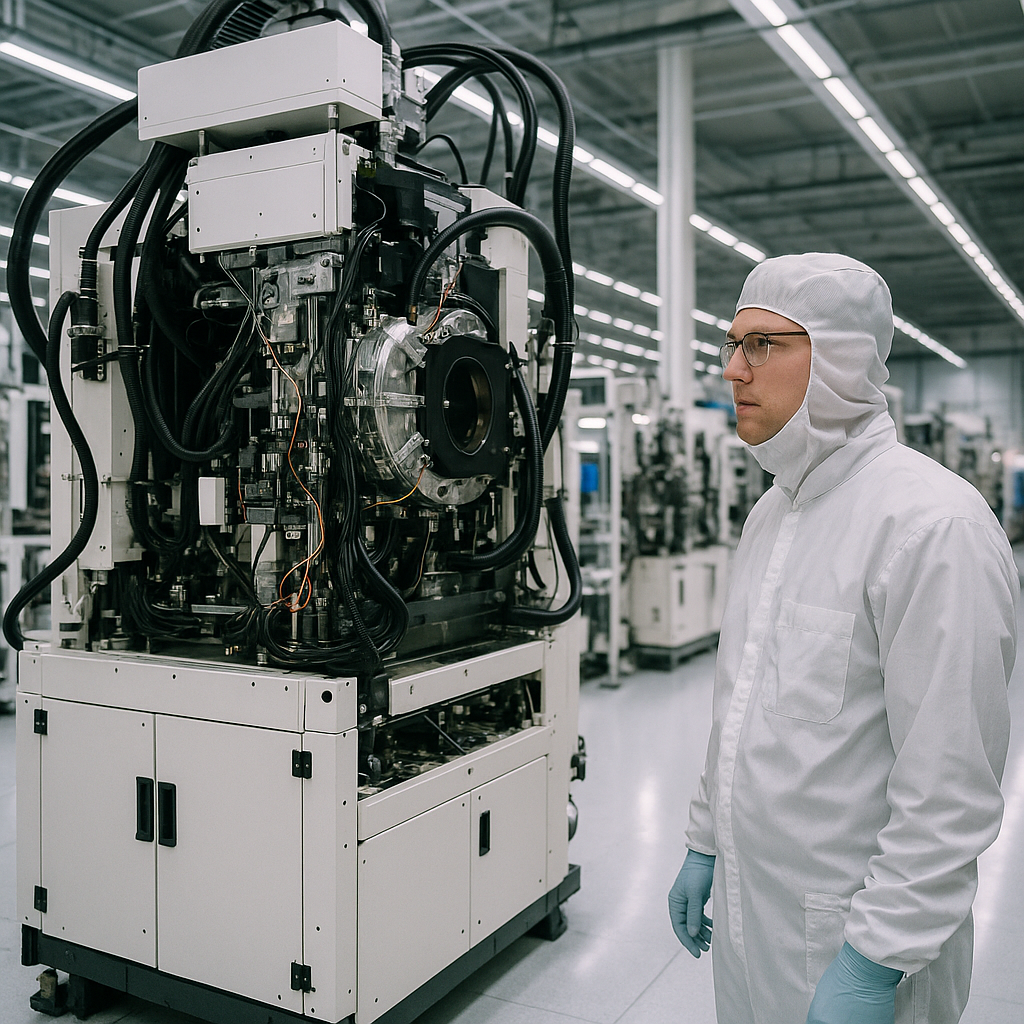
The Race to Make the World’s Most In-Demand Machine
In recent years, the global economy has witnessed an unprecedented surge in demand for advanced semiconductor manufacturing equipment. This demand has been driven by the rapid growth of technology sectors, including artificial intelligence, cloud computing, and the Internet of Things (IoT). As a result, companies are racing to develop and produce the most advanced machines capable of fabricating semiconductors, which are essential components of modern electronics.
The Semiconductor Landscape
Semiconductors are the backbone of electronic devices, powering everything from smartphones to supercomputers. The global semiconductor market was valued at approximately $527 billion in 2021 and is projected to reach $1 trillion by 2030, according to industry analysts. This explosive growth has created a fierce competition among manufacturers to secure their position in the market.
Key Players in the Semiconductor Equipment Market
Several companies dominate the semiconductor manufacturing equipment landscape, including:
- ASML: A Dutch company that specializes in photolithography equipment, ASML is the only supplier of extreme ultraviolet (EUV) lithography machines, which are critical for producing the latest generation of chips.
- Applied Materials: Based in the United States, Applied Materials provides equipment, services, and software for semiconductor manufacturing, focusing on enhancing productivity and efficiency.
- Lam Research: Another American company, Lam Research specializes in etching and deposition equipment, essential for creating the intricate patterns on semiconductor wafers.
- KLA Corporation: KLA is a leader in process control and yield management systems, helping manufacturers ensure the quality of their semiconductor products.
The Driving Forces Behind Demand
The surge in demand for semiconductor manufacturing equipment can be attributed to several key factors:
1. Technological Advancements
As technology continues to evolve, the need for smaller, faster, and more efficient chips has become paramount. Innovations such as 5G technology, artificial intelligence, and machine learning require advanced semiconductor solutions that can only be produced with cutting-edge manufacturing equipment.
2. Global Supply Chain Disruptions
The COVID-19 pandemic exposed vulnerabilities in the global supply chain, leading to significant shortages of semiconductor components. As industries scramble to rebuild their supply chains, the demand for manufacturing equipment has skyrocketed.
3. Increased Consumer Electronics Demand
The pandemic also accelerated the adoption of digital technologies, resulting in a surge in consumer electronics sales. Devices such as laptops, tablets, and gaming consoles have seen unprecedented demand, further driving the need for semiconductor production.
The Challenges of Manufacturing
Despite the booming demand, semiconductor manufacturing is fraught with challenges. Producing these advanced machines requires significant investment in research and development, as well as highly specialized knowledge and expertise. Some of the key challenges include:
1. High Capital Expenditure
Developing and manufacturing semiconductor equipment involves substantial financial investment. Companies must allocate significant resources to R&D to stay competitive, which can strain budgets, especially for smaller firms.
2. Technological Complexity
The technology behind semiconductor manufacturing is highly complex. Engineers and scientists must continually innovate to keep pace with the rapid advancements in chip design and fabrication techniques.
3. Skilled Labor Shortages
There is a growing shortage of skilled labor in the semiconductor industry. As demand for manufacturing equipment rises, companies face challenges in recruiting and retaining qualified engineers and technicians.
The Future of Semiconductor Manufacturing
Looking ahead, the semiconductor manufacturing landscape is poised for significant transformation. Several trends are likely to shape the future of the industry:
1. Increased Automation
Automation is becoming increasingly important in semiconductor manufacturing. Companies are investing in robotics and artificial intelligence to streamline production processes, improve efficiency, and reduce costs.
2. Sustainability Initiatives
As environmental concerns grow, semiconductor manufacturers are focusing on sustainability. This includes reducing energy consumption, minimizing waste, and developing eco-friendly manufacturing processes.
3. Geopolitical Factors
The geopolitical landscape is also influencing the semiconductor industry. Trade tensions and national security concerns have prompted countries to invest in domestic semiconductor production capabilities, further reshaping the global supply chain.
Conclusion
The race to create the world’s most in-demand semiconductor manufacturing equipment is intensifying as technology continues to advance at an unprecedented pace. Companies are navigating a complex landscape filled with challenges and opportunities, driven by the increasing reliance on semiconductors in various sectors. As the industry evolves, the focus will remain on innovation, efficiency, and sustainability to meet the growing global demand.
Note: The information presented in this article is based on data available up to October 2023 and may be subject to change as the semiconductor industry continues to evolve.