Delivery Robot Dogpiled on the Streets of Philly
In recent years, the emergence of delivery robots has transformed urban landscapes, but not without controversy. Philadelphia, a city known for its vibrant street culture and unique character, has recently witnessed a peculiar incident involving one of these autonomous delivery robots. This incident raises questions about the acceptance of robotics in public spaces and hints at potential challenges for the robotics industry in urban environments.
The Incident
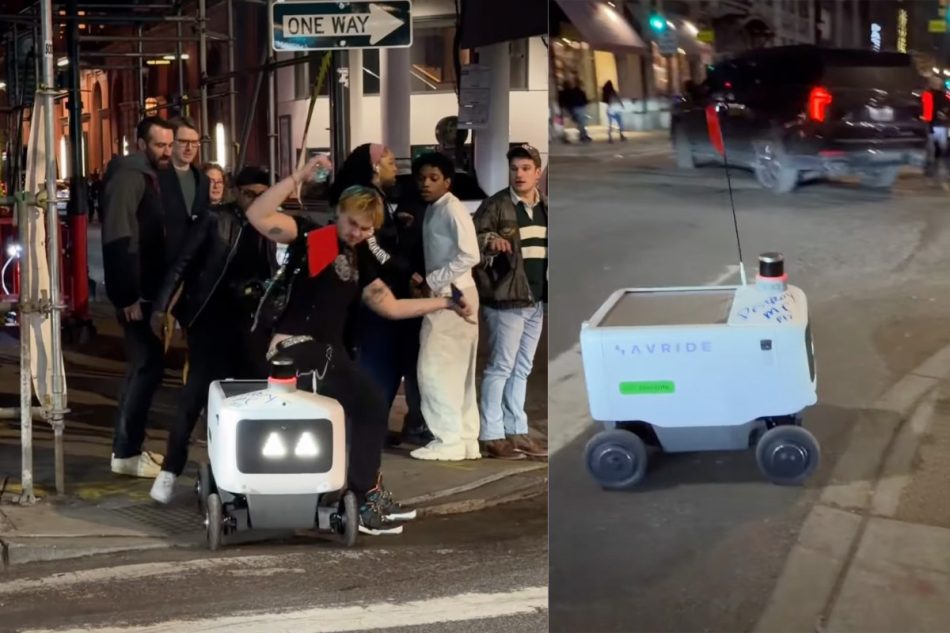
A video captured by Philadelphia street photographer Hugh Dillon on a Saturday night has gone viral, showcasing a delivery robot being subjected to a series of humorous yet troubling interactions. The 30-second clip reveals a crowd of onlookers engaging with the robot in various ways: it is kicked, sat upon, laughed at, and even humped. Despite the chaos surrounding it, the robot continues on its path, seemingly unfazed by the antics of the crowd.
As Dillon noted in his video caption, the robot faced a barrage of attention that could have easily led to its destruction. One individual even scrawled the words “DESTROY ME PLZ” on its plastic chassis. Dillon expressed his disbelief at the robot’s resilience, stating, “Honestly thought it was done for.”
The Context of Robophobia
This incident is not an isolated event but rather part of a broader narrative regarding the relationship between humans and robots in public spaces. Philadelphia has a notorious history with robots, dating back to 2015 when an experimental hitchhiking robot was vandalized and ultimately destroyed within days of its arrival.
Such incidents contribute to a phenomenon known as “robophobia,” where individuals express fear or hostility towards robots. The recent video illustrates that this sentiment has not diminished in the years since the hitchhiking robot’s demise. As robots become more integrated into daily life, the question arises: how will society adapt to these new technologies?
The Delivery Robots
The delivery robots in question are part of a partnership between Uber and a robotics company called Avride. These autonomous vehicles are designed to operate within a one to two-mile radius and can reach speeds of up to five miles per hour. While they are intended to improve convenience and efficiency in food delivery, their presence has sparked debate about their impact on public spaces.
In other cities, such as Los Angeles and Chicago, delivery robots have faced backlash from residents. Complaints have included issues such as obstructing sidewalks, causing injuries, and damaging property. As a result, some areas have implemented bans on these robots to protect public safety and maintain the integrity of community spaces.
Public Reactions
The reactions to the delivery robot in Philadelphia highlight a mix of amusement and aggression. In addition to the graffiti, comments from bystanders included remarks such as “He doesn’t even know where the f*** he’s going bro” and “ROB HIM OF HIS COPPER IMMEDIATELY.” These statements reflect a blend of humor and disdain, suggesting that while some individuals may find the robots entertaining, others view them as nuisances.
The humorous interactions captured in the video may mask a deeper societal concern regarding the role of technology in everyday life. As robots become more prevalent, the challenge lies in balancing innovation with public acceptance.
The Future of Robotics in Urban Environments
As cities like Philadelphia continue to explore the integration of delivery robots, it is essential to consider the implications for urban planning and public policy. The incidents involving these robots may serve as a warning for developers and city officials alike. Effective communication and community engagement will be crucial in fostering a positive relationship between residents and robotic technologies.
Moreover, addressing concerns about safety, accessibility, and the potential for vandalism will be vital in ensuring the successful deployment of delivery robots. Cities may need to develop regulations that govern the operation of these robots, including designated pathways and operational hours, to minimize conflicts with pedestrians and cyclists.
Lessons Learned
The Philadelphia incident serves as a reminder of the complexities surrounding the introduction of new technologies into public spaces. While the potential benefits of delivery robots are significant, including increased efficiency and reduced delivery times, their acceptance will depend on how well they are integrated into the existing urban fabric.
As cities navigate this transition, stakeholders must prioritize public safety and community engagement to foster a more harmonious coexistence between humans and robots. The future of robotics in urban environments will hinge on the ability to address public concerns while embracing technological advancements.
Conclusion
In conclusion, the recent video of a delivery robot being playfully assaulted on the streets of Philadelphia underscores the challenges faced by the robotics industry as it seeks to integrate into urban life. As cities grapple with the implications of robotic technologies, it is crucial to engage communities in meaningful dialogue and develop regulations that ensure public safety and acceptance. The journey toward a future where humans and robots coexist harmoniously is just beginning.
Note: The content of this article reflects the current state of public sentiment and technological developments as of October 2023.