
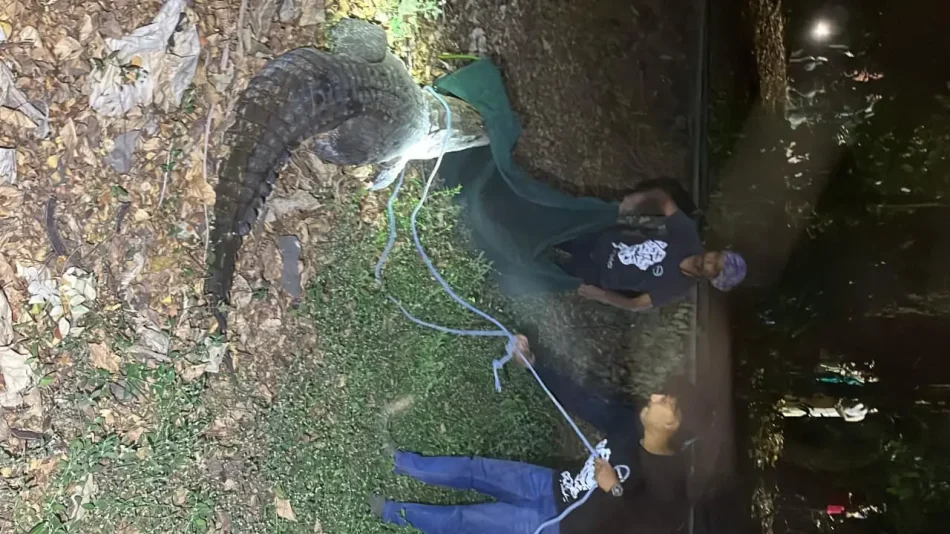
Mumbai: 9-foot marsh crocodile rescued from IIT Bombay
On March 16, 2026, a remarkable wildlife rescue operation took place at the Indian Institute of Technology (IIT) Bombay in Mumbai, where a 9-foot marsh crocodile was successfully captured and relocated. This incident highlights the ongoing interactions between urban environments and wildlife, and the importance of prompt action in such situations.
Discovery of the Crocodile
The crocodile was first spotted by security personnel on the IIT Bombay campus. Recognizing the potential danger posed by the large reptile, they quickly alerted the relevant authorities. The swift response from the security team was crucial in ensuring the safety of both the animal and the campus community.
Rescue Operation
The rescue operation was a collaborative effort between the Resqink Association for Wildlife Welfare (RAWW) and the Mumbai Forest Department. Upon receiving the alert, an expert team was dispatched to the campus. The team assessed the situation carefully before proceeding with the capture of the crocodile.
Safety Measures
The rescuers employed specialized techniques to ensure that the crocodile was captured safely and without harm. The operation was conducted with the utmost care, prioritizing the well-being of the animal as well as the safety of the people in the vicinity. This approach reflects the training and expertise of the wildlife rescuers involved in the operation.
Medical Examination and Observation
After the successful capture, the crocodile was transported for a medical examination. Veterinarians conducted a thorough assessment of its health condition. This step is vital to ensure that the crocodile is fit for release back into its natural habitat. The forest department has established protocols that must be followed before any wildlife can be returned to the wild.
Understanding Urban Wildlife Encounters
Incidents like this are not uncommon in urban areas, especially in cities like Mumbai where wildlife habitats are often encroached upon by human development. The movement of wildlife from nearby water bodies into urban settings can lead to encounters that pose risks to both animals and people.
Authorities’ Recommendations
Officials from the Mumbai Forest Department have urged residents and campus staff to remain vigilant and report any sightings of wild animals immediately. They emphasize the importance of not approaching or attempting to handle wild animals, as this can lead to dangerous situations. Instead, the public should rely on trained professionals to manage such encounters.
Community Awareness and Education
Raising awareness about wildlife conservation and the importance of coexisting with nature is essential. Educational programs can help communities understand the behavior of local wildlife and the best practices for ensuring safety. Initiatives that promote respect for wildlife can significantly reduce the likelihood of future encounters.
Role of Wildlife Organizations
Organizations like RAWW play a crucial role in wildlife rescue and rehabilitation. They not only respond to emergencies but also engage in community education and advocacy for wildlife protection. Their efforts contribute to a greater understanding of the need for conservation and the protection of natural habitats.
Conclusion
The successful rescue of the 9-foot marsh crocodile from IIT Bombay serves as a reminder of the delicate balance between urban development and wildlife preservation. As cities expand, it becomes increasingly important to foster a culture of awareness and respect for the natural world. By working together, communities can ensure the safety of both people and wildlife.
Note: Wildlife encounters can be unpredictable. Always seek professional assistance if you encounter wild animals in urban areas.


