
SpaceX's Gwynne Shotwell Aims to Put AI on the Moon
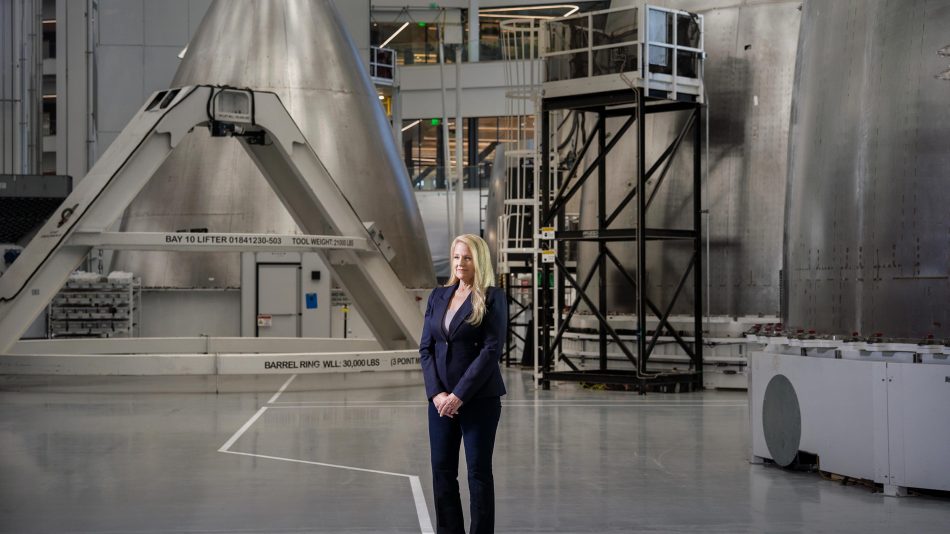
Gwynne Shotwell, the president and chief operating officer of SpaceX, is at the helm of one of the most ambitious aerospace projects in history. With the company’s Starship rockets under construction, Shotwell is not only focused on lunar missions but also on integrating artificial intelligence (AI) into space exploration.
The Starship Initiative
At SpaceX’s factory in Starbase, Texas, 18 Starship spacecraft are currently in various stages of construction. These rockets are designed to be the most powerful ever built, with the capability to generate an astonishing 16.7 million pounds of thrust from their 33 first-stage engines. This is more than double the thrust produced by the Apollo-era Saturn V rocket.
SpaceX aims to launch these rockets rapidly to meet NASA’s Artemis IV mission, which is set to return humans to the Moon by 2028. Shotwell emphasizes the urgency of the project, stating, “It’s a hard problem and the whole architecture is complex, but we’re gunning for 2028.” The goal is to ensure that the rockets are operational and ready for use by the time of the Artemis IV mission.
Building the Future of Space Travel
Despite the advanced technology, much of the Starship construction is done by hand, showcasing a blend of traditional craftsmanship and modern engineering. The factory floor is a hive of activity, with workers assembling the rockets in a meticulous process that emphasizes quality and precision.
Shotwell, who has nearly 40 years of experience in the aerospace sector, plays a pivotal role in the operations of SpaceX, which is now the world’s most valuable private company. The recent merger with xAI, an artificial intelligence company founded by Elon Musk, has further expanded SpaceX’s ambitions. The combined company is valued at approximately $1.25 trillion, with plans for an initial public offering (IPO) rumored for the second quarter of 2026.
Integrating AI into Space Exploration
One of the most exciting aspects of SpaceX’s future is the integration of AI into its operations. Shotwell has expressed her vision of creating a constellation of AI satellites in space, which would function as distributed data centers. This concept aims to reduce energy consumption and improve efficiency compared to traditional terrestrial data centers.
Proposed AI Satellite Constellation
- SpaceX has submitted a request for FCC licensing to deploy up to a million AI satellites.
- The satellites would be powered by solar energy and cooled by the vastness of space, addressing the environmental concerns associated with traditional data centers.
- Shotwell envisions these satellites being manufactured on the Moon, creating a sustainable model for space operations.
Future Lunar Settlements
Shotwell’s vision extends beyond just launching rockets and satellites. She anticipates the establishment of a lunar settlement and manufacturing facility within the next decade. “I would be disappointed if we didn’t have a settlement on the moon and [are] building a manufacturing facility on the moon within 10 years,” she stated.
Elon Musk has also shifted his focus towards lunar colonization, suggesting that a self-sustaining city on the Moon could be achieved within a shorter timeframe than the colonization of Mars. This change in focus reflects the evolving priorities of SpaceX as it aims to make humanity a multi-planetary species.
NASA’s Artemis Program
In 2021, NASA selected SpaceX to develop the Human Landing System (HLS) for the Artemis program. This contract, worth $2.9 billion, involves creating the vehicle that will transport astronauts to the lunar surface. Shotwell’s leadership will be crucial in ensuring the success of this mission, especially with the impending timeline of Artemis IV.
Competition in the Aerospace Sector
SpaceX is not without competition. Blue Origin, founded by Amazon’s Jeff Bezos, was awarded a separate $3.4 billion contract by NASA to develop its own lunar lander. This competitive landscape adds pressure on SpaceX to deliver on its commitments while pushing the boundaries of technology and innovation.
Conclusion
As SpaceX continues to develop its Starship rockets and integrate AI into its operations, Gwynne Shotwell remains a key figure in shaping the future of space exploration. With ambitious goals set for the next decade, including lunar settlements and AI satellite constellations, the company is poised to make significant strides in the aerospace industry.
Note: The information presented in this article is based on developments as of March 2026 and may evolve as new advancements occur in the aerospace sector.


