10 Indian Colleges Where Billion-Dollar Startup Founders Studied
India has become a hotbed for innovation and entrepreneurship, with many of its top colleges producing founders of billion-dollar startups. These institutions have not only provided a solid educational foundation but also fostered an environment that encourages creativity and business acumen. In this article, we explore ten Indian colleges that have been instrumental in launching successful startups that have changed industries.
1. Indian Institute of Technology (IIT) Delhi
At IIT Delhi, the entrepreneurial spirit was ignited in the minds of Sachin and Binny Bansal, who went on to establish Flipkart. Launched in 2007 as an online bookstore, Flipkart has since evolved into one of India’s largest e-commerce giants, revolutionizing how people shop online.
2. Indian Institute of Technology (IIT) Bombay
IIT Bombay is home to Bhavish Aggarwal and Ankit Bhati, the co-founders of Ola Cabs. Founded in 2010, Ola started as a cab aggregator and has grown into one of India’s largest ride-hailing platforms, providing millions with convenient transportation options.
3. Birla Institute of Technology and Science (BITS) Pilani
Phanindra Sama, Sudhakar Pasupunuri, and Charan Padmaraju, all alumni of BITS Pilani, transformed the ticketing landscape with the launch of redBus in 2006. Today, redBus is recognized as India’s largest online bus booking platform, simplifying travel for countless passengers.
4. Indian Institute of Management (IIM) Bangalore
Peyush Bansal and Amit Chaudhary, graduates of IIM Bangalore, co-founded Lenskart in 2010. This innovative online eyewear store has changed the way Indians purchase glasses, introducing home trials and technology-driven solutions to enhance customer experience.
5. National Institute of Technology (NIT) Karnataka
Shashank ND and Abhinav Lal, both from NIT Karnataka, launched Practo in 2008. This platform was designed to digitize medical records and has since evolved into a leading healthcare service connecting patients with doctors, making healthcare more accessible.
6. Indian School of Business (ISB) Hyderabad
Aman Gupta, an alumnus of ISB Hyderabad, played a crucial role in the strategy behind boAt, which was founded in 2016. Known for its stylish and affordable audio gear, boAt has quickly become a favorite lifestyle tech brand among the youth.
7. Indian Institute of Management (IIM) Ahmedabad
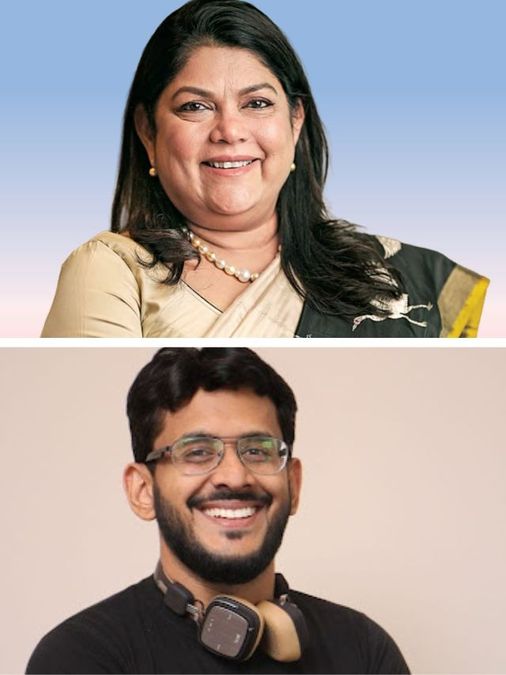
Falguni Nayar, a graduate of IIM Ahmedabad, launched Nykaa in 2012 as an online beauty store. Nykaa has since redefined the beauty shopping experience in India, offering a wide range of products and services that cater to diverse customer needs.
8. Indian Institute of Management (IIM) Ahmedabad
Another notable entrepreneur from IIM Ahmedabad is Deep Kalra, who founded MakeMyTrip in 2000. As India’s first online travel portal, MakeMyTrip has grown into a comprehensive platform that assists millions in planning their travel, including flights, hotels, and holiday experiences.
9. Indian Institute of Technology (IIT) Kharagpur
Another significant institution is IIT Kharagpur, where many aspiring entrepreneurs have honed their skills. Notable startups from this institute include Zomato, founded by Deepinder Goyal and Pankaj Chaddah in 2008, which has transformed the food delivery and restaurant discovery landscape in India.
10. Indian Institute of Technology (IIT) Madras
IIT Madras has also produced successful entrepreneurs, including Raghunandan G, who founded TaxiForSure in 2011. This ride-sharing service was one of the first in India and was later acquired by Ola, further showcasing the impact of IIT Madras on the startup ecosystem.
Conclusion
The entrepreneurial journeys of these founders highlight the critical role that education plays in fostering innovation. These colleges not only provide academic knowledge but also encourage students to think creatively and take risks. As India continues to grow as a global startup hub, the influence of these institutions will undoubtedly persist, inspiring future generations of entrepreneurs.
Note: The information presented in this article is based on available data as of October 2023 and may be subject to change.