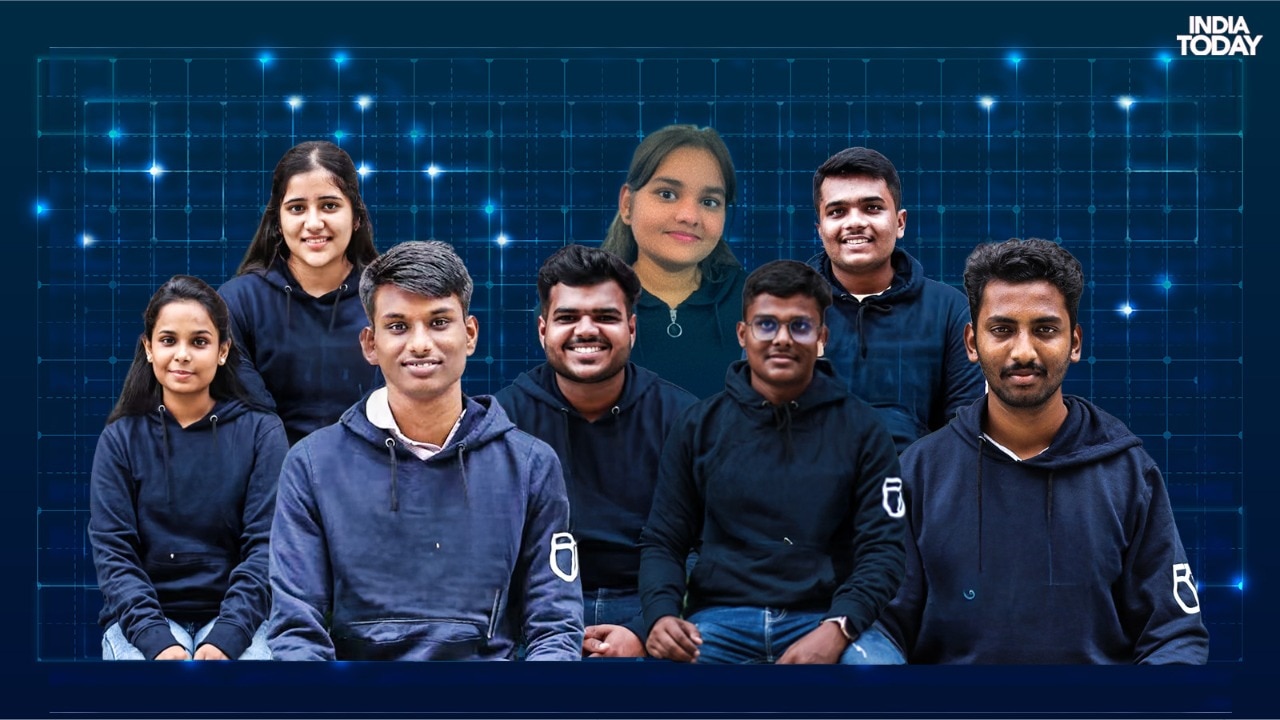
8 Undergrads Built an AI Tool: IITs are Now Using it to Fix India’s Welfare Gap
In a remarkable initiative, eight undergraduate engineers have developed an AI platform named EmpowerHub, aimed at addressing one of India’s most pressing issues: welfare access. This innovative tool has garnered attention and is currently being utilized by prestigious institutions such as IIT Roorkee, IIT Kanpur, and IIT Dharwad to enhance the accessibility of government welfare schemes across the nation.
EmpowerHub: A Student Initiative
EmpowerHub was created by graduates from the Newton School of Technology in collaboration with IIT Roorkee and the Social Studies Foundation. The project received full funding from the Ministry of Education’s Indian Council of Social Science Research (ICSSR) as part of the Vikshit Bharat programme. The platform was developed in a rapid six-month timeframe, showcasing the potential of students to create impactful public technology.
The Motivation Behind EmpowerHub
The inception of EmpowerHub was driven by a critical question: Why do millions of eligible Indians miss out on welfare schemes? Soumitra Mishra, Head of Academics at NST, highlighted that the issue was identified through extensive research conducted by IIT Roorkee and the Social Studies Foundation. The research revealed that many first-generation learners and low-income families struggled to access scholarships and welfare support due to the fragmented nature of information available.
The Welfare Information Gap
Mishra pointed out that welfare information is often scattered across numerous portals, presented in complex formats, and frequently outdated. He stated, “Millions of Indians miss out on government benefits not because they’re ineligible, but because information is scattered across hundreds of portals.” This realization prompted the need for a unified system that could streamline access to welfare information.
The Development Process
With the backing of ICSSR, a team of eight undergraduate students volunteered to build the platform from the ground up. The team comprised:
- Yashi Gupta
- Saloni Sharma
- Charan Aditya
- Gangadhar Yadav
- Soniya Malviya
- Monu Kumar
- Aryan Jangde
- Karthik Reddy
These students managed to balance their academic responsibilities while developing the platform, demonstrating that young minds can contribute significantly to solving real-world problems.
How EmpowerHub Works
The complexity of government schemes in India, which vary by ministry, state, and eligibility criteria, makes manual matching nearly impossible. EmpowerHub employs a sophisticated matching algorithm designed to address these challenges. Mishra explained, “Government schemes in India number in the thousands, each with different eligibility rules, formats, and languages.”
The AI Matching Algorithm
The AI platform continuously extracts real-time information from various government portals, PDFs, circulars, and announcements in multiple Indian languages. This ensures that users receive the most up-to-date recommendations. Mishra elaborated, “Our AI engine continuously scans verified government sources and converts them into structured data using custom-built crawlers and AI text parsers.” Over time, the engine learns from user interactions, refining its recommendations and contributing to the creation of one of India’s first comprehensive welfare databases.
The Role of IIT Roorkee
IIT Roorkee played a pivotal role in the project by providing the conceptual framework and research backbone. Ram Manohar Singh, an Associate Professor at IIT Roorkee, noted that the institution identified a pressing need for first-generation learners to find relevant welfare support. The collaboration with the Social Studies Foundation allowed for a thorough examination of the accessibility barriers faced by various user personas, including low-income households and regional-language users.
Research Framework and Data Accuracy
Singh emphasized the importance of aligning the platform’s architecture with national policy objectives and research ethics, particularly in handling sensitive demographic information. The research framework established by IIT Roorkee ensured that the data was accurate and relevant, while also guiding the design of the platform.
Community Engagement and Testing
The students from NST were actively involved in outreach efforts to pilot communities, testing the platform among real beneficiaries during its development. They visited various colleges to gauge student awareness and understand how potential users discover welfare schemes.
Early Insights from Beta Testing
Even without a formal marketing push, the beta version of EmpowerHub attracted approximately 1,500 visitors, with around 250 to 300 sign-ups. Singh remarked that these early numbers suggest strong interest and highlight the need for a tool that simplifies access to welfare schemes.
Conclusion
EmpowerHub exemplifies how student-led initiatives can create meaningful solutions to complex societal issues. By leveraging technology and collaboration, these undergraduates have developed a platform that not only addresses the welfare access gap but also empowers citizens to take advantage of government benefits. As the platform continues to evolve, it holds the potential to transform the landscape of welfare accessibility in India.
Note: The information in this article is based on the latest updates as of December 2025 and aims to provide insights into the development and impact of EmpowerHub.