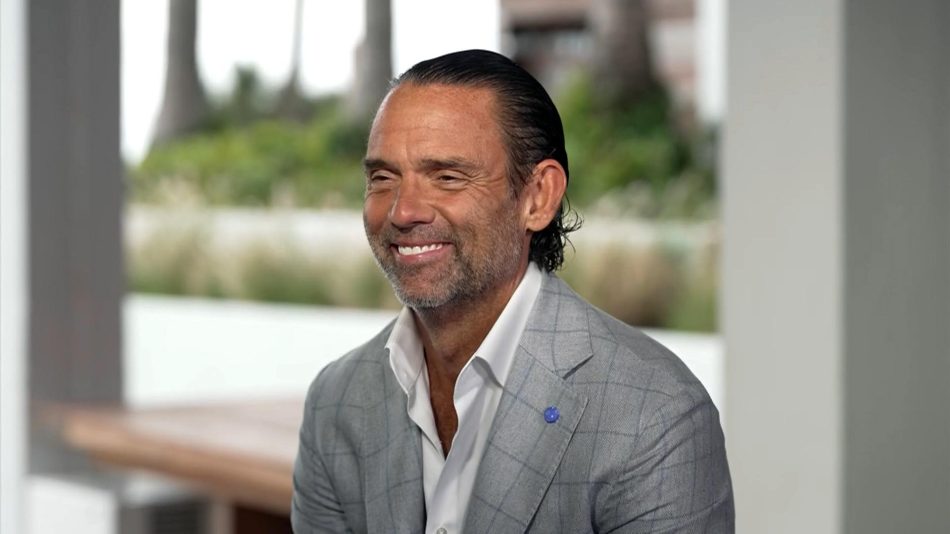
Markets are underpricing the risk of Middle East pullback in AI, says tech investor Jack Selby
In a recent interview, tech investor Jack Selby, managing director of Peter Thiel’s family office, Thiel Capital, expressed concerns about the potential impact of geopolitical tensions in the Middle East on the artificial intelligence (AI) sector. Selby argues that markets are underestimating the risks associated with a possible pullback of investments from the region, which could have far-reaching implications for AI development and infrastructure.
The Importance of Middle Eastern Investment in AI
According to Selby, Middle Eastern investors, including sovereign wealth funds and government entities, currently account for approximately 25% of global investments committed to AI over the next five years. This significant contribution underscores the region’s pivotal role in financing AI projects worldwide.
Selby warns that if the ongoing conflict in Iran persists, countries such as the United Arab Emirates (UAE) and Saudi Arabia may redirect their investments towards domestic rebuilding efforts. This shift could result in a substantial loss of capital for AI initiatives, affecting both public and private tech companies as well as critical data center projects.
Potential Consequences of Investment Withdrawal
Selby elaborates on the potential consequences of a pullback by Middle Eastern sovereign wealth funds, suggesting that it could drain hundreds of billions of dollars from the AI boom. He emphasizes that the ripple effects could significantly impact data centers and the broader technology ecosystem.
“I think markets have underappreciated how important the Middle East region is for capital expenditure spending as it relates to AI and AI infrastructure,” Selby stated. “If the Middle East starts taking some of these projects offline or canceling some of these projects, the impact on the market could be much larger than what they currently suggest.”
AI Funding Risks and Market Volatility
Selby’s insights come at a time when AI companies are increasingly reliant on funding from the Middle East. Recent reports, including one from The Wall Street Journal, highlighted missed revenue targets at prominent AI firms like OpenAI, leading to volatility in tech and chip stocks. Selby cautions that the Middle East poses another layer of funding risk as AI companies become more dependent on capital from the region.
Key Investments and Projects
- Oracle, Nvidia, and Cisco are collaborating with OpenAI to develop 5 gigawatts of capacity in the UAE.
- Microsoft has announced plans to invest $15 billion in the UAE by 2029.
- The sovereign wealth funds of the UAE and Saudi Arabia have become crucial investors in private AI companies, with OpenAI reportedly seeking $50 billion from these funds earlier this year.
Data Center Funding and Project Cancellations
Selby estimates that half of the Middle East’s AI funding is allocated to data centers located within the region, while the other half is directed towards global projects. He notes that some Middle Eastern funds and companies have already begun canceling shipping and business contracts by invoking force majeure clauses. The major concern, he warns, is that they may also start canceling data center projects.
“Markets don’t seem to grasp that this is a very real situation,” Selby remarked. “It’s very volatile. I hope and I pray that it goes back to some semblance of normalcy soon. But it seems to me that markets are underpricing this volatility and the risk.”
Broader Risks in the AI Sector
Beyond geopolitical tensions, Selby identifies a broader risk of overinvestment and speculation within the AI sector. He draws parallels to the dot-com bubble, suggesting that investors and founders are inflating the values of AI and infrastructure companies without sufficient justification.
He points out that the AI boom is consuming an unprecedented amount of capital, with top hyperscalers expected to spend over $700 billion this year. Selby warns that the resulting wealth destruction could far exceed the losses experienced during the dot-com bust.
Potential for a Major AI Bubble
“AI is a revolutionary technology, don’t get me wrong,” he stated. “But it can also be an exceptional bubble. There will be extreme winners and there will also be some real losers. And those losers will be orders of magnitude larger than any of the losers that we’ve seen before. The AI bubble, when it busts, will be at least one more zero, probably two and three more zeros than the dot-com bubble. That will be tens, if not hundreds, of billions of dollars.”
Selby cites Google as an example from the dot-com era, where it disrupted established search engines like Ask Jeeves and AltaVista. He warns that similar disruptions could occur among today’s AI leaders.
Investment Strategy and Opportunities
In light of these challenges, Selby’s investment strategy focuses on avoiding crowded markets. He is launching a second fund at Copper Sky, his Arizona-based venture capital firm, targeting tech firms outside of California, New York, and Massachusetts. He believes that the best investment opportunities lie beyond these traditional tech hubs.
“Probably 90%-plus of all venture capital investment went to California, New York, and Massachusetts, an all-time high,” Selby explained. “The good news is, if you get outside of those three states and go to the other 47 states, the deals and investment opportunities are far less expensive, and that’s what we do.”
Advice for Family Offices
Selby also shared insights regarding family offices and their investment strategies. He noted that many family offices are making direct investments in private companies, often without going through a fund. A survey from Citibank revealed that seven out of ten family offices have pursued this approach, which Selby views as a significant mistake.
He understands the motivation behind this trend, given the disappointing performance of private equity and venture capital funds. However, he emphasizes the importance of strategic investments and the value of leveraging established funds for better outcomes.
Conclusion
Jack Selby’s insights highlight the critical role of Middle Eastern investments in the AI sector and the potential risks posed by geopolitical instability. As the AI landscape continues to evolve, investors must remain vigilant and consider the broader implications of market dynamics and funding sources.
Note: The information provided in this