Is Netanyahu dead? Internet claims recent viral video of Israeli PM 'AI-generated' as it shows '6 fingers', sets rumour mills running amid Iran vs US-Israel war
A recent video of Israeli Prime Minister Benjamin Netanyahu has sparked widespread speculation on social media, with many users claiming that the footage may have been generated or altered using artificial intelligence (AI). This controversy arises amid the escalating tensions between Iran and the US-Israel coalition, leading to a storm of debate online.
The Viral Video and Speculation
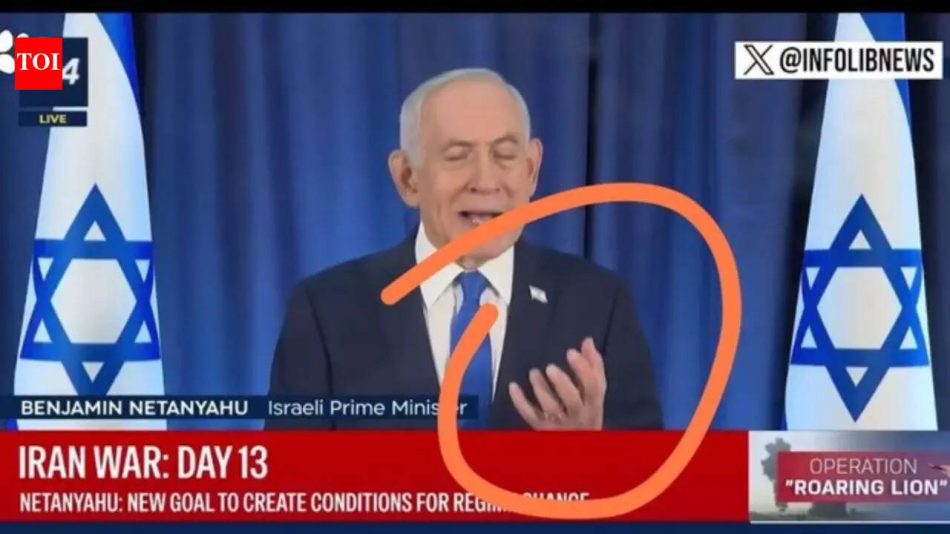
The speculation began when social media users scrutinized Netanyahu’s video address, examining it in minute detail. One particular frame became the focal point of the debate, showing Netanyahu gesturing near a microphone with a distorted hand. Several users claimed that the image appeared to depict six fingers instead of the usual five, a phenomenon often cited as a tell-tale sign of AI-generated media.
Generative AI tools have historically struggled to accurately render human hands, leading to distorted representations that have become recognizable markers for identifying synthetic images. Within hours, tweets and Instagram posts highlighting this supposed anomaly began to circulate widely, amassing millions of views and pushing the controversy into trending territory.
Social Media Reactions
As the debate intensified, numerous hashtags linked to the video began trending on X (formerly Twitter). Some users framed the clip as evidence of AI manipulation, while others suggested more dramatic possibilities, such as the notion that the video might be part of a digital propaganda strategy designed to convey messages during the ongoing conflict without requiring a live appearance.
Viral threads included posts like:
- “BREAKING: LATEST VIDEO RELEASED BY THE ISRAELI GOVERNMENT SHOWS THAT IT WAS AI GENERATED BECAUSE NETANYAHU HAS 6 FINGERS.”
- “Did this really happen? Why did Israel put out an AI speech by Netanyahu last night? Where is he?”
- “There is no getting away from the fact that the video purporting to be Netanyahu is AI influenced.”
While these claims remain unverified, they illustrate how quickly online speculation can snowball into elaborate narratives during geopolitical crises.
The Deepfake Era and Public Suspicion
This controversy surrounding Netanyahu’s video highlights a broader phenomenon known as deepfake paranoia. The advancement of artificial intelligence tools capable of generating hyper-realistic videos has raised public skepticism regarding the authenticity of digital media. Viewers are increasingly cautious, especially when unusual visual artifacts appear in a video, such as distorted hands or flickering backgrounds.
The Netanyahu clip emerged at a time when such suspicions are most likely to escalate, particularly amid the ongoing conflict involving Iran, Israel, and the United States.
Wartime Propaganda and Misinformation
The video also surfaced during one of the most volatile periods in Middle Eastern geopolitics in recent years. The ongoing confrontation has led to a surge of wartime content online, including alleged missile-strike footage, battlefield images, and military announcements. Many of these posts have turned out to be misleading, outdated, or digitally altered, creating an environment ripe for suspicion.
In this context, even minor visual irregularities can ignite widespread speculation. The rapid spread of misinformation underscores the challenges of discerning fact from fiction in a digitally connected world.
The Rise of Citizen Video Forensics
Another factor contributing to the viral debate is the growing trend of crowdsourced media analysis. Social media users are increasingly taking it upon themselves to analyze viral videos, employing techniques such as slowing down footage, enhancing screenshots, and using AI tools to evaluate the content.
This practice, often referred to as “citizen forensics,” has become a defining feature of the modern Internet. While it can sometimes uncover genuine digital manipulation, it can also lead to misinterpretations when technical artifacts are mistaken for deliberate alterations. Once a suspicious screenshot begins circulating, the narrative can spread far faster than any attempt to clarify it.
The Role of Hands in AI Detection
The intense focus on Netanyahu’s hand is not coincidental. Hands have emerged as one of the Internet’s most recognized clues for detecting AI-generated content. Early AI image generators frequently produced bizarre hand shapes, extra fingers, or fused digits, prompting users to instinctively examine hands whenever they suspect an image or video might be AI-generated.
Memes about “count the fingers” have become a recurring joke in online discussions about artificial intelligence. Thus, when a screenshot from the Netanyahu video appeared to show a distorted hand, the reaction was almost immediate, fueling further speculation.
Conclusion
The controversy surrounding Netanyahu’s viral video serves as a reminder of the complexities and challenges posed by the intersection of technology, politics, and public perception. As artificial intelligence continues to evolve, the potential for misinformation will likely grow, necessitating a more discerning approach from audiences worldwide.
Note: The claims surrounding the video of Netanyahu remain unverified, and it is essential to approach such discussions with a critical mindset, particularly in the context of ongoing geopolitical tensions.