Chinese Courts Rule Companies Cannot Fire Workers Simply to Replace Them With AI
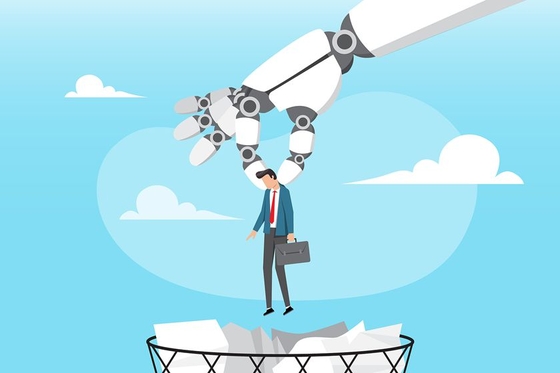
In a landmark decision, Chinese courts have established that companies cannot legally terminate employees solely to replace them with artificial intelligence (AI) systems. This ruling represents a significant advancement in labor rights as automation increasingly permeates the technology sector.
Background of the Ruling
The ruling was highlighted in a case involving a technology company based in Hangzhou. The case centered around an employee, Zhou, who worked in quality assurance, specifically verifying sentences generated by AI. Zhou’s employer attempted to reassign him to a different role while significantly reducing his salary from 25,000 yuan (approximately $3,655) to 15,000 yuan. Zhou rejected the pay cut and was subsequently dismissed from his position.
Legal Proceedings
Following his termination, Zhou sought arbitration for wrongful dismissal and was awarded compensation. In response, the company filed a lawsuit in the Yuhang District Court, challenging the arbitration outcome. The court’s decision was pivotal in reinforcing employee rights in the context of AI integration in the workplace.
Key Findings of the Court
- The court ruled that the cost-saving measures associated with AI adoption do not constitute valid grounds for termination.
- It was determined that AI implementation does not qualify as an “objective major change” that would render employment contracts void.
- The court emphasized the need for companies to explore options such as retraining or reasonable reassignment of employees rather than resorting to termination.
Legal Framework
Under Chinese labor law, unilateral termination of employment contracts is strictly regulated. Employers can only terminate contracts with mutual consent, or in cases of misconduct, incompetence, or significant unforeseeable changes, provided they give at least 30 days’ notice or severance pay. The court’s ruling underscored that the integration of AI is a strategic choice made by firms and does not fall under the category of unforeseeable changes.
Implications for AI Integration
The ruling sends a clear message that while companies may adopt AI technologies to enhance efficiency, they must also uphold their responsibilities towards their workforce. The courts suggested that businesses should focus on liberating labor through technology, rather than displacing workers. This includes investing in employee upskilling and providing reasonable reassignments with adequate compensation.
Other Relevant Cases
The Hangzhou case is not an isolated incident. On December 26, 2025, the Beijing Human Resources and Social Security Bureau dealt with a similar case involving an employee named Liu. Liu was hired in 2009 for manual data entry but lost his job when his employer transitioned to AI data collection in early 2024. His dismissal was also deemed illegal, as the court found that the shift to AI was a deliberate business decision, not an uncontrollable or unpredictable event.
Defining “Objective Major Change”
The court’s examination of whether AI job elimination constitutes an “objective major change” was crucial. According to the Labor Contract Law, such changes are typically defined as uncontrollable events, such as natural disasters or significant policy shifts. The courts clarified that business decisions, like the adoption of AI, do not meet this criterion.
Conclusion
The recent rulings by Chinese courts signify a crucial step in protecting labor rights amid the rapid advancement of AI technology. Companies are now required to consider the implications of their automation strategies on their workforce and are encouraged to adopt more humane approaches to workforce management. This includes retraining employees and providing reasonable alternatives to termination, ensuring that the benefits of technological advancements do not come at the expense of workers’ rights.
Note: The information contained in this article is based on legal rulings and interpretations as of April 2026 and may be subject to change as new cases arise and laws evolve.