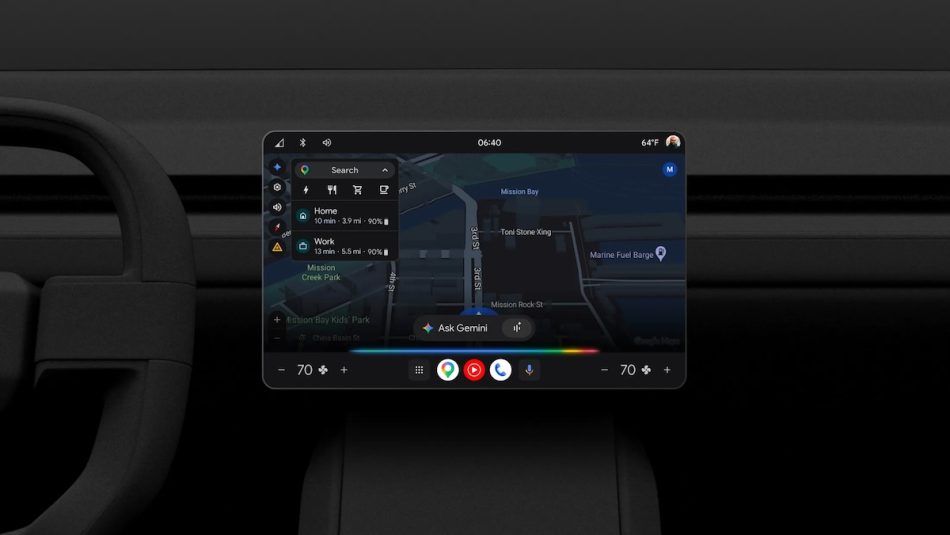
Google’s Gemini AI assistant is hitting the road in millions of vehicles
On April 30, 2026, Google announced a significant upgrade to its in-car technology with the rollout of the Gemini AI assistant. This move aims to enhance the driving experience by integrating advanced conversational AI into vehicles equipped with Google built-in.
The Rollout of Gemini AI
The introduction of Gemini follows closely behind General Motors’ announcement that the assistant will be available in approximately 4 million vehicles from the model year 2022 and newer. This includes popular brands such as Cadillac, Chevrolet, Buick, and GMC. However, Google’s announcement did not specify which automakers would be included, suggesting that Gemini will not be limited to GM vehicles alone.
Features of Gemini AI
Gemini is designed to provide a more natural and conversational interface for drivers. Unlike its predecessor, Google Assistant, Gemini allows for a more fluid interaction, enabling drivers to communicate their needs more freely. Key features of Gemini include:
- Conversational Interaction: Drivers can engage in more open-ended dialogues, allowing for a more personalized experience.
- Task Completion: Gemini can perform various tasks, such as adjusting the vehicle’s climate control, providing navigation, and recommending music.
- Information Retrieval: The assistant can pull relevant information from Google Maps, including restaurant suggestions based on user preferences.
- Hands-Free Communication: Gemini can summarize incoming messages and help drivers respond without taking their hands off the wheel.
Real-Time Conversations with Gemini Live
A standout feature of the Gemini AI is its beta version, known as Gemini Live. This function allows for real-time, open-ended conversations while driving. Drivers can activate Gemini Live by tapping a button on the interface or by saying, “Hey Google, let’s talk.” This feature is designed to foster brainstorming, learning, or casual discussions during travel.
Accessibility and Compatibility
The rollout of Gemini will begin in the United States, initially supporting English language users. Google has indicated plans to expand the availability of Gemini to additional languages and regions in the future. Importantly, Gemini is not limited to new vehicles; it will also be accessible to existing compatible vehicles via software updates.
Drivers who are signed into their Google accounts in compatible vehicles will receive prompts to upgrade to Gemini. Once enabled, the assistant can be accessed through various methods, including voice commands, the on-screen microphone, or steering wheel controls.
Future Updates and Integration
Google plans to deepen the integration of Gemini with its other services, including Gmail, Google Calendar, and Google Home. This integration aims to create a seamless experience for users, allowing them to manage their schedules and communications directly from their vehicles.
The Importance of AI in Transportation
The introduction of Gemini AI represents a broader trend in the automotive industry, where the integration of artificial intelligence is becoming increasingly vital. As vehicles become more connected and autonomous, the demand for sophisticated AI systems that can enhance safety, convenience, and user experience is growing.
With Gemini, Google is positioning itself as a leader in this evolving landscape, offering drivers a more intuitive and interactive way to engage with their vehicles. The ability to converse naturally with an AI assistant while driving not only improves the overall experience but also promotes safer driving practices by minimizing distractions.
Conclusion
In summary, Google’s Gemini AI assistant is set to revolutionize the driving experience by bringing advanced conversational capabilities to millions of vehicles. With features designed to enhance interaction, promote safety, and integrate seamlessly with other Google services, Gemini represents a significant step forward in automotive technology. As the rollout expands, it will be interesting to see how drivers adapt to this new way of interacting with their vehicles and how it shapes the future of transportation.
Note: The information in this article is based on the latest announcements from Google and industry sources as of April 30, 2026.