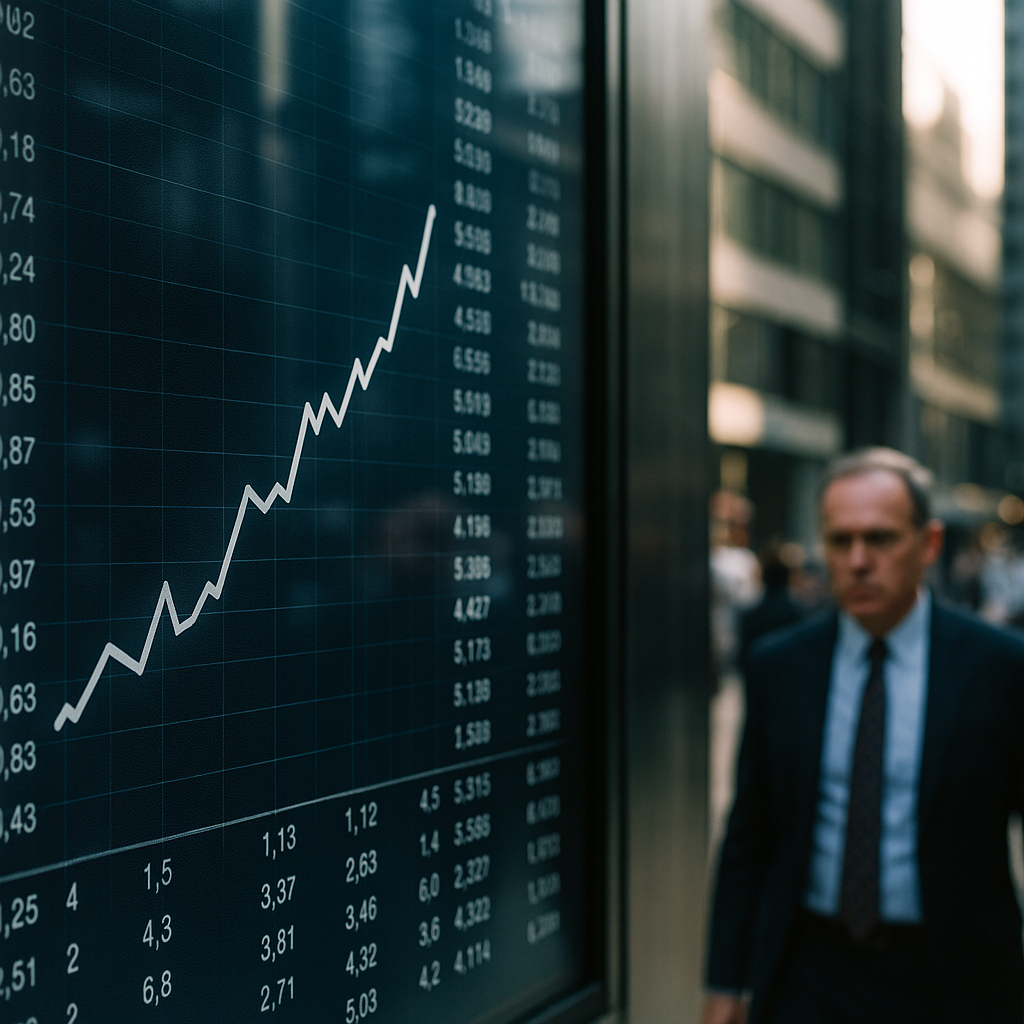
‘Sometimes, we see bubbles’: Why Michael Burry is betting against AI and doubling down on these stocks instead
Michael Burry, the hedge fund manager renowned for his prescient bet against the U.S. housing market prior to the 2008 financial crisis, is once again making headlines. This time, he is raising alarms about the potential for an artificial intelligence (AI) bubble, while simultaneously increasing his investments in several key stocks.
Burry’s Track Record
Burry’s reputation as a contrarian investor was solidified when he earned $100 million for himself and $725 million for his investors by shorting the housing market. His story was famously depicted in the film The Big Short, which highlighted his ability to identify market trends that others overlooked.
Current Market Predictions
In April 2026, Burry reiterated his concerns regarding an impending AI bubble. He has taken a bearish stance on some of the market’s most prominent AI stocks, including Nvidia and Palantir. According to reports from CNBC, Burry initiated a new position in Microsoft and increased his holdings in MSCI, PayPal, and Adobe, while maintaining his positions in software stocks.
Understanding Burry’s Strategy
Burry’s strategy involves using put options, which give investors the right to sell a stock at a predetermined price before a specified expiration date. In a recent filing, his firm, Scion Asset Management, disclosed bearish positions against Nvidia and Palantir, with put options on 1,000,000 shares of Nvidia and 5,000,000 shares of Palantir. This strategy suggests that Burry anticipates a decline in the stock prices of these companies.
Why Bet Against Nvidia and Palantir?
Burry has expressed skepticism about the sustainability of the growth seen in AI stocks. He referenced an interview with Nvidia CEO Jensen Huang, where he felt Huang was evasive when discussing the company’s future. Burry stated, “Jensen squirmed and obfuscated,” indicating his belief that the bullish sentiment surrounding Nvidia may be unwarranted.
Market Reactions
Despite Burry’s concerns, not everyone agrees with his assessment. Palantir CEO Alex Karp responded to Burry’s bearish stance, suggesting that the companies Burry is shorting are actually thriving financially. Karp described Burry’s position as “super weird,” emphasizing that both Nvidia and Palantir are generating significant revenue.
Counterarguments to Burry’s Predictions
Some analysts argue that fears of an AI bubble may be overstated. In an article published in The Atlantic, writer Rogé Karma noted that AI companies are beginning to turn profitable, and the adoption of AI tools by software developers is yielding substantial productivity benefits. He pointed out that the demand for data centers is rising alongside the growth of AI technologies.
Emerging Success Stories
One notable example of a successful AI company is Anthropic, which has reportedly experienced rapid revenue growth. Karma highlighted that if Anthropic’s current growth trajectory continues, it could soon become one of the highest-earning companies globally.
The Bigger Picture
Burry’s bearish stance on AI stocks raises important questions about market dynamics and the sustainability of tech-driven growth. While some believe that AI is a transformative technology with long-term potential, others caution that the current valuations may not be justified.
Investing in a Volatile Market
Investors considering Burry’s insights should weigh the potential risks and rewards of investing in AI stocks. The technology sector is known for its volatility, and while some companies may be experiencing rapid growth, others may face challenges that could impact their stock prices.
Conclusion
Michael Burry’s investment strategies and predictions have garnered attention due to his historical accuracy in identifying market trends. As he bets against AI stocks while increasing his holdings in other companies, investors must consider the implications of his views. Whether Burry is correct in his assessment of an AI bubble remains to be seen, but his approach serves as a reminder of the complexities and uncertainties inherent in the stock market.
Note: The information provided in this article is for informational purposes only and should not be considered financial advice. Always conduct your own research or consult a financial advisor before making investment decisions.