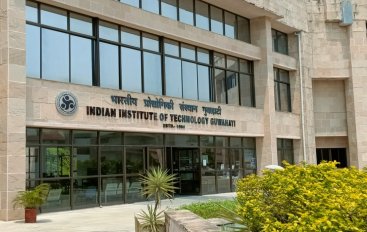
Ministry Of Electronics And Information Technology (MeitY), IndiaAI, Government Of Assam And IIT Guwahati Host Human Capital Working Group Meeting
New Delhi, Delhi, January 5, 2026: The Ministry of Electronics and Information Technology (MeitY), the IndiaAI Mission, the Government of Assam, and IIT Guwahati are collaborating to host a two-day Working Group Meeting focused on “Human Capital” at the IIT Guwahati campus. This meeting brings together senior policymakers, academic leaders, industry experts, and practitioners to discuss crucial topics related to education reform, workforce transition, and the inclusive adoption of human-centric artificial intelligence (AI).
Meeting Overview
The two-day meeting, scheduled for January 5-6, 2026, is chaired by Prof. T. G. Sitharam and serves as a key thematic precursor to the upcoming India AI Impact Summit 2026, which will take place in New Delhi from February 15-20, 2026. The discussions held during this meeting are expected to inform national-level deliberations and policy outcomes.
Opening Session Highlights
The opening session featured addresses from several prominent figures:
- Shri Syedain Abbasi, IAS: Special Chief Secretary, Government of Assam
- Shri K. S. Gopinath Narayan, IAAS: Principal Secretary (IT), Government of Assam
- Prof. T. G. Sitharam: Chair, Human Capital Working Group
- Prof. Devendra Jalihal: Director, IIT Guwahati
- Ms. Shikha Dahiya: Joint Director, IndiaAI, MeitY
During these addresses, speakers emphasized the centrality of human capital in India’s AI journey. They stressed the need to evolve from conventional skilling models to a focus on lifelong learning, augmentation, and institutional readiness.
Commitment to Future-Ready Human Capital
Prof. Devendra Jalihal highlighted IIT Guwahati’s role as a platform for collaboration among policymakers, academia, industry, and students. He noted the importance of shaping future-ready human capital in the age of AI and the strong student participation as a sign of growing interest in creating inclusive AI ecosystems.
Ms. Shikha Dahiya outlined the vision for the India AI Impact Summit 2026, focusing on human capital, the democratization of AI resources, and the responsible adoption of AI, particularly for the Global South. She emphasized the IndiaAI Mission’s role in building future-ready human capital through various initiatives, including enhancing compute capacity and developing indigenous datasets and models.
Key Themes Discussed
Prof. T. G. Sitharam underscored the necessity for an inclusive and people-centric transition to an AI-enabled economy. He advocated for moving beyond fragmented skilling efforts towards lifelong learning ecosystems that prioritize adaptability, judgment, and human-centered capabilities alongside technical skills.
Shri K. S. Gopinath Narayan emphasized that the integration of AI signifies a fundamental shift in economies and societies, highlighting the importance of human augmentation over automation. He cautioned that unchecked technological change could exacerbate inequalities and stressed the need for continuous learning, micro-skilling, and AI literacy as essential public capabilities.
Shri Syedain Abbasi warned that while AI hype mirrors previous technology cycles, this moment is unique due to AI’s autonomous capabilities. He called for indigenous compute capacity and strong public-private collaboration to address potential inequities and protect traditional employment models.
Concluding Remarks
The inaugural session concluded with a vote of thanks from Shri Ashwani Kumar, IAS, Director of the IT Department, Government of Assam. He expressed gratitude to the Human Capital Working Group for their thought leadership and acknowledged IIT Guwahati for providing an academic platform that bridges research, policy, and real-world impact.
Keynote Address and Panel Discussions
A highlight of Day 1 was the keynote address by Prof. Gautam Barua, Former Director of IIT Guwahati, on “Democratizing Competency in the Age of AI.” He discussed the shift from traditional education systems to models that enable large-scale human augmentation through domain-specific AI tools, emphasizing the need for sovereign, sector-aligned AI systems that enhance human capability while ensuring social protection for workers affected by automation.
Following the keynote, a panel discussion on “Gender-Responsive Strategies for the AI Transition” examined the impact of AI on women in the workforce. The discussion highlighted risks associated with automation, widening wage gaps, and the need for inclusive design and explainable AI to ensure equitable transitions.
Another panel discussion titled “Redefining Education for the Cognitive Age” focused on how AI is reshaping learning objectives, pedagogy, and assessment systems. The panellists discussed the shift from rote learning to cognitive, process-oriented education and the role of AI in personalizing learning experiences.
Conclusion
The Human Capital Working Group Meeting at IIT Guwahati marks a significant step towards addressing the challenges and opportunities presented by AI in India. By fostering collaboration among various stakeholders, the meeting aims to shape a future where human capital is at the forefront of AI integration, ensuring that technological advancements benefit all segments of society.
Note: This article is based on the information available as of January 2026 and aims to provide insights into the ongoing discussions and initiatives surrounding AI and human capital in India.