Param Shakti Supercomputing System Launched In IIT Madras
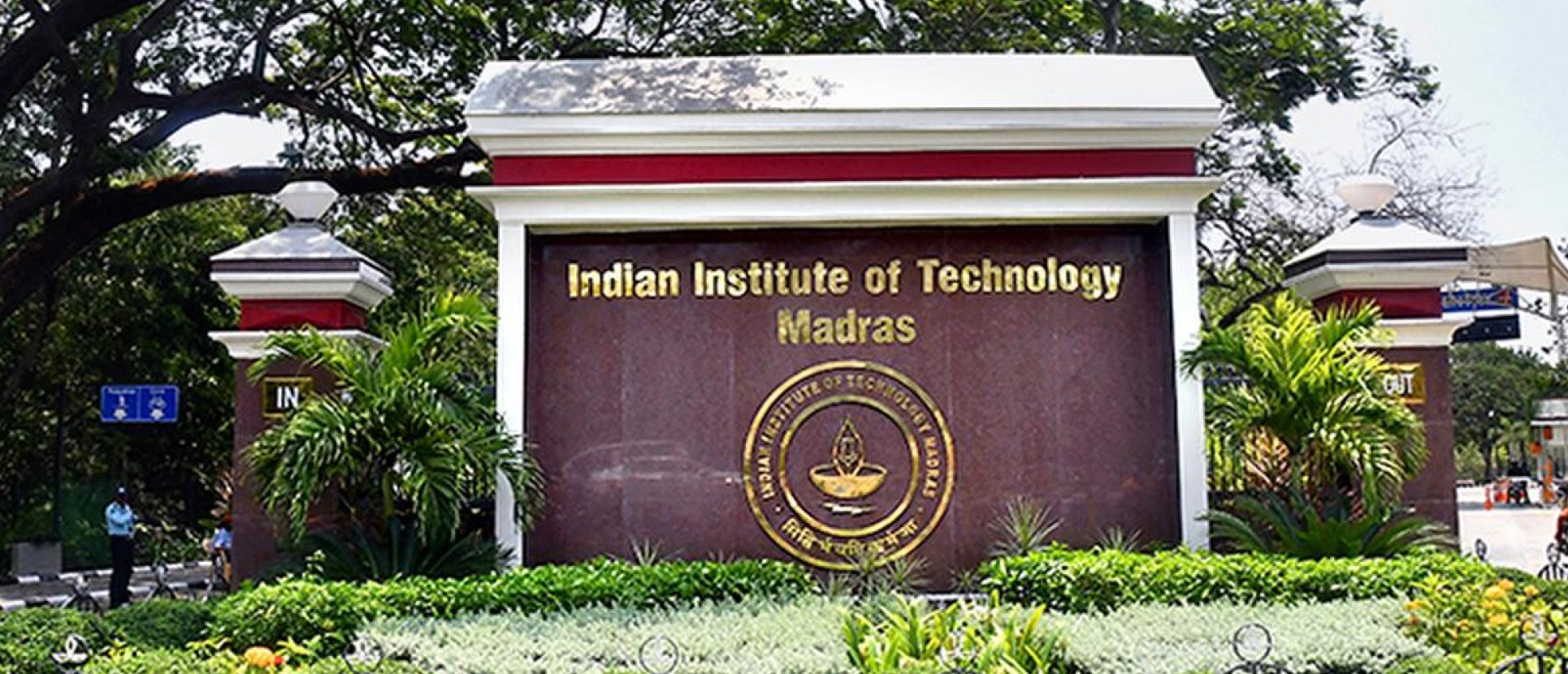
On January 3, 2026, the Ministry of Electronics and Information Technology (MeitY) Secretary S. Krishnan officially launched the ‘Param Shakti’ supercomputing system at the Indian Institute of Technology Madras (IIT Madras). This state-of-the-art facility is designed to enhance research capabilities across various scientific domains in India.
Overview of Param Shakti
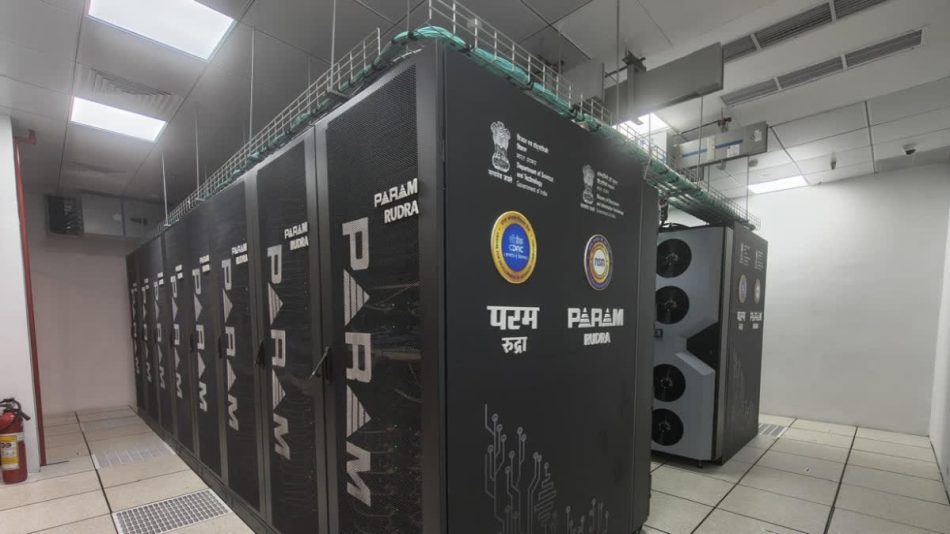
The Param Shakti system is an indigenously developed and manufactured supercomputing system, specifically a ‘3.1 Petaflop PARAM RUDRA supercomputing system’. It is part of the National Supercomputing Mission, which aims to bolster India’s computational capabilities and support advanced research initiatives.
Key Features of the Facility
- Supercomputing Cluster: The facility houses the Param Rudra supercomputing cluster.
- Integrated Infrastructure: It includes advanced systems for round-the-clock power supply, cooling, and data center operations.
- Funding and Development: The project is funded under the National Supercomputing Mission, jointly led by MeitY and the Department of Science and Technology (DST).
Significance of the Launch
During the launch event, S. Krishnan emphasized the importance of interdisciplinary collaboration at IIT Madras. He noted, “I have had a long association with IIT Madras, and I have seen first-hand how truly interdisciplinary the Institute has become. It is encouraging to see faculty and researchers from diverse departments coming together to use this facility and contribute meaningfully in their respective domains.”
National Supercomputing Mission
The National Supercomputing Mission has already seen the installation of 37 supercomputers across various institutions in India, with more systems planned for the future. The mission aims to support a wide range of application-driven projects, providing dedicated funding to ensure that researchers can operate at a scale that significantly impacts their fields.
Focus on Diverse Technologies
Krishnan also highlighted the IndiaAI Mission’s strategy of not promoting a single technology or GPU architecture. He stated, “By enabling access to multiple GPU architectures, we want our innovators, scientists, and researchers to gain broad exposure and develop the capability to master diverse platforms.” This approach is intended to foster resilience and informed technology choices, ensuring that India’s AI ecosystem remains robust and adaptable.
Remarks from IIT Madras Leadership
Prof. V. Kamakoti, the Director of IIT Madras, spoke about the various initiatives MeitY has undertaken to drive the growth of computing technology and the digital revolution in India. He mentioned the National Knowledge Network, which connects all Centrally-funded academic institutions, as a key initiative.
Prof. Kamakoti urged students to focus on developing energy-efficient program codes that facilitate effective sharing of GPU resources while also being safe from memory leaks. He stressed the importance of indigenous technologies in realizing the vision of Atmanirbhar Bharat (self-reliant India).
Encouragement for Indigenous High-Performance Computing
Shri E. Magesh, Director General of C-DAC, provided insights into C-DAC’s journey in developing the Rudra platform. He encouraged researchers to increasingly adopt indigenous high-performance computing systems to enhance India’s technological capabilities.
Innovative Solutions from IIT Madras
Prof. Phanikumar, Chairman of the Computer Centre at IIT Madras, highlighted the development of ‘MicroSim’, a multi-GPU solver suite for microstructure evolution. This suite, supported by the National Supercomputing Mission, has been made open source and is recognized as one of the fastest in its category worldwide.
Operational Success and Utilization
Since becoming operational in May 2025, the Param Shakti facility has achieved over 80 percent utilization, indicating strong demand from researchers. The facility showcases high standards in energy-efficient infrastructure, with a power usage effectiveness (PUE) ranging between 1.2 and 1.4.
Research Applications
Researchers at IIT Madras are utilizing the Param Shakti supercomputing system for a variety of applications, spanning multiple length and time scales. This includes sub-atomic electronic structure calculations and large-scale structural and system-level simulations, showcasing the versatility and power of the new facility.
Conclusion
The launch of the Param Shakti supercomputing system at IIT Madras marks a significant milestone in India’s journey towards becoming a leader in high-performance computing. With its advanced capabilities and commitment to fostering innovation, the facility is set to play a crucial role in enhancing research and development across various scientific fields.
Note: This article is based on the information available as of January 2026 and reflects the latest developments in the field of supercomputing in India.