
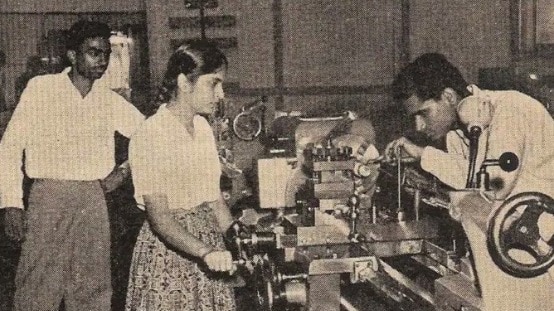
From the First Woman at IIT Bombay to a Generation at IITs
The journey of women in the Indian Institutes of Technology (IITs) began with a single trailblazer and has evolved into a significant presence in the field of engineering and technology. This article explores the historical context, current statistics, and the challenges that women face in these prestigious institutions.
The Pioneers: Tejaswini Saraf and Sushma Tewari
In the early 1960s, Tejaswini Saraf made history as the first woman to enroll at IIT Bombay. Her presence was a rarity in a male-dominated environment, symbolizing the slow yet crucial change in the landscape of technical education in India. Similarly, Sushma Tewari became the first woman at IIT Kanpur in 1962, marking another significant milestone for female representation in India’s elite technical institutes.
Growth of Female Enrollment
Over the decades, the number of women studying at IITs has seen a gradual increase. By 2025, female enrollment reached approximately 3,664 out of 18,188 total admissions, representing around 20.15% of the student body. This growth is a testament to the efforts made to encourage female participation in engineering and technology fields.
Statistics of Female Enrollment
- 1960s: First female students enrolled at IITs.
- 2010s: Sharp increase in female enrollment due to policy changes.
- 2025: 3,664 women admitted, constituting 20.15% of total admissions.
- Current female representation: Approximately 20% across all IIT campuses.
Challenges to Gender Balance
Despite the progress made, achieving gender balance in IITs remains a challenge. Several factors contribute to the stagnation of female enrollment rates, which have hovered around 20% for the past few years.
Key Factors Affecting Female Enrollment
- Access to Preparation: Quality coaching for the Joint Entrance Examination (JEE) is often expensive and concentrated in urban areas, making it difficult for young women from smaller towns and rural regions to access the necessary resources.
- Social Expectations: Families may encourage girls to pursue degrees perceived as “safer” or more traditional, which can limit their options in STEM fields.
- Campus Climate and Role Models: Although more women are studying and teaching at IITs, the lack of visible senior female leaders and faculty can impact recruitment and retention of female students.
Efforts to Improve Female Representation
In response to these challenges, various initiatives have been implemented to promote female enrollment in IITs. These efforts include:
- Outreach programs aimed at encouraging young women to consider engineering and technology careers.
- Scholarships specifically for female students to alleviate financial burdens.
- Bridge courses designed to help women transition into the rigorous academic environment of IITs.
- Girls-only mentoring programs to provide support and guidance from female role models.
- Reservation-style measures, such as supernumerary seats for women in certain programs.
Future Directions
While the foundations for female representation in IITs are stronger than they were in the 1960s, there is still much work to be done. Experts and alumni emphasize the need for systemic changes to ensure that early gains in female enrollment lead to lasting balance. Key areas for improvement include:
- Making quality preparation for entrance exams more accessible and affordable.
- Creating a safer and more inclusive campus environment for all students.
- Increasing the visibility of female leaders and faculty in technical fields.
Conclusion
The story of women at IITs is one of resilience and progress, beginning with pioneers like Tejaswini Saraf and Sushma Tewari. While significant strides have been made, the journey towards achieving true gender balance in technical education is ongoing. The focus now must be on translating early gains into sustained participation, ensuring that the doors opened decades ago lead to full inclusion and representation in the future.
Note: The information presented in this article reflects the status of female enrollment in IITs as of 2025 and highlights the ongoing challenges and initiatives aimed at improving gender balance in technical education in India.


