IIT Roorkee Develops Low-Cost System to Treat Hydroponic Wastewater
ROORKEE: Researchers at the Indian Institute of Technology (IIT) Roorkee have made significant strides in addressing the environmental challenges posed by wastewater generated from hydroponic farming. This innovative solution is an “indigenous, low-cost technology” aimed at treating hydroponic wastewater, which often contains high levels of harmful substances such as nitrates, phosphates, and ammonia.
Understanding Hydroponics and Its Wastewater Challenges
Hydroponics is a method of growing plants without soil, utilizing nutrient-rich water instead. While this technique is gaining popularity for its efficiency and productivity, it also generates wastewater that, if left untreated, can lead to serious environmental issues. The release of untreated hydroponic wastewater into natural water bodies can result in eutrophication, a process that causes algal blooms and depletes oxygen levels in the water, ultimately threatening aquatic life.
The Innovative Solution: Microalgal Photogranules
The research team from the departments of hydrology and renewable energy at IIT Roorkee has developed a cost-effective treatment technology that leverages microalgal photogranules. This method addresses the limitations of conventional microalgae-based wastewater treatment systems, which are often hindered by the energy-intensive processes required for harvesting microscopic algae. Traditional systems typically rely on expensive centrifuges or chemical additives, making them less accessible for widespread use.
Self-Aggregating Microalgae
The IIT Roorkee team has tackled this challenge by inducing microalgae to self-aggregate into dense, spherical granules. These photogranules consist of microalgae, bacteria, and cyanobacteria that work together in a symbiotic relationship. This innovative approach not only simplifies the harvesting process but also enhances the overall efficiency of wastewater treatment.
How the System Works
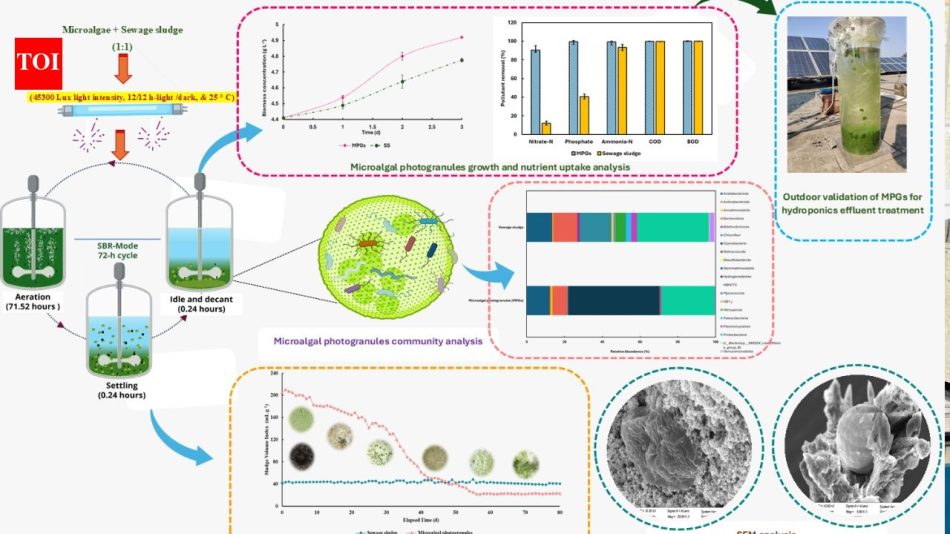
The treatment technology employs a light-driven photogranule reactor. In this reactor, hydroponic wastewater is introduced into a controlled environment where light and mild mixing are applied. Under these conditions, microalgae carry out photosynthesis, absorbing carbon dioxide and utilizing nitrates and phosphates as nutrients for their growth. Concurrently, the associated bacteria degrade organic pollutants, effectively reducing biological and chemical oxygen demand.
Formation of Granules
As the microbial community thrives, it produces extracellular polymeric substances that bind the cells together, forming compact green granules that measure approximately 4–6 mm in diameter. This granulation process is crucial, as it allows the granules to settle naturally at the bottom of the reactor once mixing ceases. This natural settling mechanism enables the clear treated water to be easily separated from the granules without the need for costly mechanical or chemical processes, thereby significantly lowering operational costs.
Results and Benefits of the Technology
According to Professor Sanjeev Kumar Prajapati, the principal investigator of the project, experimental results have demonstrated remarkable efficacy in treating hydroponic wastewater. The system achieved nearly complete removal of biological and chemical oxygen demand, with a reduction of about 99% in phosphate and ammonia levels, and nearly 90% removal of nitrate within just a few days of treatment.
Climate Mitigation Potential
In addition to its wastewater treatment capabilities, this technology also exhibits substantial potential for carbon dioxide fixation, contributing to climate mitigation efforts. With low energy requirements, a chemical-free operation, and simplified biomass recovery, the microalgal photogranule-based technology presents a sustainable and scalable solution for managing wastewater from the rapidly expanding hydroponics sector.
Conclusion
The development of this low-cost system by IIT Roorkee represents a significant advancement in sustainable agricultural practices. As hydroponics continues to grow in popularity, the need for effective wastewater management solutions becomes increasingly critical. This innovative technology not only addresses environmental concerns but also paves the way for more sustainable farming practices.
Note: The information presented in this article is based on research conducted by the Indian Institute of Technology Roorkee and highlights the importance of innovative solutions in addressing environmental challenges associated with modern agricultural practices.