IIT Kharagpur to Launch 4-Year BTech in Biomedical Engineering
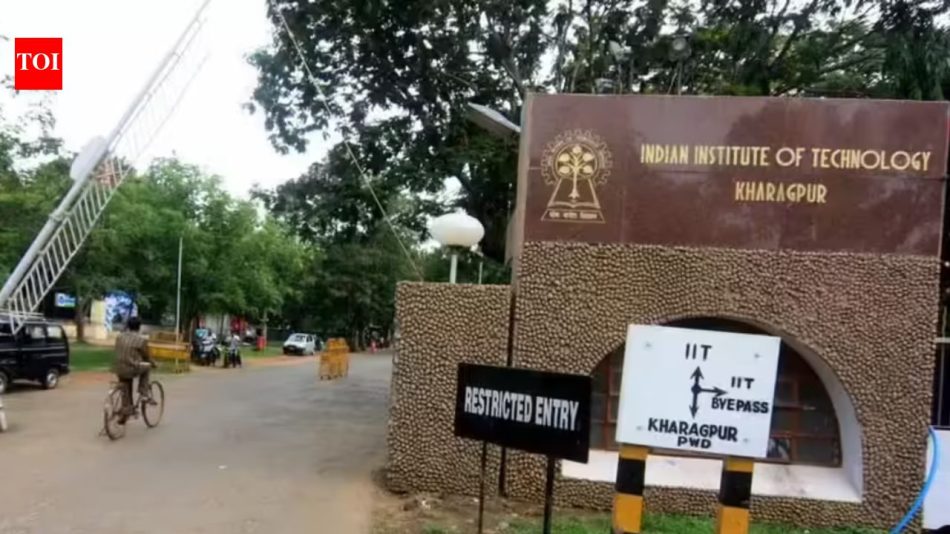
Kolkata: The Indian Institute of Technology (IIT) Kharagpur is set to introduce a four-year Bachelor of Technology (BTech) program in biomedical engineering in the upcoming academic season. This initiative aims to create a new class of professionals who possess a blend of engineering expertise, clinical insight, and the ability to translate these skills into impactful healthcare solutions.
Program Details
The new BTech program will be open to students who qualify through the Joint Entrance Examination (JEE) Advanced. Initially, the program will enroll 30 students. The School of Medical Science and Technology (SMST), which currently offers Master of Technology (MTech) programs, will be converted into a full-fledged department to facilitate this new undergraduate course.
Significance of Biomedical Engineering
According to Subhamoy Mandal, an assistant professor at SMST, biomedical engineering has evolved into a high-impact discipline globally. It plays a crucial role in various medical advancements, including:
- Magnetic Resonance Imaging (MRI)
- Robotic surgery
- Prosthetics
- Diagnostics
- Digital hospitals
India is currently at a pivotal moment in its healthcare ecosystem, which is rapidly expanding. However, there is a significant shortage of engineers capable of developing technologies that address clinical challenges. This new course aims to bridge that gap.
Curriculum and Learning Approach
The four-year curriculum is designed to be internationally benchmarked and future-oriented, blending core engineering principles with hands-on experience in developing translational healthcare technologies. The program will be integrated with the B C Roy Institute of Medical Sciences, enhancing its clinical relevance.
As part of a unique “living lab” model, students will engage with real-world medical challenges from the outset. This model aims to provide:
- Practical data for training human resources
- Simulations related to surgical procedures and disease modeling, utilizing real-life data
Faculty from the B C Roy Institute of Medical Sciences will deliver foundational clinical sciences education, while the institute’s super-speciality hospital will serve as a continuous site for student immersion, observation, and co-creation.
Training Across Frontier Domains
Professor Manjunatha Mahadevappa of SMST highlighted that students will receive training across various frontier domains, including:
- Artificial Intelligence (AI) in medicine
- Medical devices
- Robotics
- Biomedical imaging and signal processing
- Tissue engineering
- Immunology
- Modeling and simulation
This comprehensive training will equip students to develop integrated approaches to solving pressing human health problems.
Transforming Education and Healthcare Delivery
Chakraborty emphasized that most biomedical engineering courses in India are typically taught as purely academic subjects, lacking a strong clinical connection and real-world application of technology. With this new program, IIT Kharagpur aims to set a precedent for how engineering institutions can collaborate with medical fields to transform education, innovation, and healthcare delivery on both national and global scales.
The institute envisions its graduates as a new generation of specialized professionals prepared to address the challenges of futuristic healthcare.
Investment and Infrastructure Development
To support this ambitious program, IIT Kharagpur has already secured significant investments to establish modernized laboratories and integrated prototyping facilities. Additionally, new faculty members are being recruited to ensure that the program launches with the necessary depth and ambition.
Conclusion
The introduction of the BTech in biomedical engineering at IIT Kharagpur marks a significant step forward in addressing the growing need for skilled professionals in the healthcare technology sector. By integrating engineering principles with clinical practice, the program aims to produce graduates who can effectively contribute to the evolving landscape of healthcare in India and beyond.
Note: This article is based on information available as of February 2026 and is intended for informational purposes only.