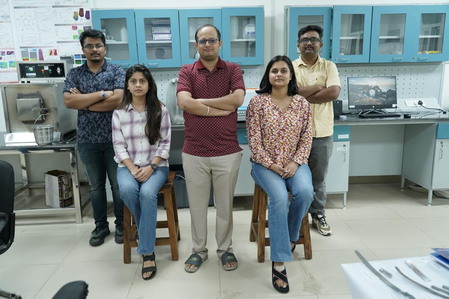
IIT Jodhpur Researchers Develop ‘Ultralight and Ultrastrong Supermetal’
Researchers at the Indian Institute of Technology (IIT) Jodhpur have made a significant advancement in materials science with the development of a groundbreaking Titanium–Aluminide (TiAl) alloy. This new alloy, named TiAl-CA, is poised to revolutionize the aerospace and defense engineering sectors by addressing the challenges of creating lightweight yet heat-resistant metals for jet engines.
Overview of TiAl-CA Alloy
The TiAl-CA alloy has achieved an unprecedented balance of ultra-low weight and exceptional high-temperature strength. Conventional superalloys used in aircraft engines often face limitations, either being too heavy or losing strength at high operating temperatures. The team at IIT Jodhpur, led by Professor S. S. Nene along with PhD students A. R. Balpande and A. Dutta, has successfully developed TiAl-CA to overcome these challenges.
Key Properties of TiAl-CA
- High Yield Strength: TiAl-CA retains gigapascal-level yield strength even at 900 °C, showcasing its remarkable durability.
- Oxidation Resistance: The alloy demonstrates excellent resistance to oxidation, a critical factor for materials used in high-temperature environments.
- Boron-Free Composition: Unlike traditional high-strength TiAl alloys that require elements like boron or carbon, which can lead to brittleness, TiAl-CA utilizes a refined combination of other elements.
Composition and Workability
The unique composition of TiAl-CA includes a blend of Niobium (Nb), Molybdenum (Mo), Tantalum (Ta), Tungsten (W), and Vanadium (V) integrated into the TiAl matrix. This innovative approach results in a material that is not only strong and stable but also highly workable, making it suitable for various manufacturing processes.
Performance Metrics
Performance-wise, TiAl-CA delivers exceptional results:
- Yield Strength: Approximately 1.1 GPa at room temperature.
- Weight: The alloy weighs nearly half as much as conventional Nickel-based superalloys, with a density of 4.13 g/cc compared to 7.75–9.25 g/cc for traditional options.
- High-Temperature Compressive Strength: TiAl-CA surpasses Nickel-based superalloys in high-temperature compressive strength, making it a superior choice for aerospace applications.
Implications for Aerospace and Defense
The development of this ultralight yet ultra-strong alloy represents a major breakthrough for the aerospace and defense industries. The lightweight nature of TiAl-CA enables the creation of fuel-efficient aeroengine components, contributing to a lower carbon footprint. This advancement aligns with global efforts to enhance sustainability in engineering practices.
Future Research and Applications
The researchers at IIT Jodhpur are now focusing on expanding testing of TiAl-CA, which includes:
- Scaling up casting processes.
- Assessing creep and fatigue resistance.
These steps are crucial for advancing the alloy toward industrial applications. Additionally, the alloy’s excellent as-cast properties make it well-suited for advanced fusion-based 3D printing technologies, such as Electron Beam Melting (EBM) and Laser Powder Bed Fusion (LPBF). This opens new avenues in high-performance component manufacturing.
Significance for India’s Materials Research
This remarkable achievement underscores India’s growing leadership in advanced materials research. The TiAl-CA alloy stands as a testament to the country’s innovation under the ‘Make in India’ initiative, paving the way for next-generation aircraft and defense systems that are lighter, stronger, and proudly made in India.
Note: This article is based on information published by IANS and has been structured to provide a comprehensive overview of the developments at IIT Jodhpur.