
IIT Jodhpur’s Smart 'Electronic Nose' Sensors May Soon Detect Diabetes, Lung Disease Through Breath
In a groundbreaking advancement in non-invasive medical diagnostics, researchers at the Indian Institute of Technology (IIT) Jodhpur are developing innovative sensor technology that could enable doctors to identify diseases simply by analyzing a person’s breath. This research aims to miniaturize complex laboratory gas-analysis systems onto microchips, paving the way for handheld devices capable of early disease detection.
Research Overview
The research team, led by Sakshi Dhankar, an Associate Professor in the Department of Electrical Engineering, is focusing on micro electro-mechanical systems (MEMS) and nano-sensor-based devices. These technologies are designed to identify disease markers present in human breath. The sensors work by detecting volatile organic compounds (VOCs) released during the body’s metabolic processes, which can indicate early signs of various health conditions.
Technology Development
The research is being conducted at IIT Jodhpur’s MEMS and Nano Sensors Laboratory. Here, scientists are designing microscopic devices capable of separating and measuring gases in breath samples. These gases are linked to several metabolic and respiratory disorders, making their detection crucial for timely diagnosis.
Inspiration from Nature
Dr. Dhankar explains that the research draws inspiration from the natural world, particularly from animals known for their acute sense of smell, such as dogs and pigs. These animals can identify specific odors, a skill that has been utilized in various fields, including the detection of explosives and hidden substances. The goal of the IIT Jodhpur team is to replicate and enhance this natural ability through advanced micro-engineering and intelligent data analysis.
Electronic Nose System
The researchers are developing an ‘electronic nose’ system that combines advanced gas sensors with artificial intelligence to mimic the human olfactory system. This system analyzes gas patterns and identifies specific chemical signatures associated with diseases. Traditional laboratory techniques, such as gas chromatography, are typically bulky and complex, which makes them unsuitable for portable medical applications.
Micro Gas Chromatography
To overcome the limitations of traditional methods, the IIT Jodhpur team has created MEMS-based micro gas chromatography (micro-GC) columns that are fabricated on silicon chips and polymer substrates. These microchannels can effectively separate key gases found in human breath, including:
- Ethanol
- Acetone
- Methanol
Elevated levels of acetone, for example, may indicate diabetic ketoacidosis, while other VOC patterns can be associated with conditions like asthma, lung disorders, and certain viral infections.
Sensor Technology
The electronic nose system employs multiple gas sensors made from nanomaterials, including:
- Metal oxides
- Two-dimensional materials
- Nano-silicon
- Heterostructures
Each sensor responds differently to various gases, generating distinct electrical signals. These signals are then analyzed using machine learning algorithms to accurately identify the compounds present in the breath sample.
Future Applications
By integrating microfabrication, nanotechnology, and artificial intelligence, the researchers aim to create a compact diagnostic platform that could eventually function as a handheld device for rapid medical screening and environmental monitoring. This technology has the potential to revolutionize the way diseases are detected and monitored.
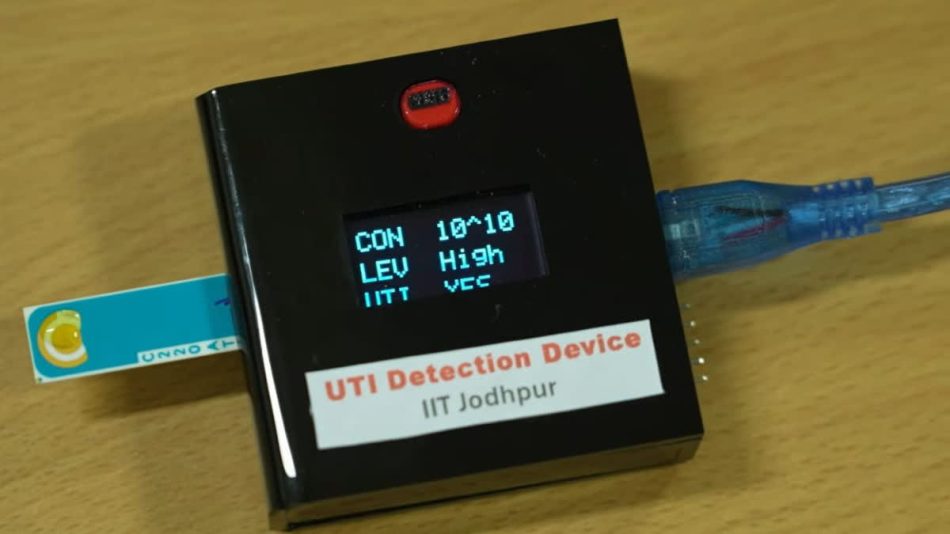
Rapid Detection of Urinary Tract Infections
In addition to breath analysis, the team is also exploring sensor-based technologies for the rapid detection of urinary tract infections (UTIs) caused by E. coli bacteria. Current diagnostic methods often require advanced laboratory equipment and may take two to three days to yield results. To address this, researchers are developing nanomaterial-modified electrodes capable of quickly detecting bacteria in urine samples.
Collaboration with Medical Experts
This project is being carried out in collaboration with medical experts from the All India Institute of Medical Sciences (AIIMS) to ensure that the technology meets clinical standards. The long-term goal is to translate cutting-edge laboratory research into practical healthcare technologies.
Conclusion
If successfully developed into portable devices, these systems could enable rapid, affordable, and non-invasive disease detection. This would allow doctors to diagnose illnesses earlier and monitor patients more effectively, ultimately improving healthcare outcomes.
Note: The information provided in this article is based on research conducted at IIT Jodhpur and aims to highlight advancements in non-invasive medical diagnostics.


