IIT Indore’s ‘maker’ movement ignites early innovation: Here is how
In recent years, a transformative shift has been occurring in India’s engineering education landscape, particularly at the Indian Institute of Technology (IIT) Indore. The institute has embraced a ‘maker’ movement that encourages students to engage in hands-on innovation from their early years, rather than waiting until their final year to embark on meaningful projects.
Redefining Engineering Education
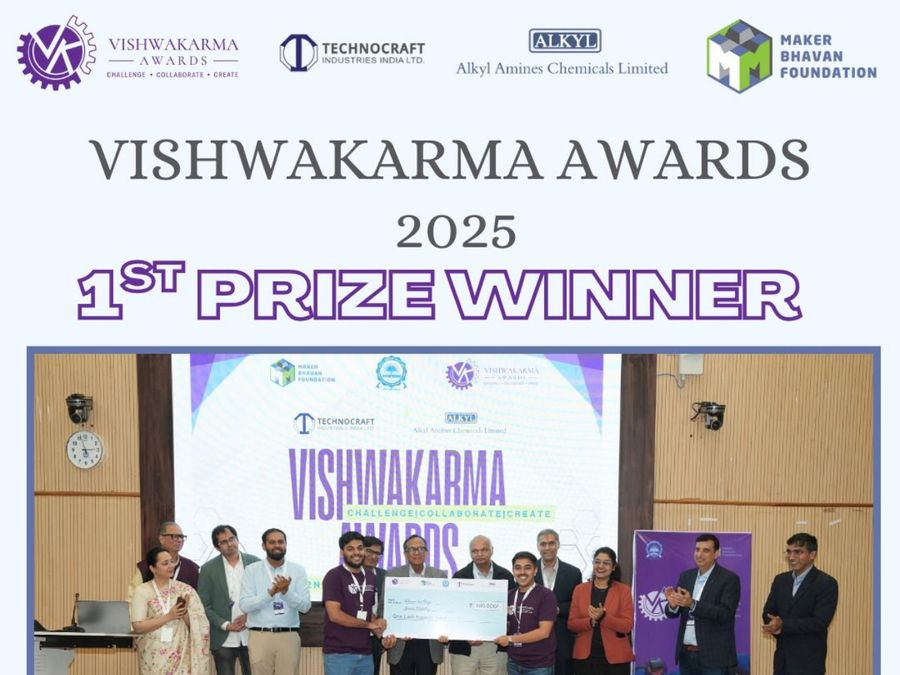
At IIT Indore, students are actively involved in designing, prototyping, testing, and refining their ideas, often leading to patent applications while still in their second or third year. This initiative is supported by the Maker Bhavan Foundation, which aims to create a vibrant ecosystem of innovation across Indian higher education.
In a physics lab that resembles a bustling workshop, first-year engineering students tackle a challenge: to design a device that allows an egg to fall from the sixth floor without breaking. This exercise emphasizes critical thinking, problem-solving within constraints, and the iterative nature of engineering.
Hands-On Learning and Maker Spaces
The maker spaces at IIT Indore are designed to be open and flexible, allowing students to experiment with materials and tools. According to IIT Indore Director Suhas Joshi, “Expose them early. Let them express their approach to solving a problem.” This hands-on approach has significantly increased student engagement, with many students now eager to spend time in the lab.
Democratizing Innovation
The Maker Bhavan Foundation, founded by Hemant Kanakia, aims to democratize innovation by collaborating with 1,000 colleges across India to establish tinkering labs. These labs focus on hands-on problem-solving and thematic challenges, ranging from sustainability to healthcare. Kanakia emphasizes the importance of curiosity, stating, “If you develop the habit of looking around and asking questions, innovation follows naturally.”
Intensive Innovation Programs
Maker Bhavan conducts six-week innovation programs where students ideate, prototype, and present their solutions within tight timelines. The focus is on the innovation process rather than the final product. Kanakia encourages students to think like engineers, stating, “You can become an entrepreneur. But first, you must learn how to think like an engineer.”
Navigating the Patent Process
One of the significant barriers for student innovators is the patenting process, which is often seen as expensive and complex. To address this, IIT Indore and Maker Bhavan are actively working to demystify the process. Joshi acknowledges the challenges but emphasizes the importance of understanding intellectual property. Workshops on patent filing, documentation, and prior-art searches help students navigate this often intimidating landscape.
Real-World Applications of Innovation
The projects emerging from these maker spaces are grounded in real-world issues. For instance, Aqua Loop, developed at IIT Indore, addresses water management challenges in India by focusing on closed-loop reuse and intelligent monitoring. The Madhya Pradesh government is already in discussions with the institute for potential deployment.
Another project, Agni Rakshak, created by students from Trinity College of Engineering, tackles fire safety by designing an affordable and user-friendly device. This innovation highlights the need for practical solutions that are not only technologically sound but also accessible to the average consumer.
Diverse Range of Innovations
The range of projects being developed is diverse. For example, Vayu Setu is an AI-powered autonomous delivery drone designed for healthcare and emergency situations, taking into account the unique challenges of Indian terrain and logistics. Additionally, students are creating assistive devices for mobility, rehabilitation aids, and low-cost diagnostic tools, often inspired by personal experiences with healthcare accessibility.
Fostering a Culture of Innovation
Students at IIT Indore are encouraged to identify gaps in various sectors, such as water wastage, fire safety, and healthcare accessibility, and convert these challenges into working prototypes. They are introduced to the fundamentals of intellectual property early in their education, learning about prior art searches and the ethical dimensions of patenting.
The message is clear: innovation does not end at the prototype stage. If an idea holds value, it deserves protection. This has led to a growing pipeline of patentable ideas emerging from undergraduate labs, with students filing provisional applications themselves, supported by mentors who clarify the patenting process.
The Future of Engineering Education in India
The initiatives at IIT Indore and the Maker Bhavan Foundation provide a glimpse into the future of engineering education in India. This model emphasizes continuous engagement with real-world challenges rather than rote learning or delayed application of knowledge. From curiosity to creation, and from creation to protection, students are learning that innovation is a disciplined, collaborative process.
With the right institutional support, this innovative process can begin much earlier and extend far beyond traditional educational models, paving the way for a new generation of engineers and innovators in India.
Note: The information presented in this article is based on developments reported as of March 2026.