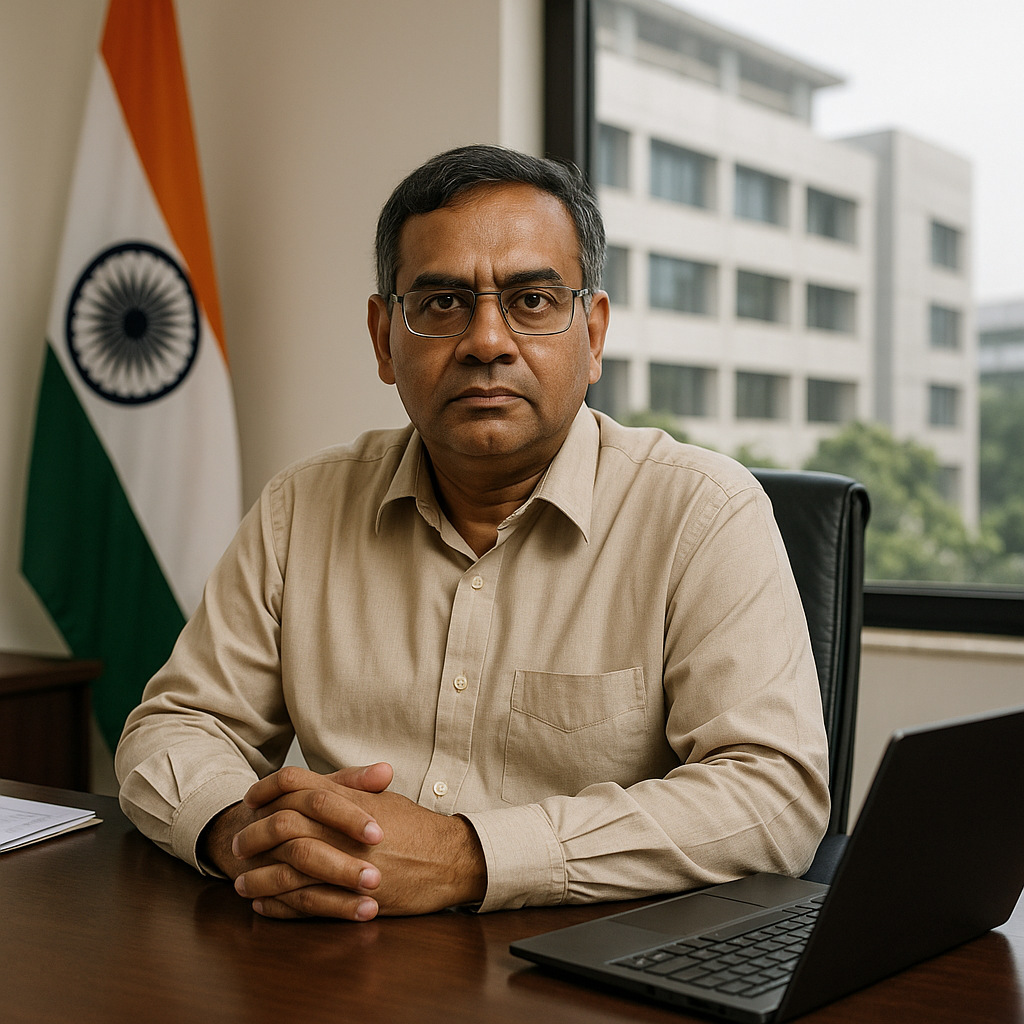
Supporting Girls’ Education Is Crucial For Scientific Progress, Says IIT Madras Scientist Swati Sudhakar
Swati Sudhakar, an Assistant Professor in the Department of Applied Mechanics and Biomedical Engineering at the Indian Institute of Technology (IIT) Madras, has made significant strides in the field of nanomedicine. Her journey from a small village in Tamil Nadu to pioneering research in advanced medical therapies highlights the importance of education, resilience, and family support in overcoming societal barriers.
Background and Research Focus
Sudhakar’s research primarily revolves around developing advanced nanomaterials aimed at improving cancer treatment, wound healing, and other medical therapies. She is also exploring the burgeoning field of space nanotherapeutics, where she studies how nanoparticles can be utilized to deliver medicines more effectively, particularly in the unique conditions of space.
Her work is not only crucial for scientific advancement but also emphasizes the need for empowering girls through education. Sudhakar firmly believes that investing in a daughter’s education is pivotal for building a stronger future for society as a whole.
Overcoming Challenges in a Male-Dominated Field
Sudhakar’s journey has not been without its challenges. Coming from a small village in Bodinayakkanur, Tamil Nadu, she faced societal expectations that often prioritize marriage over education for women. Despite being a gold medalist in both her bachelor’s and master’s degrees, she had to convince her parents to support her decision to pursue higher education.
She recalls, “Convincing my parents to allow me to pursue my master’s degree was a major challenge. My father was particularly concerned about marriage and social expectations.” This hesitation extended to her ambition of pursuing a PhD abroad, as no one in her family had ever ventured overseas for higher studies.
Sudhakar faced strong social pressure, safety concerns, and the weight of familial expectations, but she persevered and completed her PhD in Germany. Following this, she conducted postdoctoral research in London before returning to India to contribute to the scientific ecosystem.
The Importance of Girls’ Education
Sudhakar emphasizes that educating girls is crucial for societal progress. She states, “Empowering girls through education is key to societal progress.” Her experiences have shown her that when girls are educated, they can break stereotypes, pursue careers in science and technology, and contribute significantly to their communities.
Despite the advancements in institutions like IIT Madras, Sudhakar notes that the gender ratio in science and technology remains unequal. Women still encounter subtle and systemic barriers in many academic spaces. She believes that breaking these stereotypes is an ongoing process that requires resilience, persistence, and a strong sense of self-belief.
Research Contributions and Innovations
Sudhakar’s research aims to address real-world healthcare challenges. For instance, when patients undergo chemotherapy, the drugs often harm healthy cells, leading to severe side effects. Additionally, in rural and remote areas, the storage of medicines poses a significant challenge, as many require refrigeration and special transportation.
To tackle these issues, her lab has developed nano-archeosomes, which are specially designed nanoparticles that act as carriers for medicines. These nanoparticles can transport drugs directly to targeted cells, especially diseased ones, thereby improving treatment effectiveness while minimizing damage to healthy cells. Furthermore, these nanomaterials help preserve medicines for extended periods without the need for refrigeration, making healthcare more accessible, particularly for underserved communities.
International Research Experience
Sudhakar’s research journey in Germany and London has been instrumental in shaping her current work. In Germany, she specialized in synthesizing nanoparticles and studying their interactions with proteins using advanced biophysical tools. This foundational research laid the groundwork for her subsequent work in London, where she focused on the applied aspects of nanomaterials and biotechnology.
She observes significant differences between the research culture abroad and in India, particularly in terms of funding. In countries like Germany and cities such as London, research funding is considerably higher, allowing researchers to receive better salaries and access cutting-edge training from an early stage. This results in a more mature research ecosystem, which often attracts talented students to pursue their studies abroad.
The Future of Girls in STEM
Sudhakar’s story serves as an inspiration for many young girls aspiring to enter the fields of science, technology, engineering, and mathematics (STEM). By advocating for girls’ education and sharing her experiences, she hopes to encourage more girls to pursue their ambitions and break free from societal constraints.
She concludes, “Through every stage, I learned that breaking stereotypes is not a one-time achievement but a continuous process; one that requires courage, support, and a commitment to one’s passion.”
Conclusion
Swati Sudhakar’s journey from a small village to a leading researcher in nanomedicine underscores the critical role of education in empowering girls and fostering scientific progress. By supporting girls’ education, society can pave the way for a brighter future, filled with innovation and advancements in various fields.
Note: The insights shared in this article highlight the importance of education and resilience in overcoming societal barriers, particularly for women in science and technology.