IIT Bhubaneswar Hosts Talk on MicroLED Technologies and Advanced Gas Sensors – India Education | Latest Education News | Global Educational News
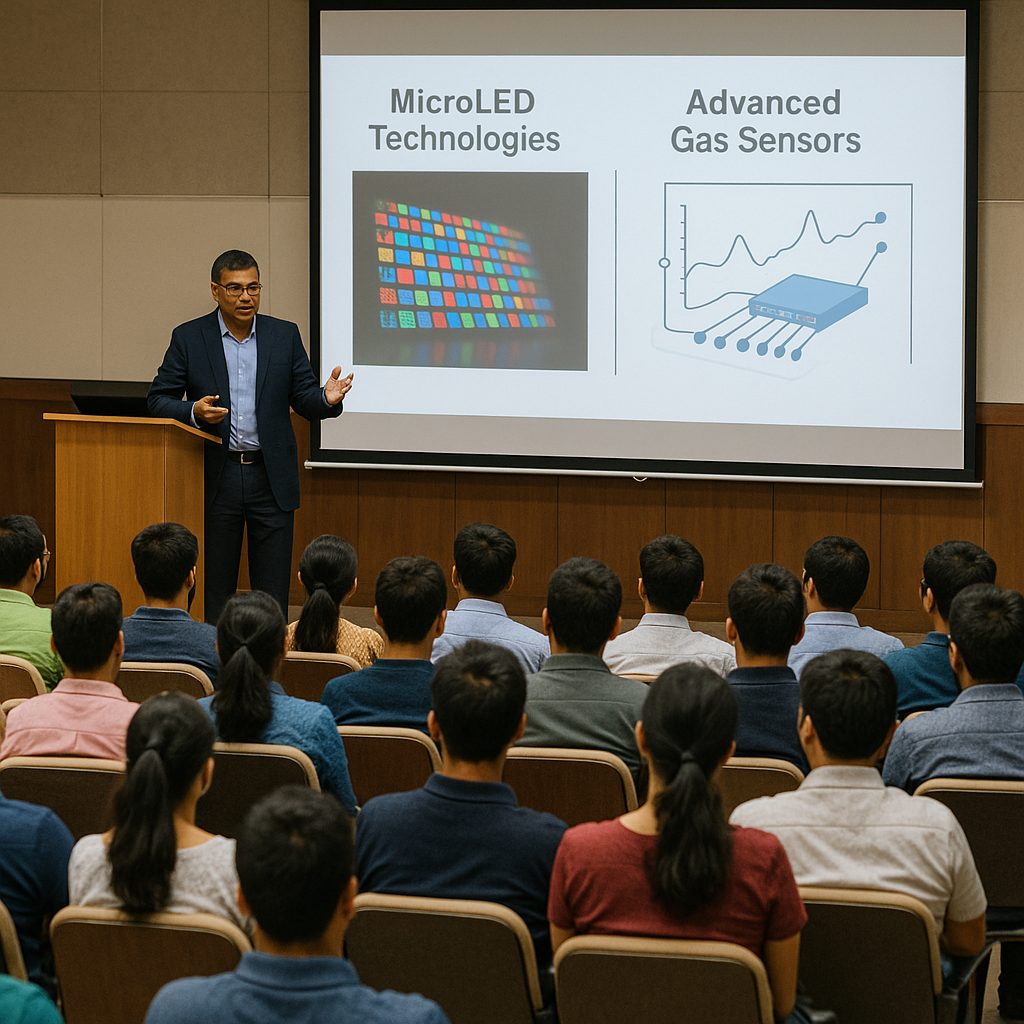
The Indian Institute of Technology (IIT) Bhubaneswar recently organized an insightful talk focusing on the cutting-edge fields of MicroLED technologies and advanced gas sensors. The event attracted a diverse audience, including students, faculty members, and industry professionals, all eager to learn about the latest advancements in these innovative areas.
Understanding MicroLED Technology
MicroLED technology is rapidly gaining traction in the display industry due to its potential to revolutionize how we experience visual content. Unlike traditional LED displays, MicroLEDs consist of tiny, microscopic light-emitting diodes that can produce brighter images with higher contrast ratios and energy efficiency.
Key Features of MicroLED Technology
- High Brightness: MicroLEDs can achieve higher brightness levels compared to conventional displays, making them suitable for various lighting conditions.
- Energy Efficiency: These displays consume less power, which is beneficial for both the environment and user costs.
- Superior Color Accuracy: MicroLEDs offer a wider color gamut, enhancing the overall viewing experience.
- Scalability: The modular nature of MicroLED technology allows for the creation of displays in various sizes and shapes.
Applications of MicroLED Technology
MicroLED technology has a wide range of applications across different sectors, including:
- Consumer Electronics: Used in televisions, smartphones, and wearable devices.
- Automotive Displays: Enhancing dashboard displays and infotainment systems.
- Advertising: Creating dynamic and eye-catching advertising displays.
- Virtual and Augmented Reality: Providing high-resolution displays for immersive experiences.
Advanced Gas Sensors: A Growing Need
In parallel with advancements in display technology, the demand for advanced gas sensors has also increased significantly. These sensors are crucial for monitoring air quality, detecting hazardous gases, and ensuring safety in various environments.
Importance of Gas Sensors
Gas sensors play a vital role in numerous applications, including:
- Environmental Monitoring: Tracking air pollution levels and ensuring compliance with environmental regulations.
- Industrial Safety: Detecting leaks of toxic gases in manufacturing and processing plants.
- Health Monitoring: Measuring indoor air quality to safeguard public health.
- Smart Homes: Integrating with home automation systems to enhance safety and comfort.
Technological Innovations in Gas Sensors
Recent advancements in gas sensor technology have led to the development of more sensitive, faster, and reliable devices. Some notable innovations include:
- Nano-sensors: Utilizing nanomaterials to enhance sensitivity and selectivity.
- Wireless Technology: Enabling remote monitoring and data transmission.
- Low-Power Operation: Designing sensors that consume minimal energy, making them suitable for battery-operated devices.
Insights from the Talk
The talk at IIT Bhubaneswar featured prominent experts in the fields of MicroLED technology and gas sensors. They shared their research findings, industry experiences, and future prospects for these technologies. Key takeaways from the discussion included:
- The potential for MicroLEDs to replace OLED displays in the near future due to their superior performance.
- The importance of developing gas sensors that can operate in extreme conditions, such as high temperatures and humidity.
- Collaboration between academia and industry is essential for driving innovation and commercialization of these technologies.
Future Directions
As MicroLED technology and advanced gas sensors continue to evolve, several trends are expected to shape their future:
- Integration with Artificial Intelligence: AI algorithms can enhance the functionality of gas sensors by enabling predictive analytics and real-time monitoring.
- Miniaturization: Ongoing efforts to reduce the size of sensors and displays will lead to more compact and versatile applications.
- Increased Demand for Sustainable Solutions: The push for eco-friendly technologies will drive innovations in both MicroLED and gas sensor development.
Conclusion
The talk at IIT Bhubaneswar highlighted the significant advancements in MicroLED technologies and advanced gas sensors, showcasing their potential to impact various industries positively. As research and development in these fields continue, we can expect to see even more innovative applications that enhance our daily lives and contribute to a safer, more sustainable future.
Note: The information presented in this article is based on the latest developments and research in the fields of MicroLED technology and gas sensors as of October 2023.