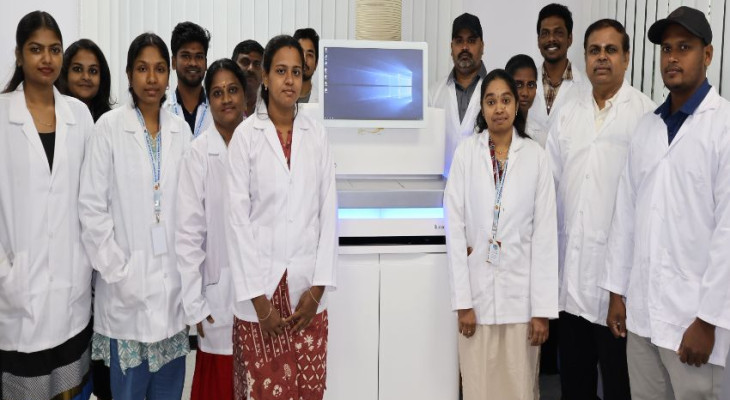
IIT-Madras and IRFC Establish India’s First Single Cell Omics Translational Research Lab
On November 17, 2025, the Indian Institute of Technology (IIT) Madras, in collaboration with the Indian Railways Finance Corporation (IRFC), announced the establishment of India’s first Single Cell Omics Translational (SCOT) research laboratory. This groundbreaking facility aims to enhance research capabilities in various medical fields and is expected to significantly impact healthcare in India.
Overview of the SCOT Research Laboratory
The SCOT lab is equipped with state-of-the-art instrumentation designed to facilitate:
- Early diagnosis of diseases
- Disease prognosis
- Biomarker discovery
- Drug screening across a range of diseases
These diseases include cancer, cardiovascular conditions, infectious diseases, inflammatory disorders, metabolic disorders, and other non-communicable diseases.
Funding and Location
The establishment of the SCOT lab is made possible through a Corporate Social Responsibility (CSR) grant of ₹10.83 crore provided by IRFC. The laboratory will be located within the Department of Medical Sciences and Technology (DMST) at IIT Madras, creating a hub for innovative medical research.
Significance of the Collaboration
The collaboration between IIT Madras and IRFC marks a significant milestone in India’s journey towards advancing drug discovery and precision medicine. V. Kamakoti, the Director of IIT Madras, expressed optimism about the lab’s potential, stating, “The state-of-the-art SCOT Research Laboratory will greatly enhance our ability to develop solutions for India’s capabilities in early diagnostics, targeted therapeutics, and next-generation healthcare innovation.”
Impact on Medical Research
Usha Venugopal, Member (Finance) of the Ministry of Railways, highlighted the importance of the SCOT Research Lab in strengthening India’s medical research capabilities. She stated, “The support extended through IRFC’s CSR funding will aid studies that have the potential to improve early diagnosis and develop better therapies. This collaboration shows how institutions can work together for larger national goals.”
Venugopal expressed hope that the facility will contribute to knowledge, innovation, and improved health outcomes in the years to come.
Advancements in Disease Research
Anubama Rajan from the Department of Medical Sciences and Technology at IIT Madras emphasized the need for research platforms that connect molecular insights to clinical impact. She stated, “With the SCOT Research Laboratory established in partnership with IRFC, we now have the capability to study diseases at single-cell resolution, accelerate drug discovery, and develop early-detection and precision-medicine strategies tailored to our patients.”
Training and Future Prospects
The SCOT lab will also serve as a national training hub, bringing together clinicians, scientists, and engineers to foster the next generation of India’s translational research ecosystem. Rajan added, “This facility strengthens India’s ability to drive drug discovery, early diagnostics, and precision healthcare, while training the next generation of clinicians and scientists.”
Conclusion
The establishment of the SCOT Research Laboratory at IIT Madras represents a significant advancement in India’s medical research landscape. By focusing on single-cell biology and its applications in drug discovery and precision medicine, this collaboration is poised to make a lasting impact on healthcare in India.
Note: This article is based on information provided by PTI and has not been edited for content.