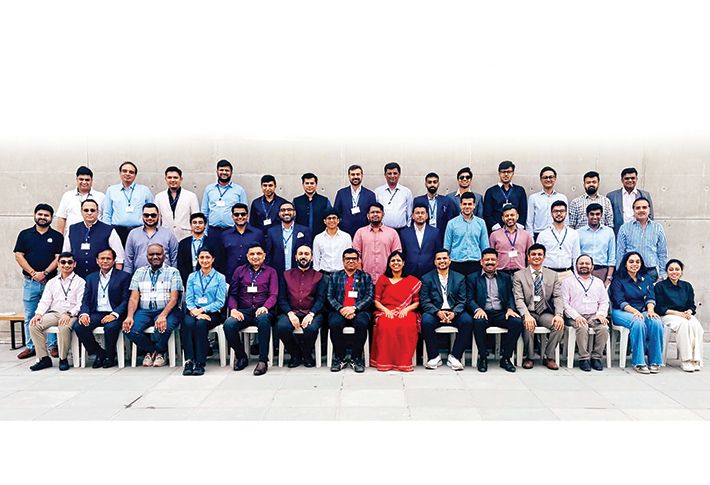
West Asia conflict: IIM Ahmedabad moves Dubai batch to India
The ongoing conflict in West Asia has prompted Indian institutions and companies operating in the region to reassess their operations and contingency plans. A notable example is the Indian Institute of Management (IIM) Ahmedabad, which has relocated its executive MBA cohort from Dubai to its campus in India.
Background of the Situation
The conflict, primarily involving the United States and Israel against Iran, has escalated over recent weeks, affecting various sectors, including education. As tensions rose, IIM Ahmedabad faced the challenge of continuing its executive management program for mid-career professionals, which had a cohort studying in Spain when the war broke out.
Decision to Relocate Students
Rather than transitioning classes to an online format, which the institute believed would undermine the learning experience, IIM Ahmedabad decided to move the entire batch back to its Ahmedabad campus. The cohort consists of 35 students enrolled in the Dubai-based executive MBA program.
Sunil Sharma, the dean of IIM Ahmedabad’s Dubai campus, emphasized the importance of in-person interaction among students. He noted that previous experiences during the pandemic revealed that students preferred physical presence and engagement with peers over virtual learning, even under social distancing protocols.
Logistical Considerations
Sharma explained that he and the institute’s director met to discuss the best course of action in light of the conflict. They concluded that relocating the Dubai cohort to India was the most effective solution until the situation stabilized.
Other Indian educational institutions with campuses in Dubai, such as BITS Pilani, SP Jain School of Global Management, and Amity University, are also evaluating their options. While BITS Pilani has opted for online classes, the responses from other institutions remain pending.
Expert Opinions on the Move
Education analysts have weighed in on the decision to relocate students or shift to online learning. Narayanan Ramaswamy, a partner and leader in education and skill development at KPMG, remarked that IIM Ahmedabad’s decision was strategic, especially given the small size of the cohort. He noted that larger institutions might face more logistical challenges in making similar decisions.
Ramaswamy pointed out that while some programs, like traditional MBA courses, can adapt to virtual formats, the quality of education should not be compromised by logistical constraints.
Impact on Indian Companies
The conflict has also raised concerns among Indian companies with employees in West Asia. An estimated 9 million Indians work in the region, and many firms have begun to implement safety measures for their staff. Notable companies such as Tata Consultancy Services, KEC International, and Larsen and Toubro are closely monitoring the situation.
The war has cast uncertainty over the Gulf Cooperation Council (GCC) region, which has historically been viewed as a safe and stable business environment. The reputation of the GCC as a desirable location for expatriate professionals is now under scrutiny.
Demographics of Indian Expatriates in West Asia
According to data from the Ministry of External Affairs, there are over 3.5 million Indians residing in the UAE, making it home to the second-largest Indian diaspora. Other significant populations include:
- 2.4 million in Saudi Arabia
- Nearly 1 million in Kuwait
- About 830,000 in Qatar
- More than 300,000 in Bahrain
- Just under 700,000 in Oman
This large expatriate community underscores the importance of the region to India, both economically and culturally.
Conclusion
The decision by IIM Ahmedabad to relocate its Dubai batch to India reflects a broader trend among Indian institutions to prioritize the quality of education and student experience amid geopolitical tensions. As the situation in West Asia continues to evolve, educational institutions and businesses must remain agile and responsive to ensure the safety and well-being of their students and employees.
Note: The situation in West Asia remains fluid, and ongoing developments may impact further decisions by educational institutions and companies operating in the region.