
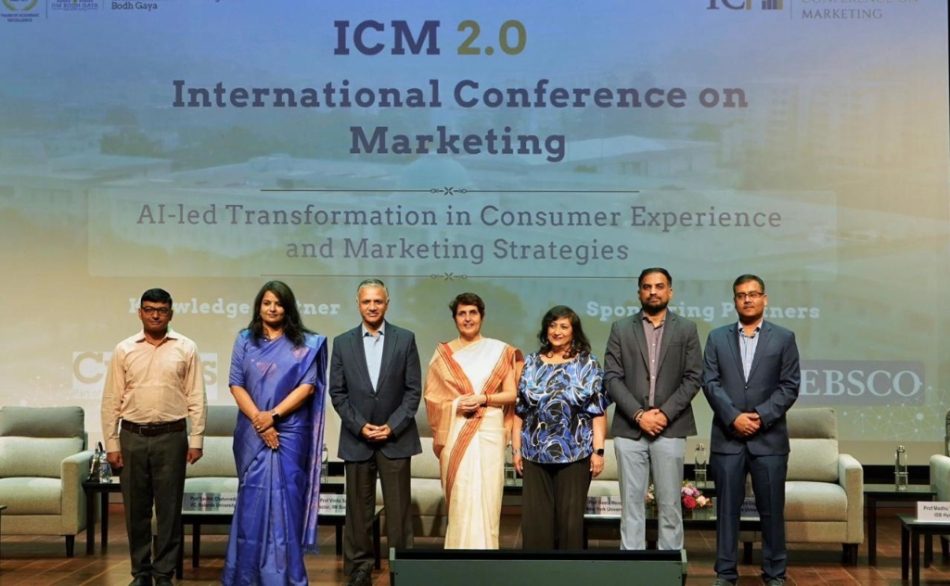
Global Scholars Gather at IIM Bodh Gaya to Discuss AI’s Impact on the Future of Marketing
Gaya: Scholars, researchers, and industry professionals from across the globe convened at the Indian Institute of Management (IIM) Bodh Gaya for the two-day International Conference on Marketing (ICM 2.0), held on March 14 to 15, 2026. The conference aimed to explore how artificial intelligence (AI) is reshaping consumer experiences and marketing strategies.
Conference Theme and Objectives
Themed “AI-led Transformation in Consumer Experience and Marketing Strategies,” the conference focused on the increasing role of data analytics, machine learning, and intelligent technologies in business decision-making. The discussions highlighted a significant shift in marketing from traditional mass communication to predictive, personalized engagement driven by AI and advanced analytics.
Welcome Address
Prof. Vinita S. Sahay, director of IIM Bodh Gaya and patron of the conference, delivered the welcome address. She outlined the institute’s vision of promoting impactful research while preparing students for a technology-driven and data-centric economy. Prof. Sahay emphasized that IIM Bodh Gaya is actively integrating artificial intelligence into its learning, research, and institutional processes to equip future leaders for a rapidly evolving digital landscape.
Keynote Lectures
The conference featured keynote lectures from prominent academics, including:
- Prof. Anand K. Jaiswal, IIM Ahmedabad
- Prof. Aditya Gupta, Texas State University
- Prof. Geeta Menon, New York University
- Prof. Madhu Viswanathan, Indian School of Business
- Prof. Shaphali Gupta, IIM Kozhikode
- Prof. Weng Marc Lim, Sunway University
These sessions examined various aspects of AI-driven marketing, including the evolution of digital marketplaces, recommender systems, and the strategic value of data in modern businesses. The speakers also addressed concerns surrounding data privacy, ethics, and the responsible use of technology.
Importance of Data Ethics
Many speakers emphasized that while AI enables deeper consumer insights and highly personalized services, organizations must ensure transparency and trust in how data is collected and utilized. The discussions underscored the importance of ethical considerations in the deployment of AI technologies in marketing.
Societal Implications of AI
The event featured Chief Guest Prof. Sachin Chaturvedi, vice-chancellor of Nalanda University, who spoke about the broader societal implications of artificial intelligence. He stressed the need for a people-first approach to technological change, highlighting that societies must prioritize continuous reskilling to adapt to rapid innovation.
Thematic Tracks
The conference included six thematic tracks covering:
- Marketing Analytics
- Consumer Behaviour in Digital Economies
- AI-led Communication Strategies
- Sectoral Applications of AI
- Sustainability and Ethics
- Emerging Research Methods
More than 260 research papers were submitted for the conference, of which 205 were accepted after a rigorous peer review process. The event was convened by Dr. Pinaz Tiwari, Dr. Anup A. Soren, and Dr. Chandan Parsad, and it brought together participants from academia, industry, and research communities, including scholars from leading institutions such as IIM Ahmedabad, IIM Bangalore, and IIT (ISM) Dhanbad.
Research Presentations
Over the two-day program, more than 120 research presentations were delivered through both offline and online sessions. These presentations covered a wide range of topics related to AI and marketing, showcasing the latest research and innovations in the field.
Conclusion
Through keynote talks, technical sessions, and research discussions, ICM 2.0 reaffirmed IIM Bodh Gaya’s role as a platform for global academic dialogue on emerging issues in marketing, technology, and artificial intelligence. The conference not only highlighted the transformative potential of AI in marketing but also emphasized the need for ethical practices and societal considerations in its application.
Note: The discussions and findings presented at ICM 2.0 will contribute significantly to the ongoing dialogue about the future of marketing in the age of artificial intelligence.


